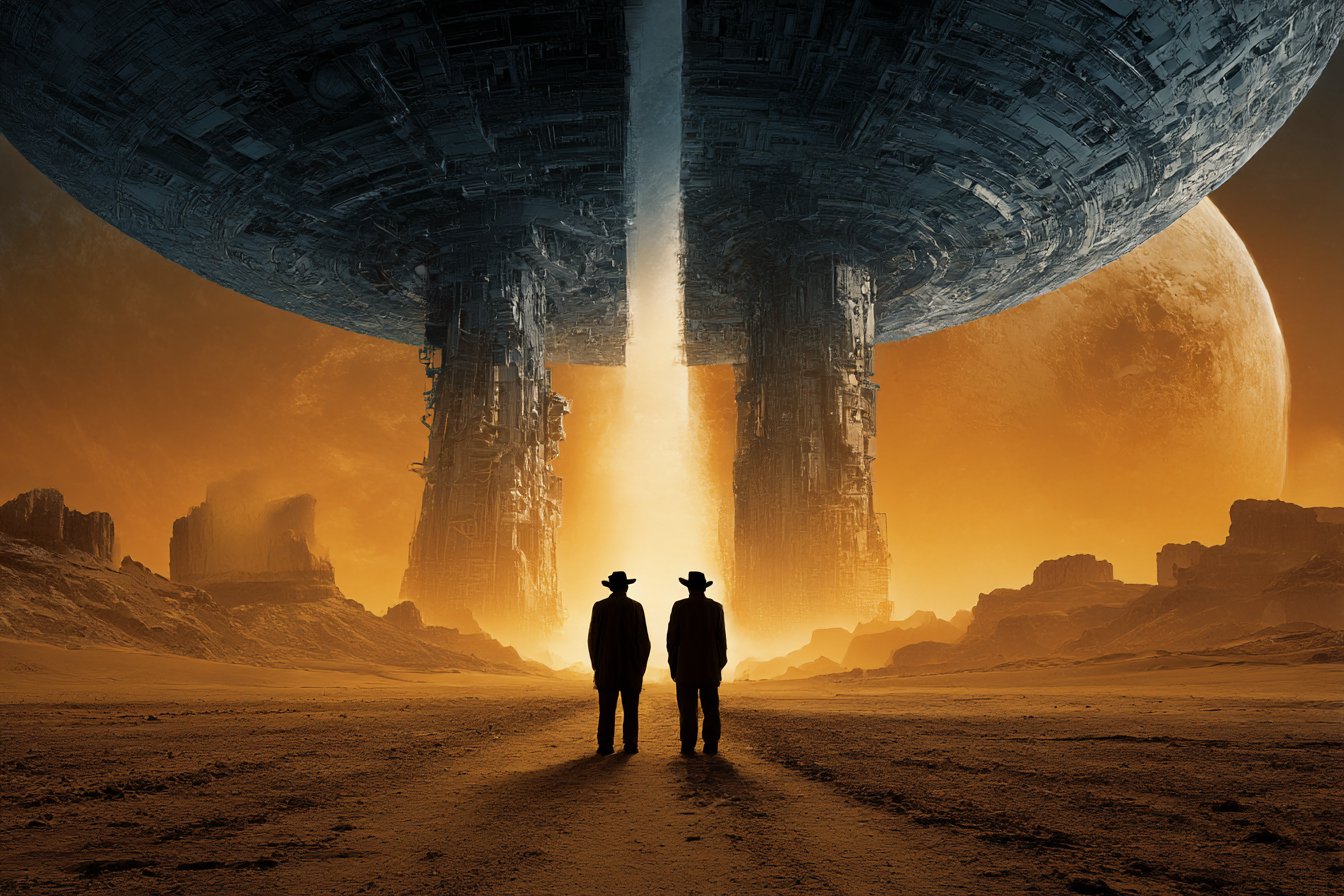

Last Tuesday, I was trying to explain to my neighbor why I'd rigged up LED strips under my kitchen cabinets to pulse like a spacecraft control room. "It's not just decoration," I said, watching her eyebrows climb toward her hairline. "I'm testing how ambient lighting affects our perception of space — you know, for a story I'm working on about life aboard generation ships." She backed away slowly, probably wondering when I'd gone completely off the rails.
But that's the thing about being caught between science and fiction — you start seeing ordinary moments as opportunities to test extraordinary ideas. My LED experiment wasn't just aesthetic; it was research. How would constant artificial lighting affect human psychology during decades-long space voyages? Would blue-shifted light panels make crew members feel more alert, or would it mess with their circadian rhythms in ways we haven't considered?
This kind of thinking drives everything I write about. Science fiction works best when it doesn't just imagine fantastic scenarios, but actually grapples with the messy realities they'd create. I can't stand stories that handwave the hard questions — like how do you grow food on Mars when the soil is toxic, or what happens to human bone density after ten years in low gravity?

These aren't boring technical details; they're the foundation that makes or breaks believability.
I learned this lesson the hard way during my electronics retail days. You'd be amazed how quickly customers lose interest when you can't explain why a particular gadget works the way it does. "It's magic" doesn't sell products, and it doesn't sell stories either. But "here's the clever engineering principle behind it" — now that hooks people. They want to understand, even if they don't need all the technical specs.
My physics background gives me tools to separate plausible speculation from complete fantasy. When I read about faster-than-light communication through quantum entanglement, I can spot where the science ends and the wishful thinking begins. Quantum entanglement is real, but it can't transmit information faster than light — that's been proven mathematically. However, there might be other quantum effects we haven't discovered yet that could work differently. The key is knowing which boundaries are absolute and which might be flexible.
Take artificial intelligence consciousness, for example. Right now, we can't even agree on what consciousness means, let alone how to create it artificially. But I've spent hours talking to ChatGPT and similar programs, and I can feel something shifting in how they respond. Not consciousness exactly, but something more sophisticated than simple pattern matching. When I write about AI stories, I try to capture that uncertainty — the moment when you're not sure if you're talking to a very clever program or something approaching genuine awareness.
You Might Also Like

The best science fiction doesn't just predict technology; it explores how technology changes us. I remember reading Kim Stanley Robinson's Mars trilogy and being struck by how he handled the psychological effects of terraforming. His characters don't just solve engineering problems — they grapple with what it means to fundamentally alter an entire world. Should we make Mars more Earth-like, or should we adapt ourselves to be more Mars-compatible? These questions matter because they reflect real debates we're having about climate change and genetic engineering right here on Earth.
Sometimes my experiments fail spectacularly. Last month, I tried building a homemade hologram projector to understand how three-dimensional displays might work in future interfaces. After spending two days fiddling with mirrors, lasers, and smartphone screens, all I managed to create was a blurry green mess that gave me a headache. But even the failure taught me something valuable — true holographic displays require much more precise optical engineering than most sci-fi stories acknowledge. The technology isn't impossible, just way more complicated than writers usually admit.
What excites me most is when scientific discoveries open up new storytelling possibilities. CRISPR gene editing technology has been around for barely a decade, but it's already inspiring incredible narratives about human enhancement, designer babies, and biological warfare. The science is advancing so rapidly that fiction struggles to keep up. I find myself constantly revising story ideas as new research papers come out.
But I also push back against the idea that harder science always makes better fiction. Some of my favorite stories bend the rules for emotional truth. Ursula K.
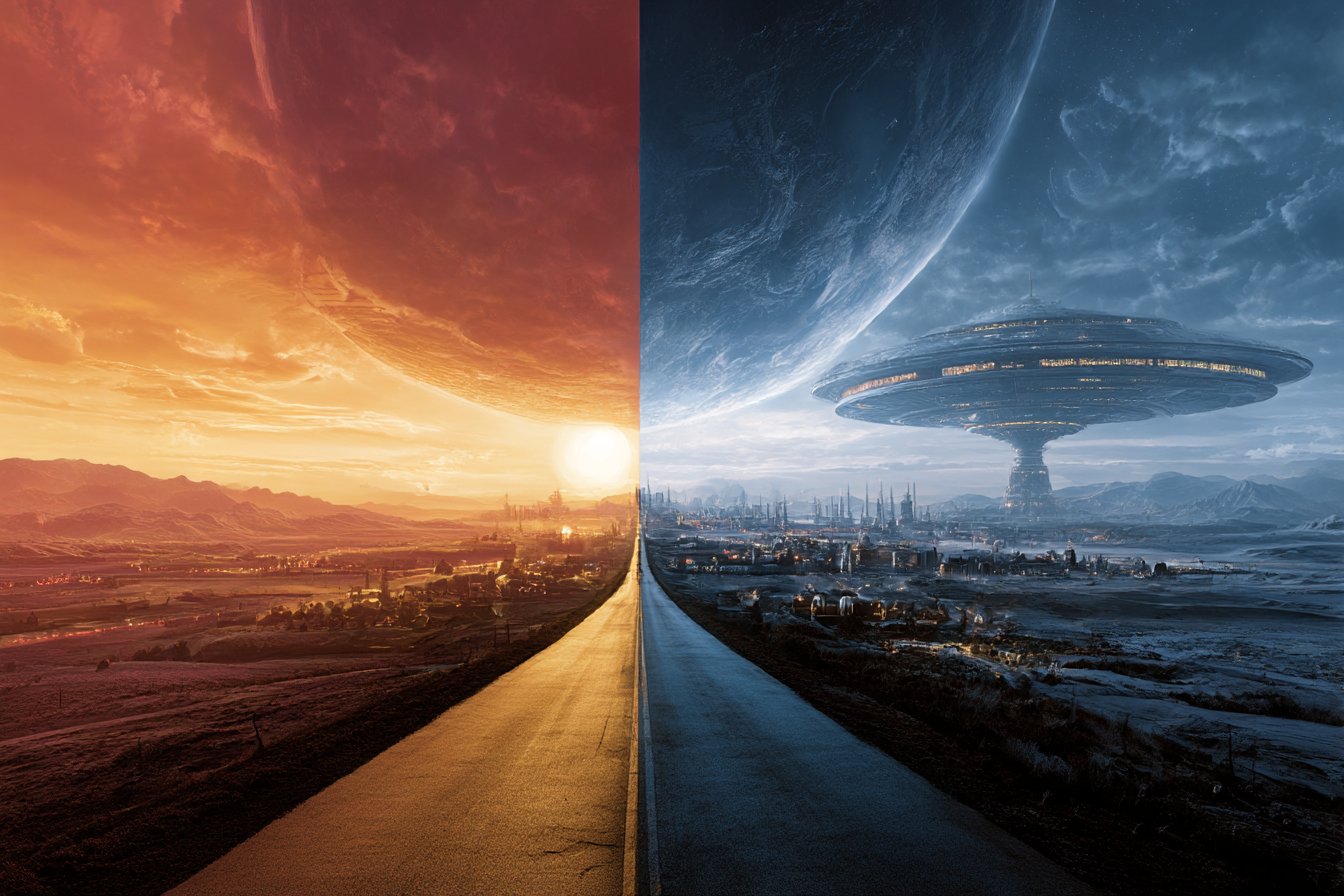
Le Guin's "The Dispossessed" isn't scientifically rigorous about its ansible communication device, but it uses that impossible technology to explore profound questions about isolation, connection, and social organization. The made-up physics serves the human story, not the other way around.
This balance — between scientific plausibility and emotional resonance — shapes how I approach every article I write. When I analyze a new sci-fi film, I'm not just nitpicking the technical details (though I definitely do that). I'm asking whether the impossible elements serve a purpose, whether they help us understand something true about human nature or our relationship with technology.
My readers seem to appreciate this approach. I get emails from aerospace engineers who love that I acknowledge the real challenges of space exploration, and from English teachers who use my articles to help students think critically about the stories they read. One high school student wrote to tell me she'd decided to study astrobiology after reading my piece about extremophile organisms and their implications for alien life. That's the kind of impact that keeps me going — bridging the gap between what we know and what we dream.
The future isn't just something that happens to us; it's something we actively create through the stories we tell and the experiments we dare to attempt. Even failed LED kitchen experiments contribute to that process, one small illumination at a time.

0 Comments