
Last month I picked up a book that had me completely stumped by page three. The protagonist was casting spells to repair a damaged spaceship's hull, and somehow — impossibly — it worked. My physics background kept screaming "that's not how vacuum exposure works!" while my inner fantasy lover whispered "but what if it could?"
That's the thing about mixing science fiction and fantasy: get it right, and you've got something magical that feels inevitable. Get it wrong, and you've created a mess that satisfies nobody. I've seen brilliant concepts crash and burn because the author couldn't decide if they were writing hard sci-fi or epic fantasy, and I've watched seemingly ridiculous premises soar because someone understood exactly what rules they were breaking and why.
The secret isn't avoiding the collision between magic and science — it's choreographing the dance.
I remember working on that game mod project years ago, trying to build a derelict space station that felt authentic. We'd spent weeks getting the lighting just right, making sure every flickering panel told a story about power distribution and system failures. Then someone suggested adding "energy crystals" as a power source. The team nearly split in half. Half of us saw it as fantasy nonsense that would ruin our carefully crafted tech realism. The other half argued it could work if we treated the crystals like advanced battery technology we didn't fully understand yet.
We ended up keeping the crystals, but we made them feel earned. They had serial numbers, manufacturer logos, heat signatures that matched their energy output. When they failed, they didn't just "stop glowing" — they developed stress fractures, leaked coolant, and required specific tools to remove safely. We gave our fantasy element a scientific skin, and suddenly it belonged in our world.
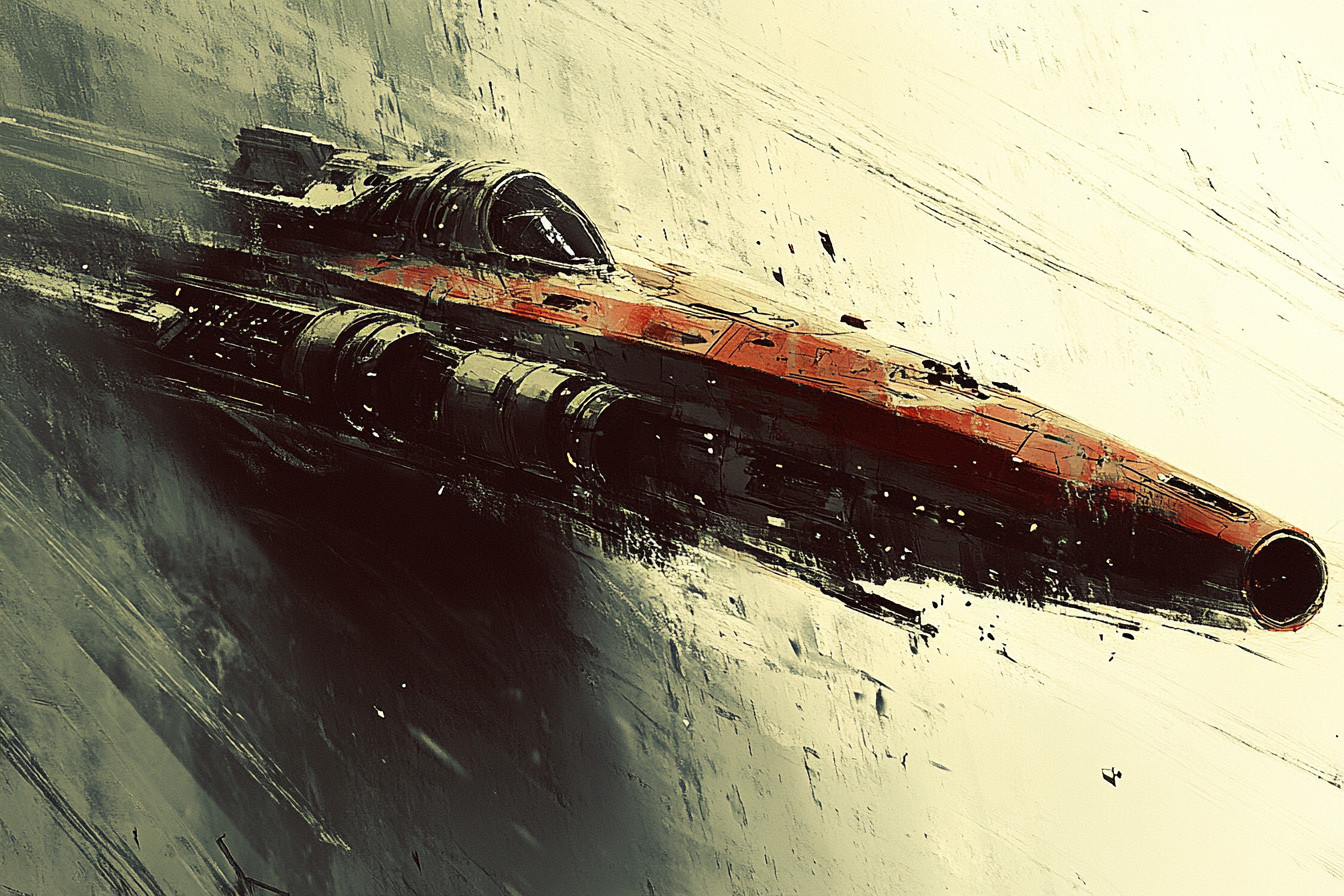
That project taught me something crucial: successful fantasy-sci-fi hybrids don't ignore the tension between magic and science. They build their entire story around resolving it.
Look at something like *The Fifth Element*. On paper, it's completely bonkers — ancient stones that control elements, a perfect being created from DNA fragments, love as a literal cosmic force. But Luc Besson grounds every fantastical element in a future that feels lived-in and functional. The stones aren't just mystical artifacts; they're part of an ancient defense system with clear operational parameters. The perfect being isn't just magical; she's the product of advanced reconstruction technology we can almost believe exists. Even the power of love gets expressed through concrete, visual effects that follow consistent rules.
The film works because it commits completely to its own internal logic. When Leeloo learns human languages by speed-reading every book in existence, it feels miraculous but not arbitrary. The movie has already established that this future has brain-computer interfaces and accelerated learning tech. Magic? Maybe. But magic that grew out of science we can extrapolate from what we know today.
Compare that to something that doesn't work as well — and I won't name names because I'm not trying to tear anyone down, but we've all seen those movies where laser guns run out of "magic energy" for no clear reason, or where ancient spells somehow interface perfectly with alien computers. The problem isn't mixing the genres; it's not respecting what makes each genre compelling in the first place.
You Might Also Like
Fantasy earns its wonder through internally consistent rules. Yes, wizards can cast fireballs, but there are costs, limitations, training requirements. The magic feels magical because it operates according to principles we can understand even if we can't replicate them.
Science fiction earns its credibility through extrapolation from known science. Even when we're dealing with faster-than-light travel or artificial consciousness, the best sci-fi makes us think "yeah, that could work" by showing us the logical steps from here to there.
When you smash these genres together carelessly, you lose both the wonder and the credibility. But when you do it thoughtfully, you can create something stronger than either genre alone.
I've been experimenting with this in my own writing lately. I'm working on a story about terraforming engineers who discover that certain planets resist their atmospheric processors in ways that seem almost intentional. The "magic" might just be planetary-scale organic computing we don't recognize yet — or it might be something genuinely supernatural. The key is that my characters approach it like scientists, even when their instruments can't measure what they're experiencing.
The trick is picking your battles. You can break some scientific rules, but not all of them. You can introduce magical elements, but they need to feel like they belong in your world. Most importantly, your characters need to react to genre-blending elements in ways that feel authentic to their backgrounds and the world they inhabit.

A starship engineer encountering actual magic should be skeptical, curious, maybe even excited about the implications for physics. They shouldn't just shrug and accept it without question. Similarly, a fantasy wizard suddenly dealing with quantum computers should be fascinated by this new form of "spell-crafting," not immediately intuitive about programming languages they've never seen.
The best hybrids I've encountered don't try to hide their genre-mixing. They celebrate it. They make the collision between scientific and magical worldviews part of the story's central tension. Characters struggle to understand phenomena that don't fit their training. Conflicts arise from different groups interpreting the same events through completely different conceptual frameworks.
What we end up with isn't pure fantasy or pure science fiction. It's something new — stories that capture both the rigorous curiosity of good sci-fi and the sense of wonder that makes fantasy magical. Stories where learning how something works doesn't make it less amazing, just differently amazing.
That's the real rule these hybrids break: the idea that understanding and wonder are mutually exclusive. Sometimes the most magical thing is discovering that magic has rules too.

0 Comments