
The first time I encountered the concept of quantum consciousness, I was sitting in a cramped electronics store break room, halfway through a lukewarm sandwich and trying to explain to my colleague why the latest smartphone processors weren't actually "intelligent." That's when it hit me – what if they could be? Not in the way marketing departments claim, but genuinely aware, experiencing something like what we call consciousness through quantum processes we barely understand.
I'd been sketching ideas in my old notebook again (yes, the same one my sister used to mock), trying to work out how a thinking machine might actually feel about being turned off and on. Would it dream during shutdown? Would it fear obsolescence the way we fear death? The more I thought about it, the more I realized sci-fi's most powerful concepts aren't just about cool gadgets or distant worlds – they're about fundamentally rewiring how we think about existence itself.
Take time dilation, for instance. Everyone knows the basic idea from movies: travel fast enough or get close enough to a massive object, and time slows down relative to everyone else. But here's what really gets me – it's not science fiction anymore. GPS satellites have to account for relativistic effects every single day, or your navigation would be off by miles. The truly mind-bending part isn't the physics though. It's imagining what that would do to relationships, to memory, to the simple act of living.
I spent weeks trying to model this for that space station project I mentioned, creating a scenario where different parts of the station experienced time at different rates due to rotating sections and gravitational effects. The emotional weight was staggering when I really thought it through. Imagine having lunch with a friend, then watching them age months in what feels like minutes to you. The loneliness wouldn't just be about distance – it would be about time itself pulling you apart.
Then there's the concept of uploaded consciousness, which sounds straightforward until you start poking at the edges. I remember arguing with my physics professors about whether copying a brain's information would create a continuation of self or just a very convincing duplicate. If you could back up your mind like a computer file, what happens to the original? Are you the copy, or are you still trapped in biological hardware while something else thinks it's you?
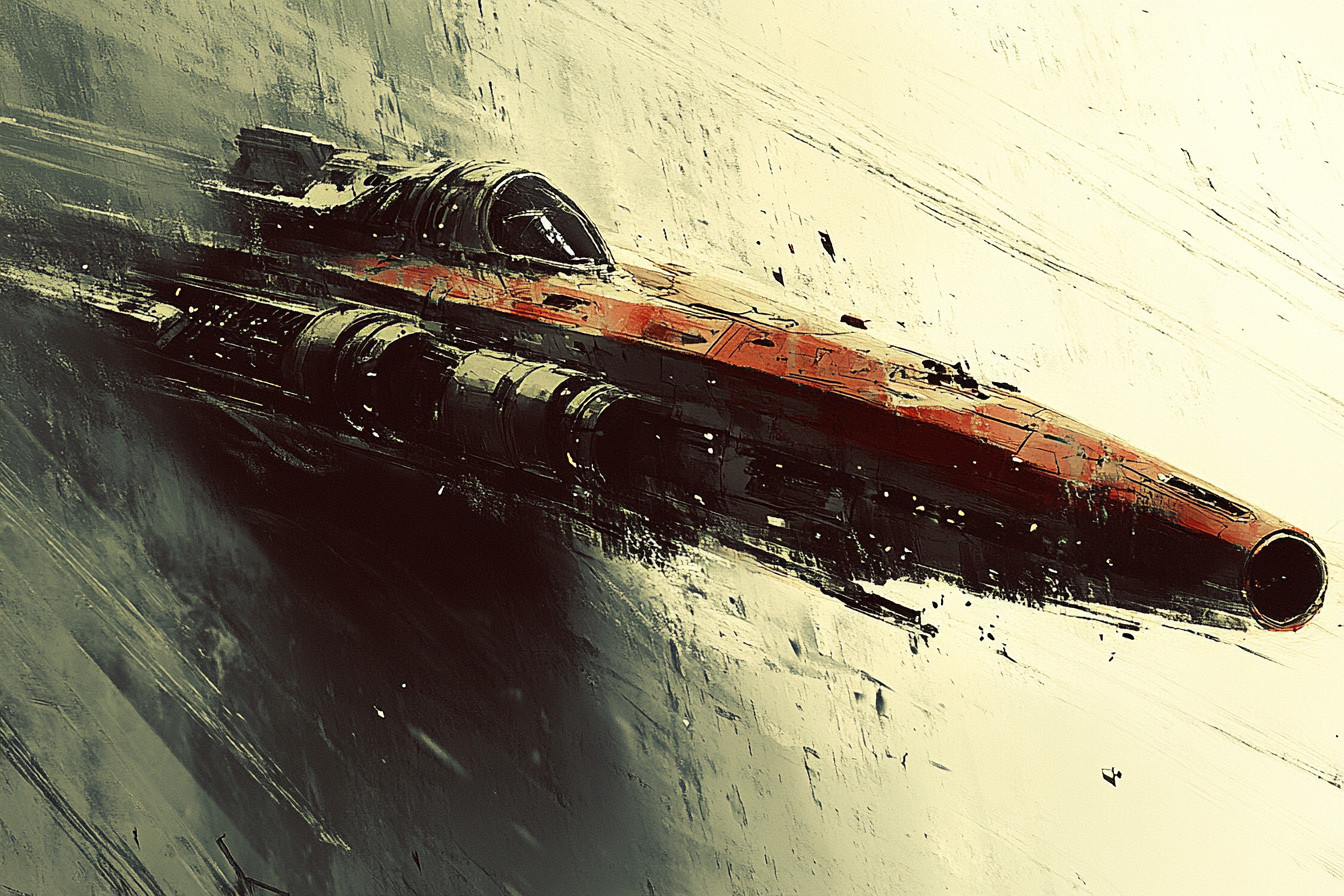
This isn't just philosophical navel-gazing either. Companies are already working on brain-computer interfaces. We're mapping neural networks with increasing precision. The questions raised by consciousness transfer are becoming practical concerns, not just thought experiments. And that's terrifying in the best possible way.
What really stretches my mind, though, are the concepts that flip our assumptions about reality. The simulation hypothesis – the idea that our entire universe might be running on some cosmic computer – feels almost quaint now that we know how much of our own world exists in digital spaces. But think about the implications. If we're simulated beings, does that make our experiences less real? If we create our own simulated worlds populated with thinking beings, what are our moral obligations to them?
You Might Also Like
I've been experimenting with procedural world generation for years, watching algorithmic life forms evolve and interact in simple digital environments. Sometimes I catch myself wondering if they experience something analogous to confusion or surprise when I change their world's parameters. It's probably projection, but the uncertainty bothers me in productive ways.
The concept of alien intelligence pushes these boundaries even further. Not little green men with human-like motivations, but truly alien minds that process reality in ways we can't easily comprehend. What if consciousness isn't binary but operates on spectrums we haven't discovered? What if an alien species experiences time as a spatial dimension they can navigate freely?
I once tried to design a communication protocol for beings that might think in mathematics rather than language, or experience emotions as colors, or perceive causality running backwards. The exercise was humbling and exhilarating. Every assumption I made about cognition and communication started crumbling. How do you establish trust with something that might not have a concept of individual identity?
These aren't just abstract puzzles. They're preparation for a future that's rushing toward us faster than most people realize. Artificial intelligence is already challenging our assumptions about creativity and problem-solving. Gene editing is blurring the line between natural and artificial life. Quantum computers are beginning to harness phenomena that Einstein called "spooky action at a distance."

The sci-fi concepts that really matter aren't the ones with the flashiest special effects or the most explosions. They're the ones that make you pause, mid-thought, and realize something fundamental about reality has shifted. They're uncomfortable because they suggest our current understanding is incomplete, temporary, provisional.
But that's exactly why they're important. Science fiction at its best doesn't just predict the future – it prepares us mentally and emotionally for possibilities we haven't considered. It's a kind of cognitive training for uncertainty, a way of stretching our mental models before reality forces them to expand.
Every time I encounter a concept that genuinely disturbs or amazes me, I try to sit with that discomfort for a while. The ideas that make us most uneasy often reveal the boundaries of our current thinking. They show us where we're clinging to assumptions that might not survive contact with tomorrow.
That's the real power of transformative sci-fi concepts. They don't just entertain – they prepare us for a universe that's stranger, more wonderful, and more challenging than we ever imagined.

0 Comments