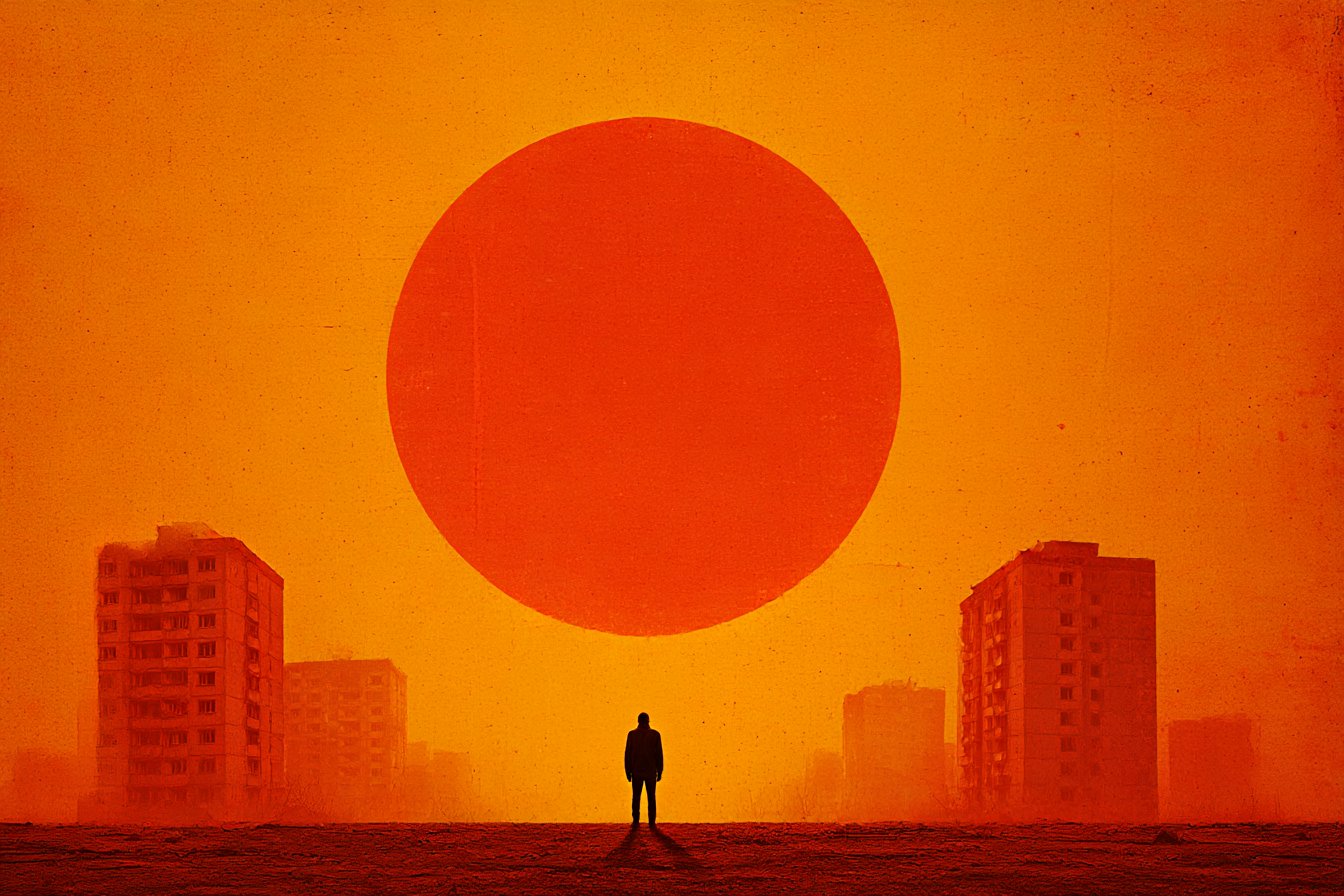

You know that feeling when a movie gets under your skin and just… stays there? I had that experience with Danny Boyle's Sunshine back in 2007, and honestly, it's never really left. I remember walking out of the cinema feeling simultaneously exhilarated and deeply unsettled, like I'd witnessed something that was part hard science, part psychological horror, and part spiritual meditation on what it means to be human when everything familiar falls away.
What struck me first wasn't the stunning visuals — though they're absolutely gorgeous — but how the film manages to feel both utterly plausible and completely terrifying. I mean, we're talking about a crew flying a bomb the size of Manhattan into the sun to reignite it. On paper, that sounds ridiculous. But Boyle and screenwriter Alex Garland ground everything in such meticulous scientific detail that you buy it completely.
I've always been fascinated by how science fiction handles the transition from "this could work" to "this is happening." Sunshine nails that transition because it respects both the science and the human psychology involved.

The ship's design, the physics of solar approach, even the way the crew discusses thermal shielding — it all feels researched rather than invented. There's a moment early on where they're talking about communication delays with Earth, and the casual way they mention the increasing isolation hits harder than any dramatic speech about loneliness could.
But here's what really gets me about this film: it understands that space isn't just physically hostile, it's psychologically corrosive. I spent months after watching it thinking about how the crew members start to crack under the pressure, not just from their impossible mission but from the sheer weight of carrying humanity's survival on their shoulders. That's not metaphorical weight — that's literal, crushing responsibility that would break anyone.
The character of Robert Capa, played by Cillian Murphy, becomes the film's emotional anchor precisely because he's the most scientifically grounded member of the crew. He's not the traditional hero type, but he's the one who can calculate exactly what needs to happen and why. There's something haunting about watching a physicist realize he might have to sacrifice everything for an equation to work out. I kept thinking about all those scientists throughout history who've had to make impossible choices in service of knowledge or survival.

What really sets Sunshine apart from other space films is how it handles the descent into madness. And I'm not just talking about the controversial third act that splits audiences — though we'll get to that. I'm talking about how the movie shows us that isolation and cosmic terror don't need alien monsters or external threats. The horror comes from within: from religious mania, from the breakdown of rational thought under extreme stress, from the realization that you might be humanity's last hope and you're probably going to fail.
The film's visual language supports this perfectly. Those shots of the sun aren't just beautiful — they're hypnotic in a way that makes you understand how someone could become obsessed with our star as both life-giver and destroyer. I found myself researching solar physics after watching this, trying to understand whether the science held up. Turns out, it mostly does, which makes the whole thing even more unsettling.
You Might Also Like

Now, about that third act. Yeah, it goes full slasher movie. A lot of people hate this turn, and I get why — it feels jarring after the careful scientific buildup. But you know what? It worked for me, and here's why: space madness isn't just a convenient plot device, it's a documented psychological phenomenon. When you combine extreme isolation, massive pressure, and proximity to something as incomprehensibly powerful as the sun, human minds break in unpredictable ways.
The character of Pinbacker represents what happens when someone stares too long into the cosmic abyss and decides it's staring back with purpose. His religious mania isn't random — it's the logical endpoint of someone who's spent too long contemplating humanity's insignificance in the face of stellar mechanics. That terrified me more than any alien ever could.
I've watched Sunshine probably a dozen times now, and each viewing reveals new details that support the overall sense of mounting dread. The way the crew's routines slowly break down. How their voices change when talking to Earth. The increasing frequency of system failures that might not be accidental.

It's all building toward that moment when you realize this mission was probably doomed from the start, not because of the science but because of the psychology.

What keeps bringing me back to this film is how it treats scientific knowledge as both salvation and curse. These characters know exactly what they're up against — the math is clear, the physics are unforgiving, the odds are calculated. But that knowledge doesn't make them feel better; it makes everything worse because they understand precisely how impossible their situation is.
The film's sound design deserves mention here too. John Murphy's score and the ambient noise create this constant sense of claustrophobia and mounting pressure that mirrors what the characters are experiencing. I tried recreating some of those sounds in my workshop once using oscillators and metal sheets — completely failed, but the attempt made me appreciate how carefully crafted the audio environment is.
Sunshine haunts me because it presents a future that feels both scientifically rigorous and emotionally true. It's not interested in easy answers or triumphant heroism. Instead, it asks what happens when smart, capable people face a problem that might not have a solution, and how long human rationality can hold up under cosmic-scale pressure.
That's the kind of science fiction that stays with you long after the credits roll. It doesn't just show you cool spaceships or neat gadgets — it shows you what those things might cost us, and whether we'd be willing to pay that price when everything depends on it.

0 Comments