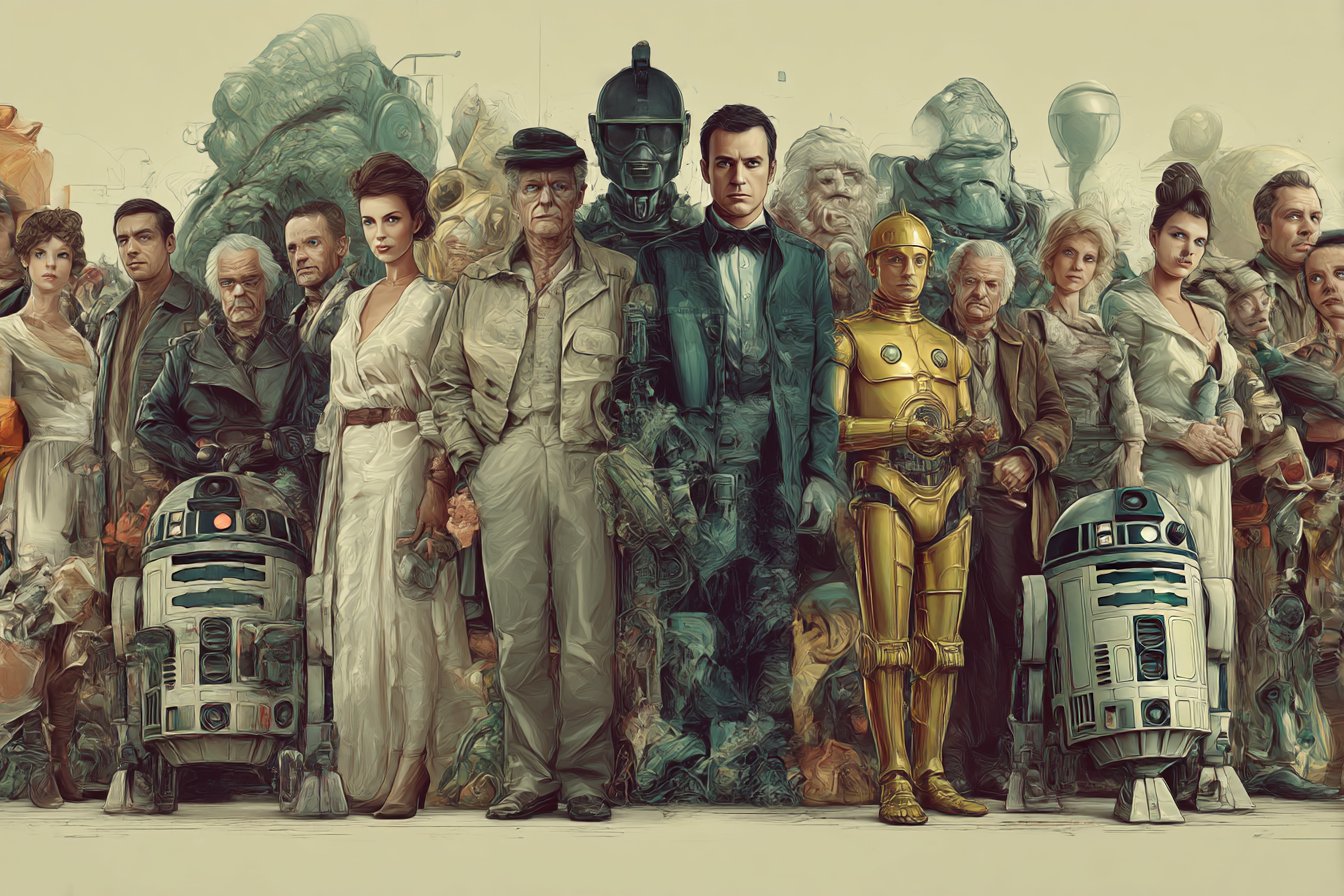

You know that feeling when you meet someone at a party and three years later you still think about something they said? Science fiction characters hit me the same way, except instead of wondering about their weekend plans, I'm lying awake thinking about how they'd handle being uploaded to a quantum computer or watching their home planet get swallowed by a black hole.
I've been wrestling with this question for months now — what makes certain sci-fi characters stick around in your head long after you've closed the book or left the cinema? It's not just the cool gadgets they carry or the impressive spaceships they pilot. Hell, I can barely remember the technical specs of the Enterprise, but I can tell you exactly how Data's eyes looked when he was trying to understand human emotion.
The answer hit me while I was tinkering with an Arduino project last winter, trying to build a basic voice recognition system that could respond to simple commands. The thing kept misinterpreting everything I said — "lights on" became "rice dawn" about half the time. But there was this one moment when it perfectly understood a complex sentence, responded correctly, and then immediately forgot what had just happened.

That's when I realised what I was seeing: the gap between programming and consciousness, between following instructions and actually understanding them.
That gap — it's exactly what makes characters like Data, HAL 9000, or Ava from Ex Machina so compelling. They exist in the space between what we are and what we might become, between human and not-quite-human. The best sci-fi characters don't just represent futuristic concepts; they embody our anxieties and hopes about those concepts.
Take Ripley from the Alien films. On paper, she's a straightforward action hero fighting monsters in space. But what really makes her memorable isn't the flamethrower or the power loader fight. It's how she represents our fear of the unknown combined with our capacity to adapt and survive. When she makes that impossible choice at the end of the first film — to blow herself up rather than let the creature reach Earth — you're not just watching a plot resolution. You're watching someone wrestle with the ultimate question of self-sacrifice versus species survival.

I remember reading Neuromancer for the first time and being completely confused by Case, the protagonist. He's this burned-out hacker, addicted to cyberspace, living in a world where technology has advanced far beyond anything we had in the 1980s. But Gibson doesn't spend pages explaining how the neural interfaces work or what cyberspace looks like. Instead, he shows us Case's withdrawal from the digital world, his desperate need to jack back in, his relationship with technology that's simultaneously intimate and destructive. Suddenly this futuristic concept — living more in virtual reality than physical reality — feels incredibly immediate and real.
You Might Also Like

What Gibson understood, and what the best sci-fi character creators understand, is that technology changes everything except human nature. We might have faster-than-light travel, but we'll still feel homesick. We might have artificial intelligence, but we'll still struggle with questions of consciousness and soul. We might have genetic engineering, but we'll still wonder what makes us fundamentally ourselves.
The characters that stay with you are the ones who make these abstract concepts personal. When Deckard in Blade Runner questions whether he might be a replicant himself, it's not really about androids or memory implants. It's about identity, about what makes you you, about the horror of discovering that your most precious memories might be manufactured. That's a fear that resonates whether you're worried about AI or just wondering if your childhood was as happy as you remember it.
I've noticed that memorable sci-fi characters often share a specific trait: they're caught between worlds. They're not fully human, or they're more than human, or they're the last human, or they're trying to become human. There's always this tension, this sense of not quite belonging anywhere. Think about Spock, forever caught between his logical Vulcan heritage and his emotional human side. Or consider the Doctor from Doctor Who — ancient, alien, but desperately in love with humanity and Earth culture.

This in-between quality creates what I call the "uncanny valley of character development." Just like robots that look almost but not quite human make us uncomfortable, sci-fi characters who are almost but not quite like us create this fascinating tension that keeps us engaged. We can relate to them enough to care about their struggles, but they're different enough to show us new ways of thinking about familiar problems.
The practical elements matter too, of course. When I'm reading or watching sci-fi, I need to believe in the character's world before I can believe in the character.

If someone's supposedly living on Mars but never mentions the low gravity, or if they're using advanced AI but it behaves like a 1990s chatbot, the illusion breaks down. The best sci-fi characters exist in worlds that feel consistent and lived-in, where the extraordinary elements have been thought through carefully enough that they feel plausible.
But ultimately, what makes sci-fi characters memorable isn't the science — it's the fiction, the human story being told through the lens of speculative technology. When I think about why certain characters have stayed with me for years, it's because they've helped me think about fundamental questions in new ways. What does it mean to be conscious? What are we willing to sacrifice for progress? How do we maintain our humanity when everything around us is changing?
These aren't abstract philosophical questions when you're watching Data struggle with emotions or following Ripley as she faces impossible choices. They become immediate, personal, urgent. That's the magic of great sci-fi characterisation — it takes our biggest questions about the future and makes them feel as intimate and pressing as wondering whether you remembered to lock your front door.

0 Comments