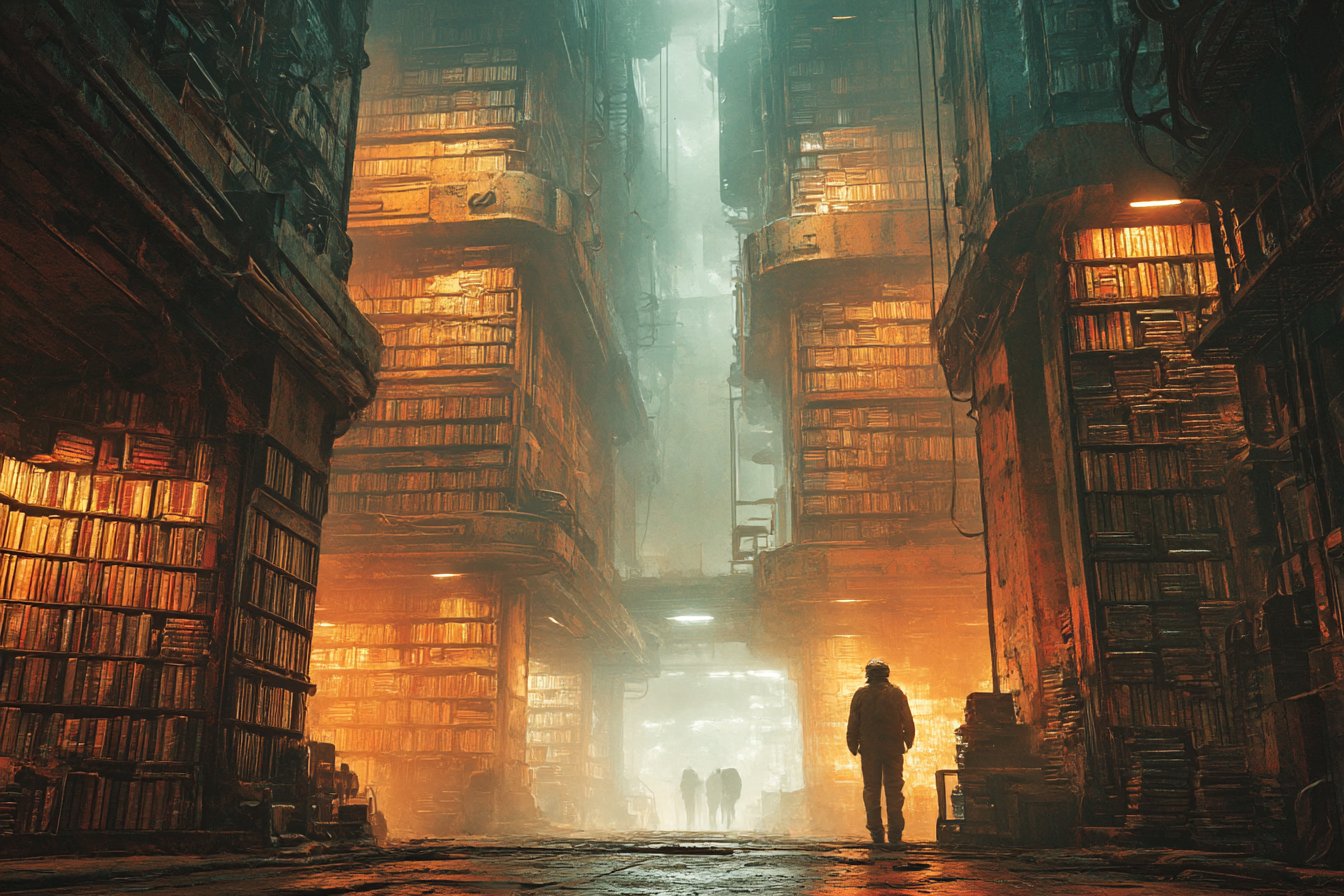

Last month I picked up a book from a charity shop bin that made me sit in the car for twenty minutes after reading just the first chapter. Not because it was bad — quite the opposite. The prose was tight, the world-building felt lived-in rather than constructed, and the central question about memory and identity genuinely unsettled me. I'd never heard of the author before. When I got home and searched online, I found maybe three reviews and a single interview from 2018.
That's the thing about science fiction publishing these days — everyone talks about the same handful of blockbuster releases while genuinely brilliant work gets shuffled to the side. I'm not talking about hidden gems that are secretly terrible (we've all been burned by breathless recommendations that turned out to be style over substance).
I mean books that tackle big ideas with skill and care but somehow never found their audience.
Take *The Prey of Gods* by Nicky Drayden. This thing bounces between AI consciousness, genetic manipulation, and South African mythology with the kind of energy that should have had book clubs arguing for months. Drayden doesn't just throw concepts at the wall — she builds a world where ancient gods wake up to find themselves competing with artificial intelligences for relevance. The teenagers in the story feel like actual teenagers, not forty-year-old writers pretending to remember what being seventeen was like. When I finished it, I immediately wanted to discuss it with someone, but good luck finding anyone who's read it.
Or consider *Radiance* by Catherynne Valente. Here's a book that reimagines the golden age of Hollywood but sets it in a solar system where every planet is habitable. It's told through a mix of film treatments, radio transcripts, and traditional narrative — sounds gimmicky, right? But Valente pulls it off because she understands that form should serve story, not dominate it. The mystery at the center (what happened to a missing documentary filmmaker on Venus) genuinely matters, and the worldbuilding details feel researched rather than invented. The book won awards, sure, but I've met exactly two people in person who've actually read it.
Sometimes the problem is timing. *Station Eleven* by Emily St. John Mandel became a pandemic reading sensation, but years earlier, *The Windup Girl* by Paolo Bacigalupi was exploring similar themes of societal collapse and human adaptation with arguably more scientific rigor. Bacigalupi's vision of a future dominated by genetic modification and energy scarcity feels more plausible every year, but it never reached the cultural saturation point that Mandel's book achieved. Maybe it was too grim, too technical, too willing to show us futures we'd rather not think about.

Then there are books that suffer from genre confusion. *The Power* by Naomi Alderman got plenty of attention, but *Parable of the Sower* by Octavia Butler — which covers similar ground about women claiming agency in hostile worlds — still feels criminally underread. Butler wrote with a physicist's attention to cause and effect: her future California, ravaged by climate change and economic collapse, doesn't feel sensationalized or melodramatic. It feels inevitable. Maybe that's why people avoid it.
You Might Also Like

I've been thinking about this a lot lately, especially after trying to recommend books to my nephew (he's fifteen and just getting interested in sci-fi beyond the obvious blockbusters). When I mentioned *The Goblin Emperor* by Katherine Addison, he looked at me like I'd suggested homework. But that book manages to be both a fantasy court intrigue and a meditation on kindness in positions of power. It's the rare novel that asks: what if the good person actually got the throne? What if competence and empathy weren't mutually exclusive? Those aren't small questions.
Part of the problem is marketing, obviously. Publishers dump money behind books they think will be the next *Hunger Games* or *Ready Player One*, while quieter, more thoughtful work gets lost in the shuffle. But I think there's something else going on too. Science fiction readers, myself included, sometimes get caught up in the spectacle — the bigger the spaceship, the more complex the time travel mechanics, the more attention a book gets. We overlook stories that are content to explore one or two ideas really well.
*The Left Hand of Darkness* remains Ursula K. Le Guin's most famous work, and rightfully so, but her later novel *The Dispossessed* might actually be more relevant today. It's about a physicist trying to bridge two worlds — one capitalist, one anarchist — and the personal cost of that kind of idealism. Le Guin doesn't stack the deck; both societies have genuine advantages and serious flaws. The book trusts readers to think through the implications rather than spelling everything out.

Same with *The Handmaid's Tale* versus *Parable of the Talents* (Butler again). Everyone knows Atwood's dystopia, but Butler's sequel to *Parable of the Sower* explores similar themes of religious extremism and authoritarian control with more attention to how these systems actually emerge and sustain themselves. Butler was writing about charismatic leaders using crisis to consolidate power decades before we had daily examples on the news.
I'm not trying to be contrarian here — popular books become popular for reasons, and many of them deserve their success.
But the sci-fi conversation feels narrower than it should be. We're missing out on books that could change how we think about artificial intelligence, climate adaptation, genetic modification, space exploration, human consciousness. Instead we get the same handful of authors recommended over and over while writers like Becky Chambers (*A Closed and Common Orbit*), Martha Wells (*All Systems Red*), and Jeff VanderMeer (*Borne*) build devoted but small followings.
Maybe that's just how publishing works — most books find their readers eventually, even if it takes decades. Butler's *Parable* books are finally getting the attention they deserved twenty years ago. Le Guin's *The Dispossessed* keeps finding new generations of readers. But I can't help feeling we're losing something when brilliant work gets overlooked in favor of what's loudest or most marketable.
Next time you're browsing for something to read, try looking past the front tables and bestseller lists. Check out books that won awards you've never heard of, or ask independent bookstore staff what they've been excited about lately. Some of the best sci-fi being written today is hiding in plain sight.

0 Comments