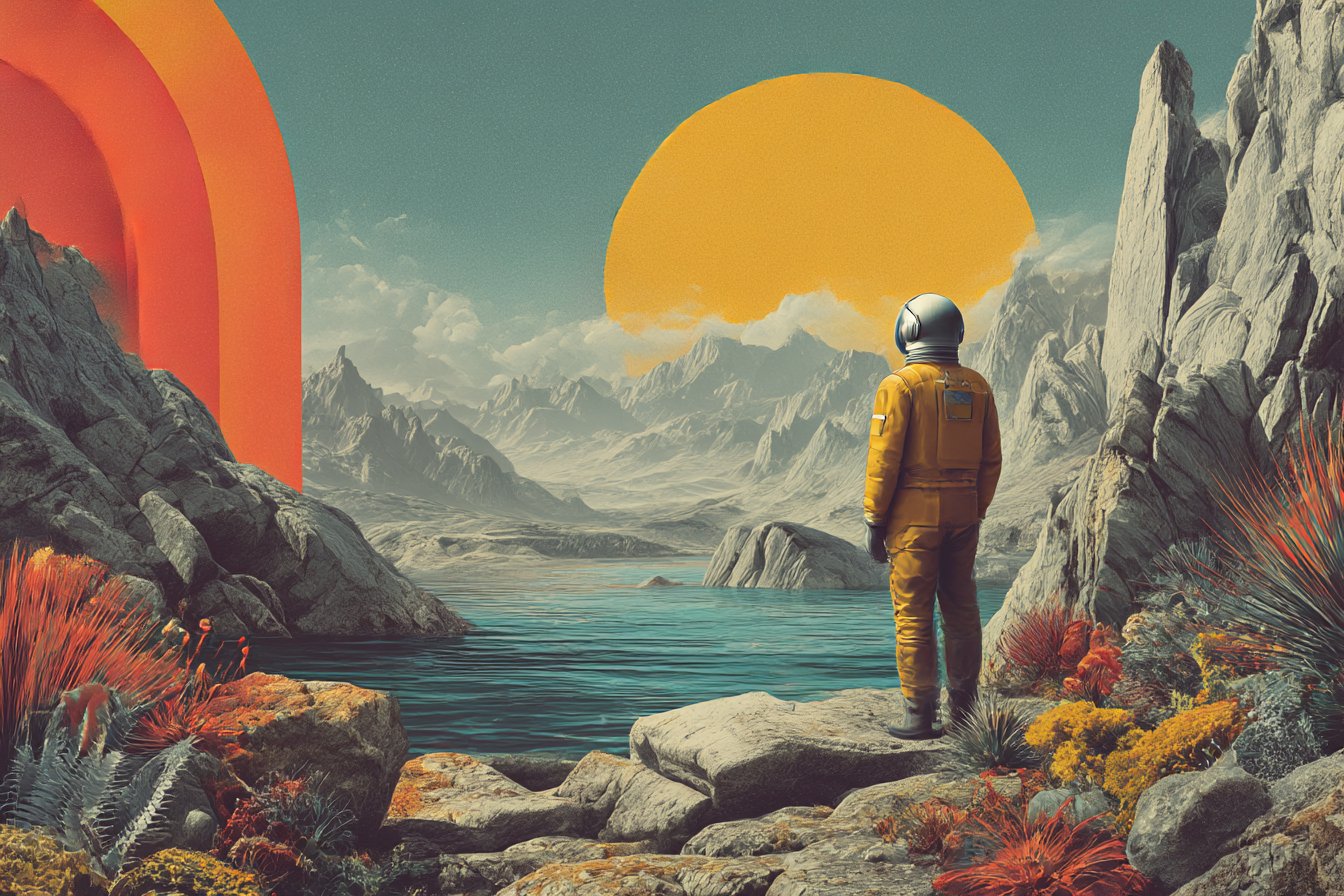

You know that feeling when you pick up a book from 1953 and suddenly get the uncomfortable sensation that the author was somehow peering directly into your smartphone screen? I get it constantly with older sci-fi. Last week I was rereading Ray Bradbury’s “Fahrenheit 451,” and there’s this scene where Mildred is completely absorbed by her wall-sized TV screens, wearing little radio earbuds, essentially living in a bubble of personalized entertainment. I put the book down and looked around my living room — at my 65-inch display, my wireless earbuds charging on the coffee table, my tablet propped against a cushion. The man wrote this in 1953. Fifty-three!
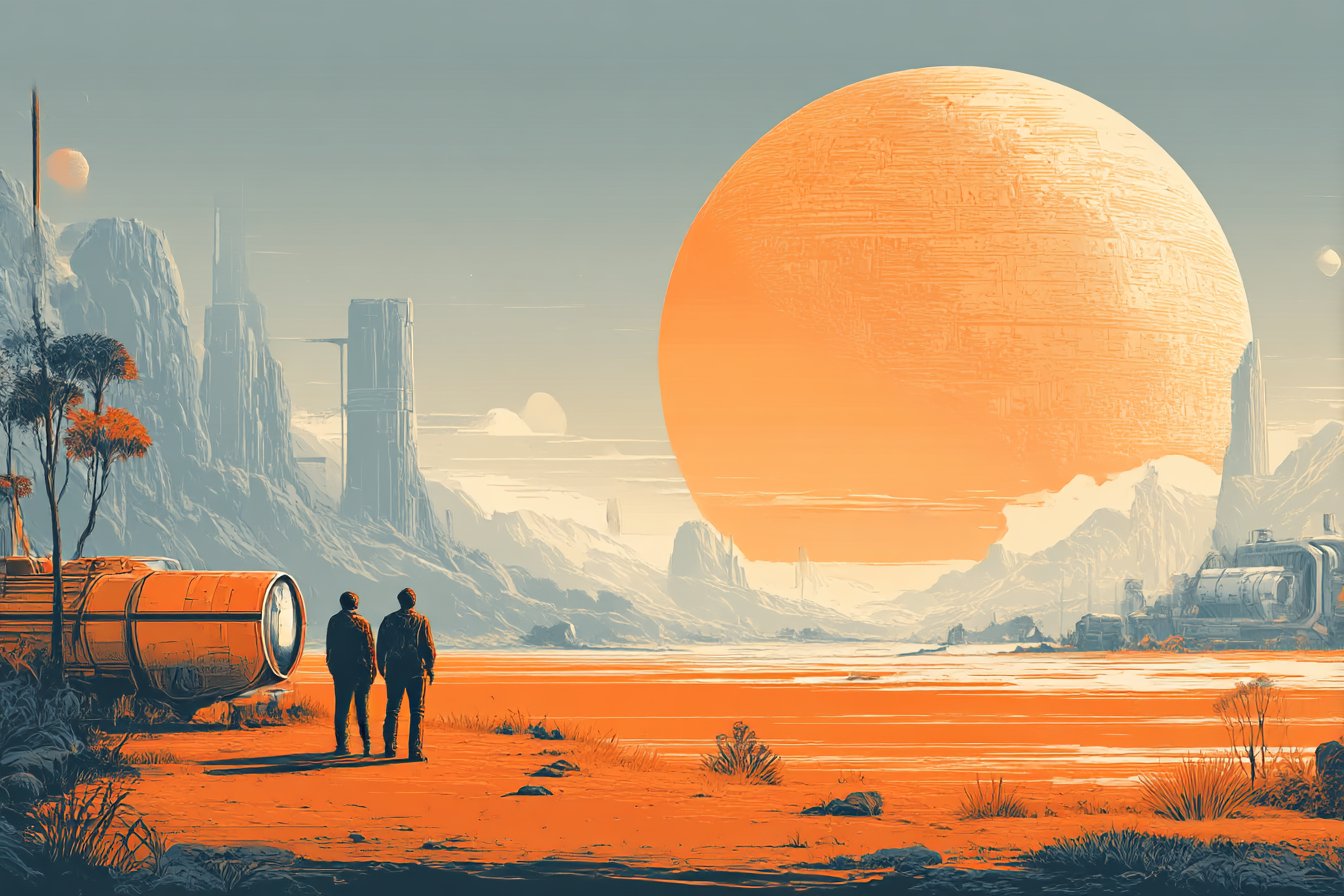
It’s unsettling how often this happens. Not just with the obvious tech predictions (though those are impressive enough), but with the deeper currents — the social dynamics, the psychological changes, the weird ways technology reshapes how we think and feel. Some of these authors seem to have had a direct line to our current moment, and honestly, it makes me wonder what they saw that we’re still missing.
Take Philip K. Dick’s “Do Androids Dream of Electric Sheep?” Sure, everyone knows it inspired “Blade Runner,” but when I reread it recently, what struck me wasn’t the replicants or the flying cars. It was Dick’s obsession with authenticity — what’s real versus what’s manufactured, and how hard it becomes to tell the difference. The protagonist literally owns a fake animal because real ones are too expensive after an ecological collapse, and he’s deeply ashamed about it. Meanwhile, I’m sitting here with my synthetic wood desk, my plant-based meat in the fridge, and my carefully curated social media feed that’s about 30% authentic me and 70% aspirational version. Dick nailed something about how we’d all become performers in our own lives.
But here’s what really gets me: it’s not just that these authors predicted our gadgets. They predicted our anxieties. When I first read Isaac Asimov’s robot stories as a teenager, I thought they were about robots. They’re not. They’re about unemployment, about obsolescence, about the fear that we’ll create something that makes us irrelevant. Sound familiar? Every conversation I have about AI these days circles back to the same questions Asimov was wrestling with in the 1940s. Will our creations protect us or replace us? How do we maintain control over systems smarter than we are? What happens to human dignity when machines can do everything we can do, but better?
I remember trying to explain to my dad why ChatGPT made me nervous, and I ended up just lending him “I, Robot.” He came back a week later, looking slightly shaken. “This guy figured it out seventy years ago, didn’t he?”
Then there’s Ursula K. Le Guin, who somehow managed to write “The Dispossessed” in 1974 and capture exactly what it would feel like to live through climate anxiety, wealth inequality, and social media outrage cycles all at once. Her anarchist physicist protagonist bounces between two worlds — one a capitalist society choking on its own excess, the other a communist utopia that’s become rigid and stifling. Neither works perfectly, and the tension between them feels precisely like scrolling through Twitter while trying to figure out how to save the planet without giving up everything that makes life comfortable.
You Might Also Like

The scary part isn’t that these writers got the technology right. It’s that they understood the human part so clearly. J.G. Ballard wrote about people becoming psychologically dependent on car crashes and shopping malls decades before we had any evidence that dopamine hits from consumption and conflict could literally rewire our brains. William Gibson coined “cyberspace” before most people owned computers, but more importantly, he understood that we’d all become slightly split personalities — part physical being, part digital avatar — and that the boundary between those selves would blur until we couldn’t quite remember which one was real.
I’ve been thinking about this a lot lately because I keep meeting people who seem to live exclusively in science fiction premises without realizing it. My neighbor works from home in virtual reality, attending meetings as a cartoon version of himself. My sister’s boyfriend is developing apps that use machine learning to predict what you want to buy before you know you want it. My cousin just got a job at a company that’s trying to grow human organs in laboratories. These would have been the wildest flights of imagination fifty years ago. Now they’re Tuesday.
What strikes me most about the truly prescient sci-fi isn’t the stuff that got the details right — though that’s fun to notice. It’s the emotional accuracy. Kurt Vonnegut wrote about the psychological toll of living through constant technological change, and how people would cope by retreating into increasingly elaborate forms of denial and black humor. Look around. Check any news site, any social media feed. We’re all living in a Vonnegut novel now, making jokes about the apocalypse while ordering takeout through an app.
Maybe that’s why I keep coming back to these books. They don’t just predict our future — they help us understand our present. When I read Octavia Butler’s “Parable of the Sower,” I see climate refugees and wealth inequality, sure, but I also see a manual for psychological survival in chaotic times.
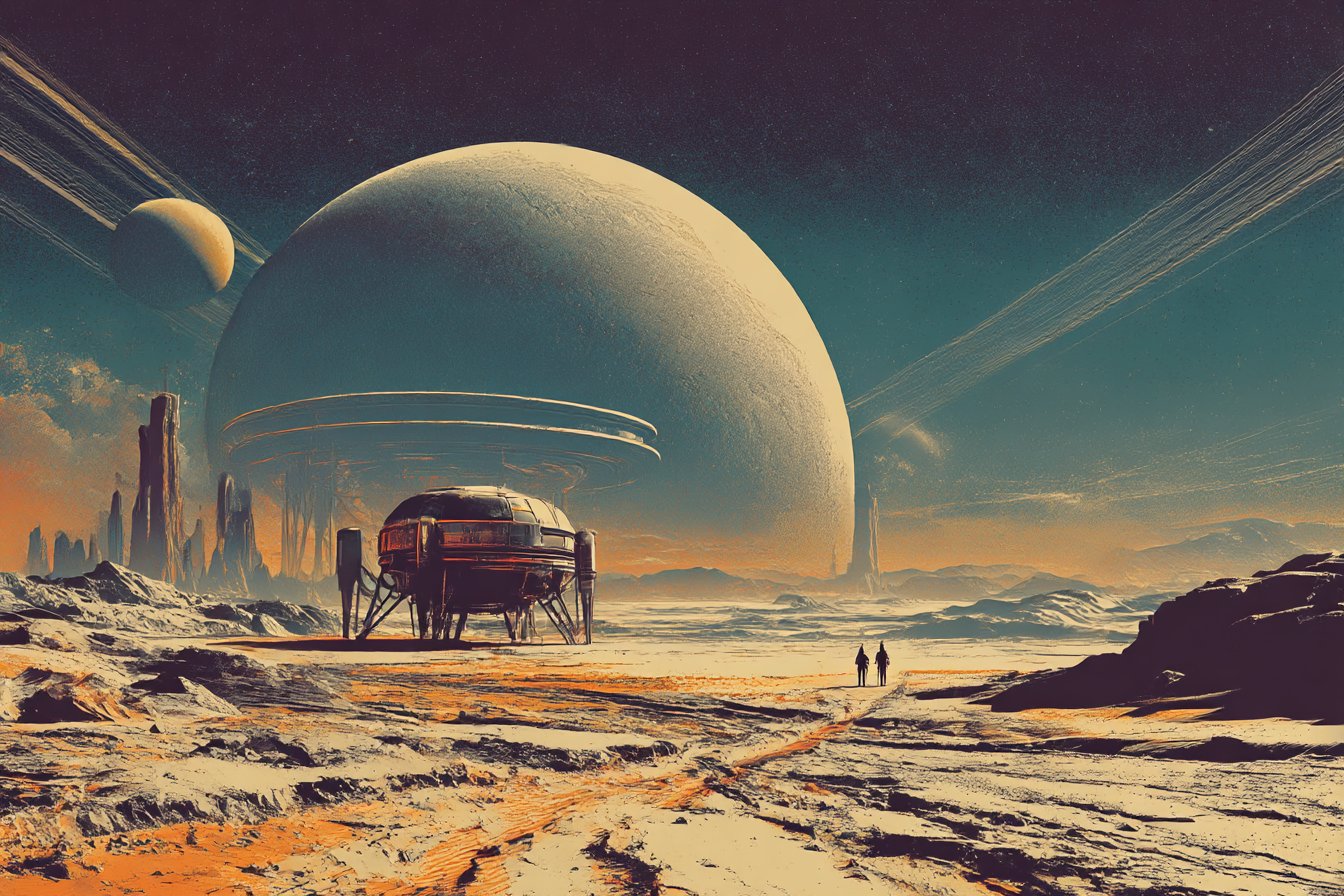
When I revisit Arthur C. Clarke’s “2001,” I’m not just thinking about HAL’s malfunction — I’m thinking about how we design systems we can’t fully understand or control, and what happens when they start making decisions for us.
The really unnerving thing is that most of these authors weren’t trying to predict anything. They were just paying attention — to human nature, to social patterns, to the logical consequences of the changes they could already see beginning. Which makes me wonder: what are we not noticing now? What patterns are already emerging that someone, somewhere, is quietly writing down in a notebook, building into a story that will seem impossibly prophetic fifty years from now?
Sometimes I think the best science fiction isn’t about the future at all. It’s about right now, just tilted sideways enough that we can finally see it clearly.

0 Comments