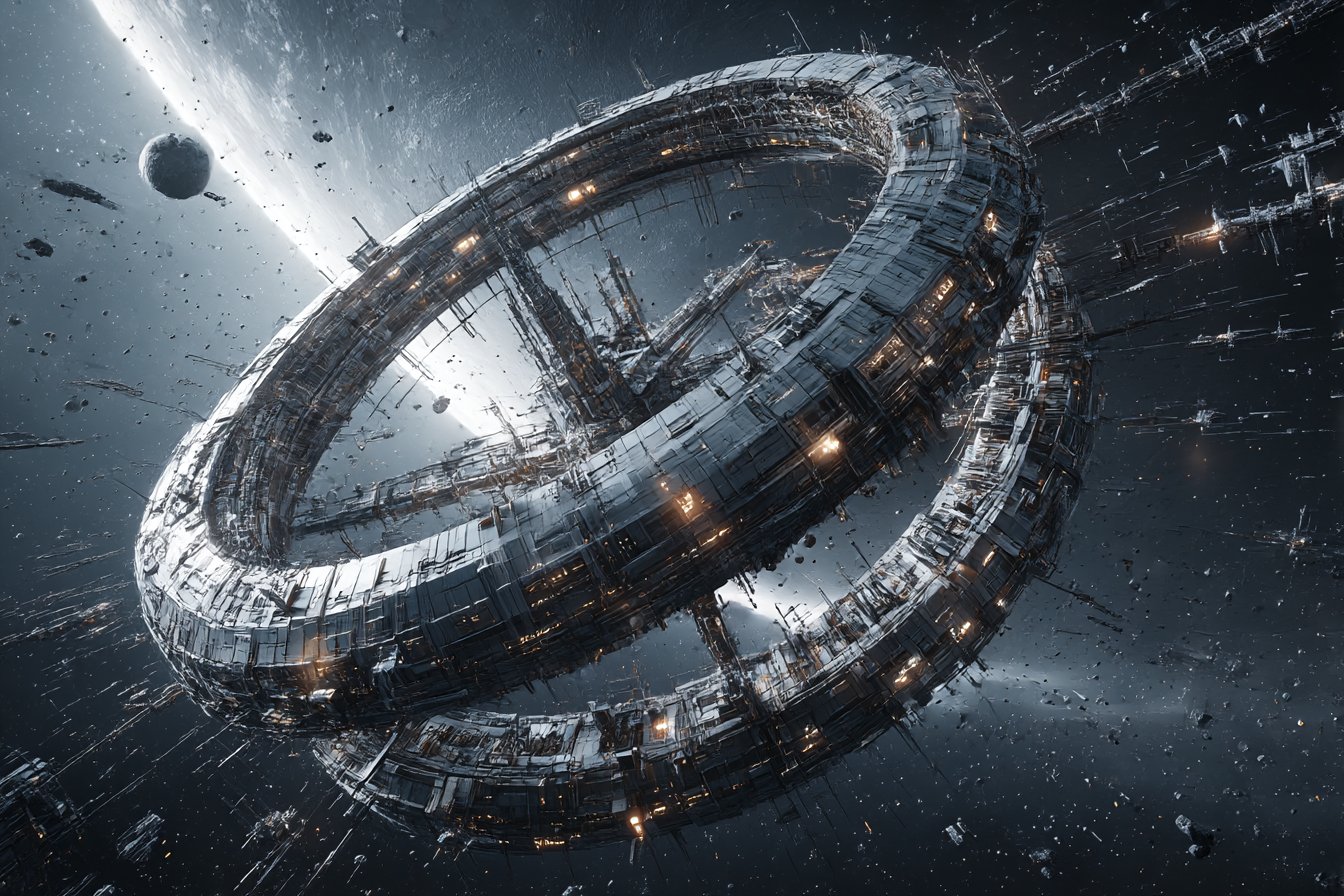

Have you ever tried explaining to someone why you care so much about fictional places that don’t actually exist? I was having coffee with my neighbor last week when she asked what I’d been working on lately, and I found myself describing the atmospheric processors on Sevastopol Station from *Alien: Isolation* with way too much enthusiasm. She gave me that look — the one that says “you know this isn’t real, right?”
But here’s the thing: those fictional spaces *are* real in the ways that matter most. They shape how we think about isolation, community, survival, and what it means to call somewhere home when home is a metal cylinder spinning through the void.
I’ve spent the better part of fifteen years studying how writers transform space stations from mere settings into living, breathing worlds. It started during my physics degree when I got obsessed with the practicalities — how would artificial gravity actually feel?
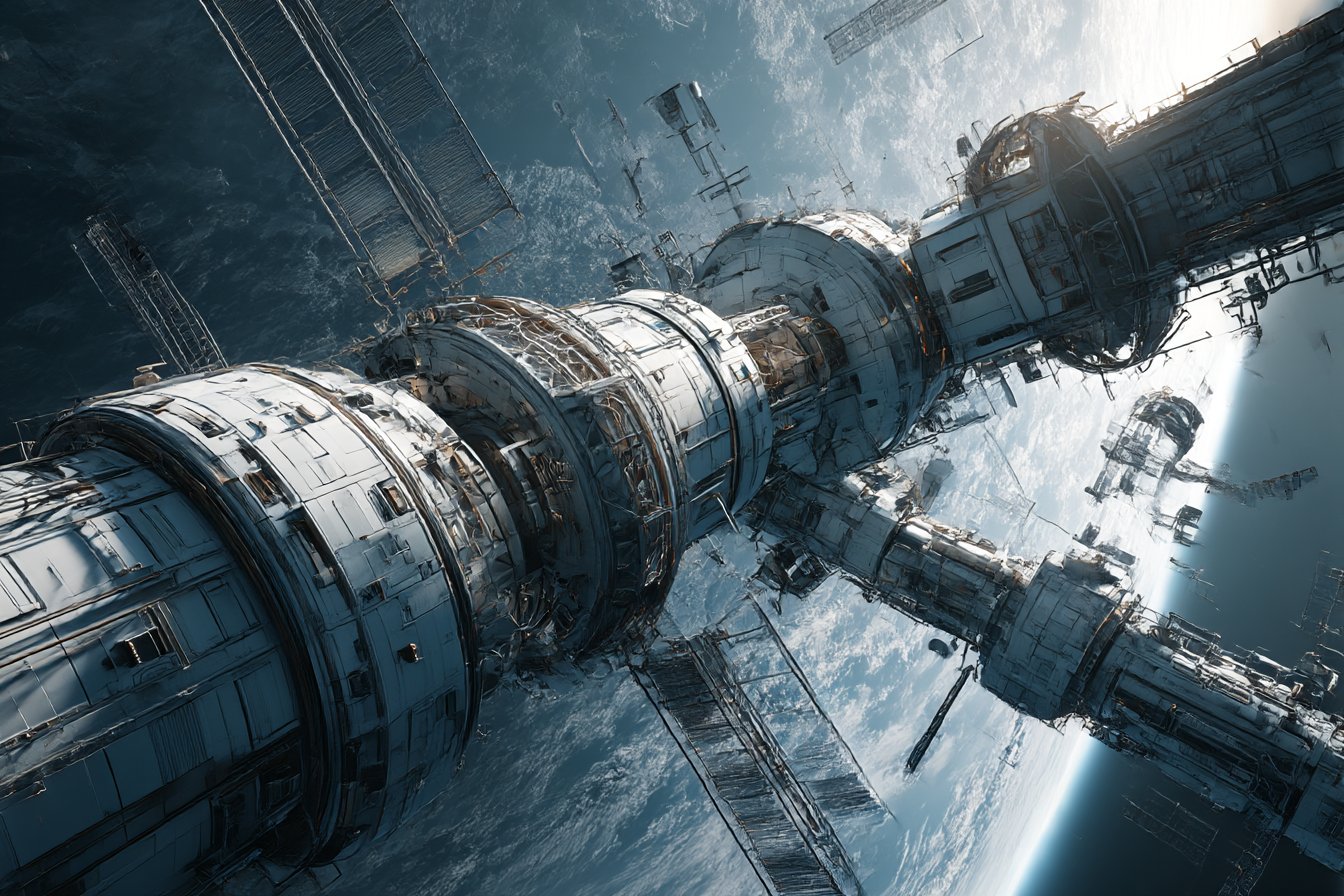
What would the air smell like after six months of recycling? But it quickly became about something deeper: how do you make readers believe that people could live, love, fight, and die in these impossible places?
The best sci-fi space stations aren’t just backdrops. They’re characters in their own right, with personalities shaped by their creators’ choices about six crucial elements that I’ve come to think of as the building blocks of believable orbital worlds.
Environment is where everything starts. I remember reading Kim Stanley Robinson’s *Aurora* and being struck by how he described the ship’s biomes — not just as pretty gardens in space, but as complex ecosystems with their own weather patterns, soil chemistry, and seasonal cycles. The station’s environment isn’t just life support; it’s home. Writers who get this right understand that humans don’t just need oxygen and water. We need the smell of rain, the feel of wind, the sound of leaves rustling. Even if that wind is generated by circulation fans and those leaves are genetically modified to thrive under LED arrays.
The most convincing space stations have environmental quirks that residents take for granted but visitors find unsettling. Maybe the artificial day-night cycle runs on a 26-hour rhythm that leaves newcomers perpetually jet-lagged. Perhaps there’s a section where the gravity generators create a slight shimmer in the air, or corridors that echo differently because of the station’s unusual hull composition. These details don’t need elaborate scientific explanations — they just need to feel consistent and lived-in.
Society grows naturally from environment. When you can’t just walk outside and breathe, when every calorie and every drop of water has to be carefully managed, social structures adapt. The societies I find most compelling in space fiction aren’t just Earth cultures transplanted to orbit — they’re something new, shaped by the unique pressures of closed-system living.
Take Becky Chambers’ *A Closed and Common Orbit*. The way she describes daily life aboard ships and stations feels authentic because she understands that scarcity breeds cooperation in some areas and fierce competition in others. Who gets the hydroponics bay with the best light spectrum? How do you handle noise complaints when thin walls are all that separate you from your neighbors? What happens to privacy when everyone’s survival depends on monitoring each other’s health and behavior?
You Might Also Like

Conflict in space stations isn’t just about external threats — though those certainly matter. The most gripping station-based stories I’ve read understand that the greatest tensions often come from within. Resources might be scarce, leading to rationing disputes or black markets. Ideological differences get magnified when you can’t escape the people who disagree with you. Personal grudges fester in closed quarters. Equipment failures become life-or-death emergencies that test everyone’s priorities.
I tried modeling this once in a tabletop RPG campaign I ran. Within three sessions, my players had created their own informal economy based on coffee rations and developed an elaborate social hierarchy around who got assigned to EVA duty. They didn’t need alien invasions or system malfunctions to generate drama — the station itself provided enough friction to drive months of stories.
Resource management is where the rubber meets the vacuum. Every successful space station story I’ve analyzed has some form of “the conversation” — that moment when characters have to confront the mathematics of survival. How much food do we really have? Can we stretch the water reclamation system another six months? What happens if the hydroponic yields drop by just ten percent?
These aren’t just plot devices; they’re world-building tools. When Martha Wells writes about Preservation Station in her Murderbot Diaries, she doesn’t overwhelm us with technical specifications, but she drops in enough details about power consumption, air recycling, and manufacturing capacity that the station feels like a real place with real limitations. The technology serves the story, not the other way around.
Isolation might be the most psychologically complex element. It’s not just about being far from Earth — though that certainly matters. It’s about what happens to human nature when you can see the entire scope of your world from any observation deck. Some writers explore this through claustrophobia and cabin fever. Others focus on how isolation breeds both intense community bonds and devastating betrayals.
The stations that stick with me aren’t necessarily the biggest or most technologically advanced. They’re the ones where I can imagine what it would feel like to wake up each morning, look out a porthole at the star field, and know that this metal bubble contains everyone and everything you’ll interact with for months or years to come.
Technology in the best space station fiction isn’t just gadgetry — it’s the invisible foundation that makes everything else possible. The artificial gravity isn’t just convenient; it shapes architecture, social spaces, and even combat. The communication systems determine whether the station feels connected to the wider universe or utterly alone.
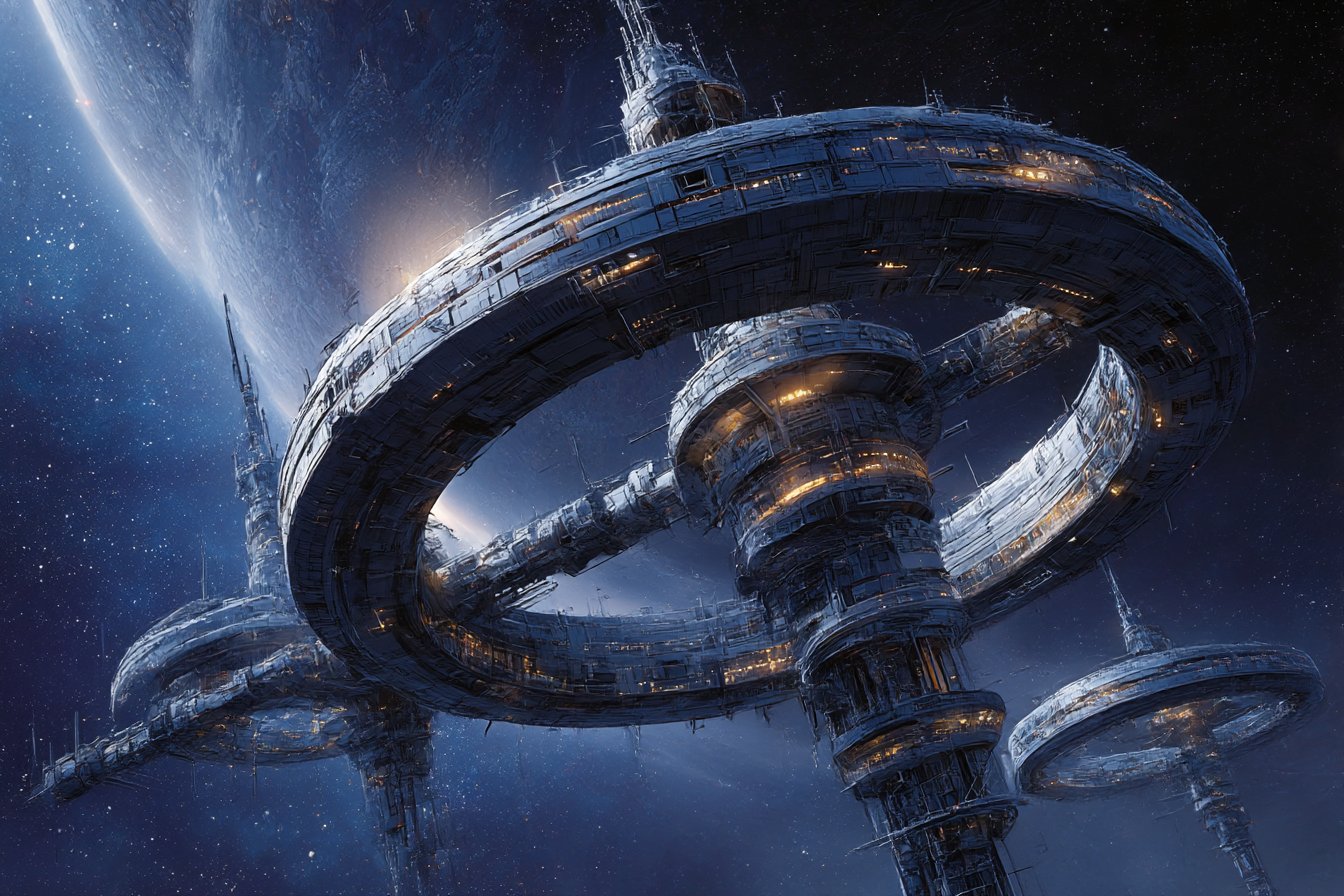
Life support systems influence everything from social hierarchy (who controls the oxygen?) to daily rituals (why does everyone gather in hydroponics during third shift?).
What I love most about well-crafted space station worlds is how all these elements interact. Environmental stress creates social tension. Resource scarcity drives technological innovation. Isolation amplifies both conflict and community. Technology enables new forms of society, which in turn reshape how humans relate to their environment.
These aren’t just cool places to visit in our imaginations. They’re laboratories for exploring what we might become when we finally do build homes among the stars.

0 Comments