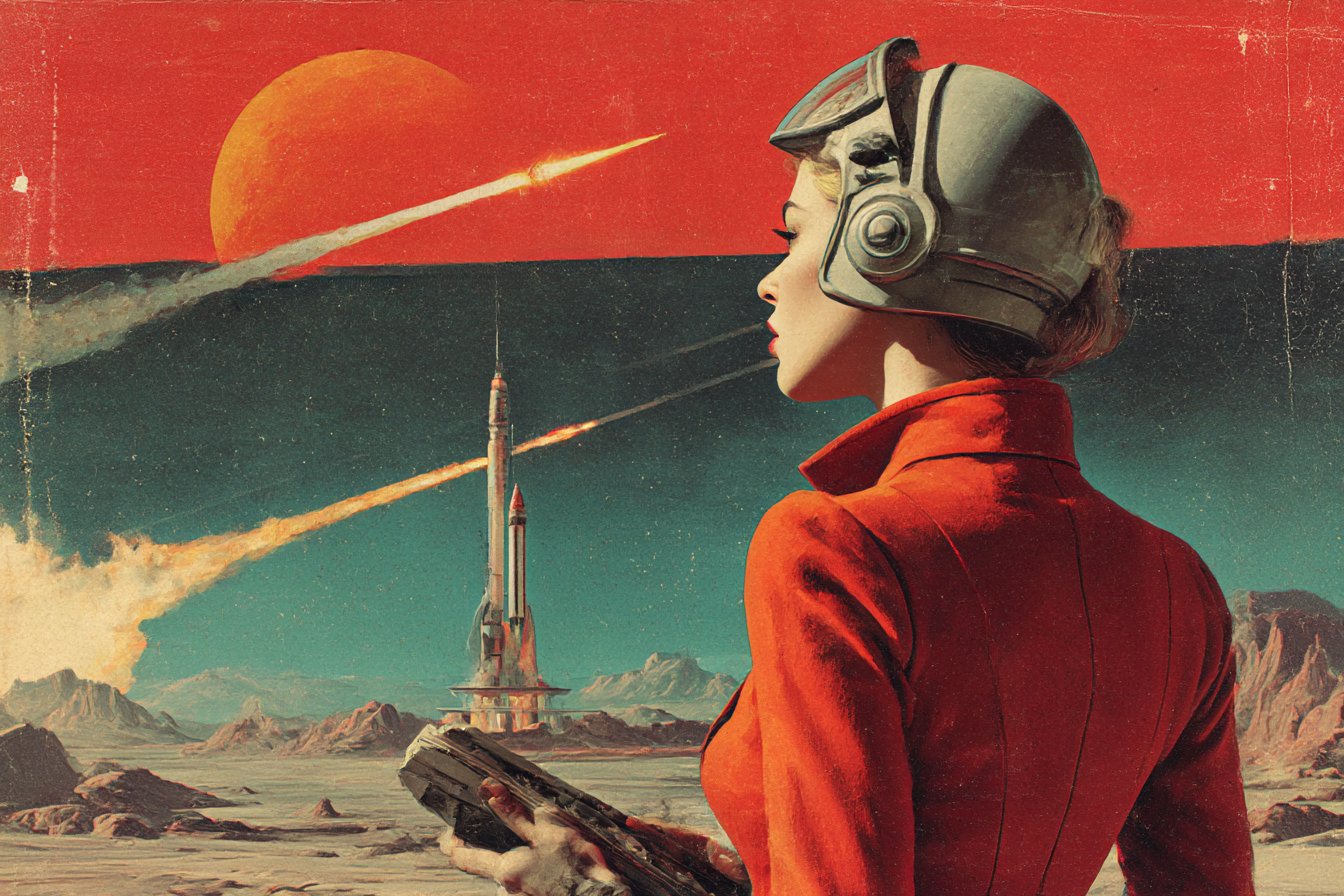

There’s this moment that happens sometimes — you close a book, set it down on your nightstand, and instead of reaching for your phone or checking the time, you just… sit there. The world of the story hasn’t quite released you yet. Your bedroom looks the same, but something feels different. Maybe it’s the way light hits your curtains, or how the hum of your refrigerator suddenly sounds more significant. That’s when you know you’ve read something that’s going to stick around in your head for months, maybe years.
I’ve been chasing that feeling since I was twelve, digging through those musty paperback bins at library sales in Crowthorne.
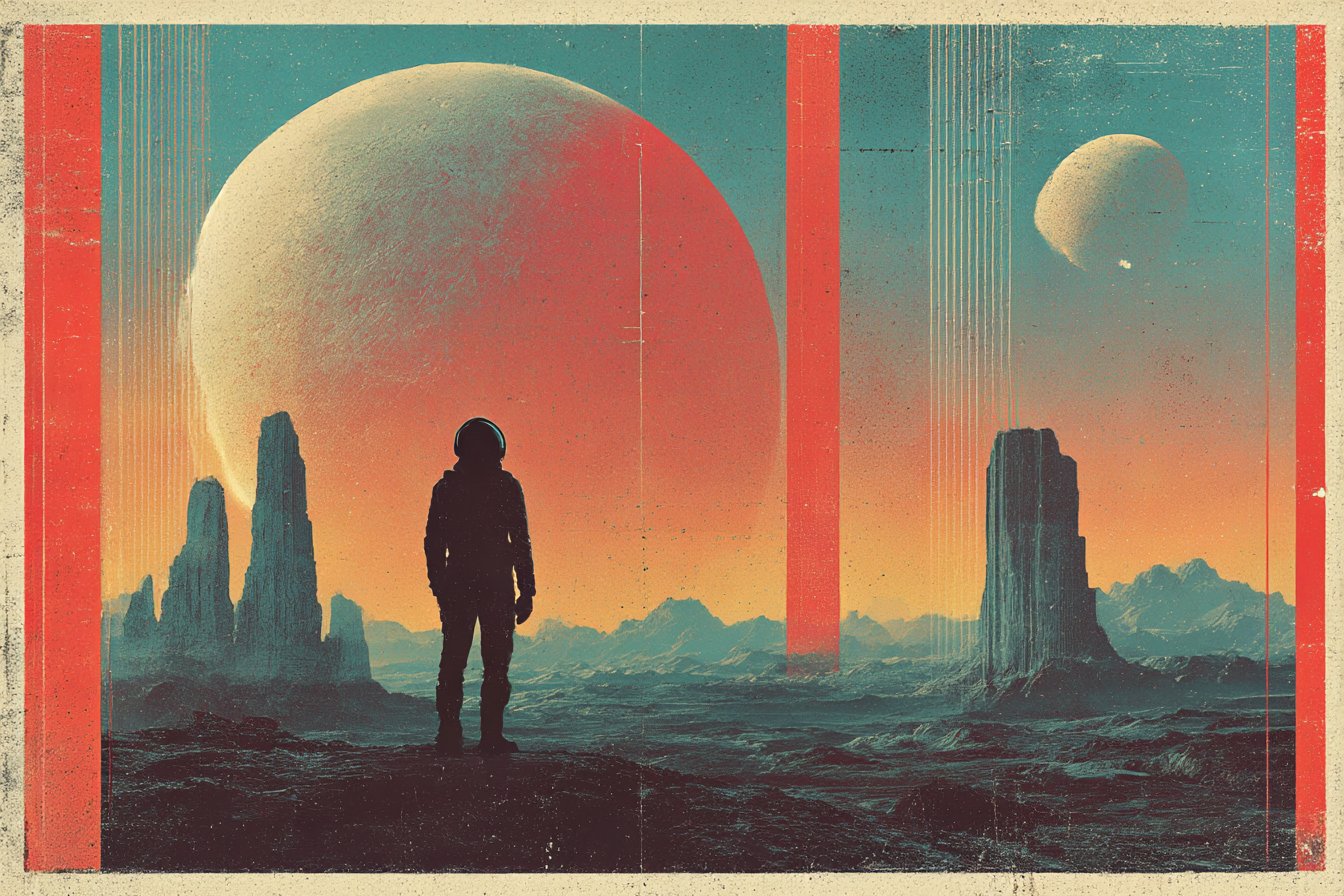
My sister would roll her eyes watching me stuff another carrier bag with books that had covers featuring chrome spaceships and women in impractical armor. “You’re going to run out of shelf space,” she’d say, which turned out to be prophetic — I’ve got stacks on my bedroom floor now.
But what is it exactly that makes certain sci-fi stories burrow into your brain and set up permanent residence? I’ve been turning this question over for years, especially when I’m writing reviews or talking to other readers who describe the same phenomenon. It’s not always the biggest, flashiest concepts that do it. Sometimes it’s the quiet ones that get you.
Take Philip K. Dick’s “We Can Remember It for You Wholesale” — you probably know it better as the basis for Total Recall. Sure, the memory implants and Mars colonies are cool, but what haunts you afterward is that crushing doubt about your own experiences. Did that awkward conversation with your neighbor actually happen, or did you just think it did? Dick had this talent for making the ordinary feel unstable, like the ground might shift under your feet at any moment.
Or consider Ursula K. Le Guin’s “The Ones Who Walk Away from Omelas.” There’s barely any traditional sci-fi in it — no spaceships, no robots, no aliens. Just a utopian city with one horrible secret. But that story rewires how you think about collective happiness and moral compromise. I can’t walk through a particularly pleasant neighborhood without wondering what’s hidden in the basement.
The stories that really stick tend to have this quality of making you complicit somehow. They don’t just show you something strange — they force you to consider what you’d do in that situation. Would you walk away from Omelas? Would you choose to have your memories erased? Would you trust an AI that claimed to love you?
I noticed this pattern when I was working on that game-modding project I mentioned before. We were designing the interior of an abandoned space station, trying to make players feel genuinely unsettled rather than just jump-scared. The most effective elements weren’t the obvious horror beats — they were the small details that suggested human choices. A coffee mug left half-full on a control panel. Personal photos taped to a bulkhead. A handwritten note saying “Check ventilation system — strange noise in sector 7.”
You Might Also Like

These tiny details worked because they implied stories. Someone had lived there, made decisions, worried about things. When that someone disappeared, their choices became yours. Do you investigate sector 7? Do you trust the emergency protocols? The game made you responsible for continuing someone else’s story, and that responsibility lingered long after you’d logged off.
The best lasting sci-fi works similarly. It doesn’t just present you with a what-if scenario — it makes you inhabit it emotionally. Think about how Ray Bradbury’s “There Will Come Soft Rains” sticks with you. It’s not because of the automated house (though that’s brilliantly done). It’s because you start to imagine yourself in that house, going through your daily routines while the world has ended around you. The story makes you feel the weight of continuation, of systems persisting after their purpose has vanished.
Sometimes the staying power comes from a single image that crystallizes a larger idea. In J.G. Ballard’s “The Terminal Beach,” it’s the image of a man living alone among atomic test sites, surrounded by the geometric patterns of blast damage. That image carries so much meaning about isolation, about the aesthetics of destruction, about how we adapt to the unthinkable. Years later, you’ll see a brutalist building or a bombed-out photograph and think of that story.
Other times, it’s the moral weight that won’t let go. I remember reading Liu Cixin’s “The Dark Forest” and being completely shaken by the idea that revealing your location to the universe might be an act of species suicide. It’s a concept that makes you look at SETI projects differently, makes you wonder about the ethics of sending signals into space. The story plants this seed of cosmic paranoia that grows every time you see news about detecting exoplanets or potential alien signals.
The characters matter too, but not always in the way you’d expect. The most memorable sci-fi characters aren’t necessarily the most likeable or heroic — they’re the ones who feel genuinely human while making impossible choices. Take the protagonist of Ted Chiang’s “Story of Your Life” (which became the movie Arrival). She’s not particularly extraordinary, but she faces an extraordinary decision about foreknowledge and free will.
Her very ordinariness makes her choice feel real, makes you wonder what you’d do with the same terrible gift.
What strikes me is how these lasting stories often work by making the fantastic feel inevitable. The best sci-fi doesn’t just ask “what if?” — it asks “what then?” and “what next?” and “what would that cost?” They follow their premises through to emotionally honest conclusions, even when those conclusions are uncomfortable.
I keep coming back to this idea that lasting sci-fi changes how you see the world around you. It gives you new categories for understanding experience, new metaphors for describing feelings you couldn’t quite name before. That’s the real test of whether a story will stick with you — not whether you enjoyed it in the moment, but whether it becomes part of your mental toolkit for making sense of life.
And maybe that’s enough philosophy for one evening. Time to see what’s waiting for me in that stack of books by my bed.

0 Comments