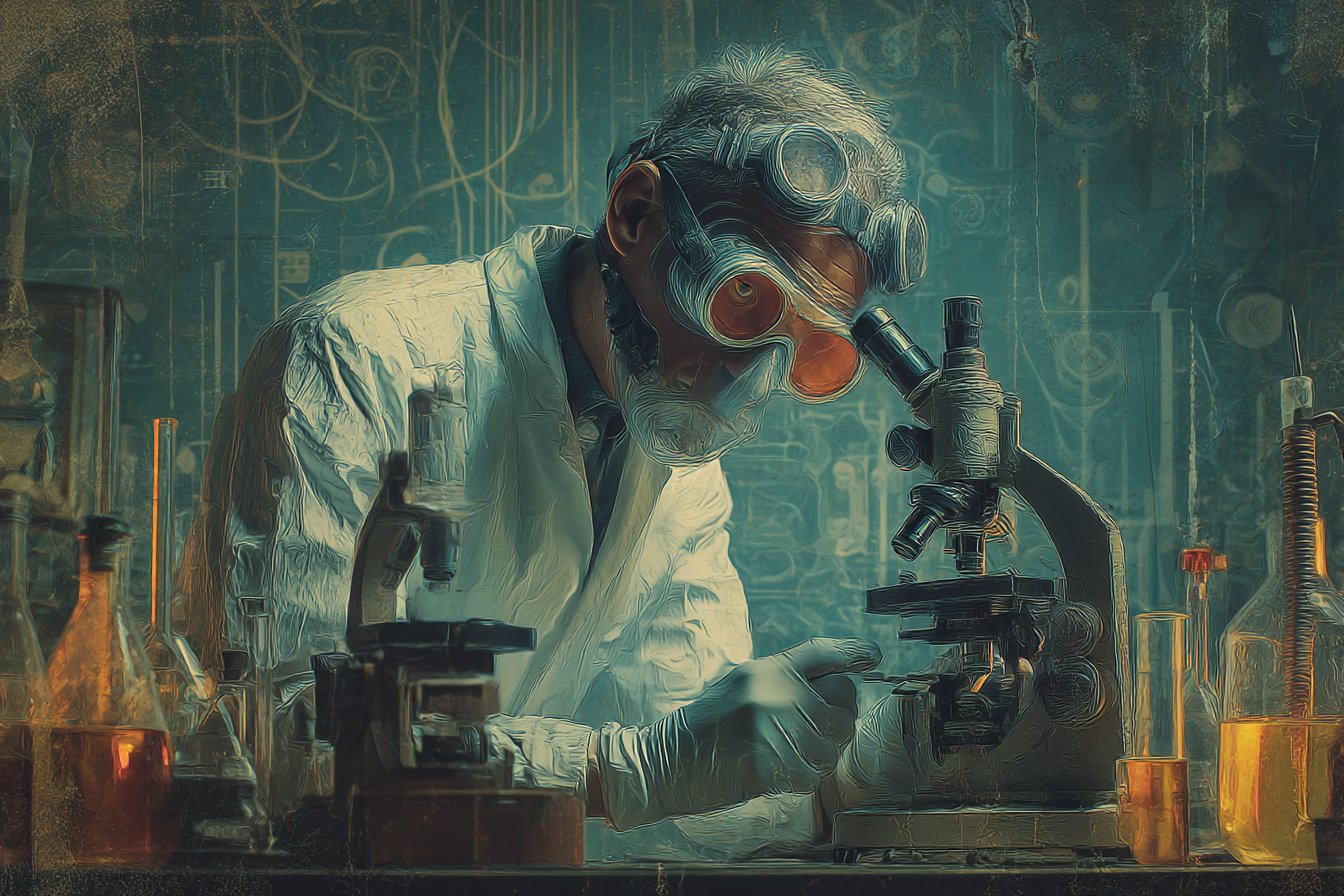

Have you ever noticed how many sci-fi stories hinge on one particular character type? I’m talking about the scientist — not just any scientist, but that specific archetype who shows up again and again, wielding knowledge like a double-edged sword. They’re the ones making breakthroughs that change everything, usually while wrestling with whether they should.
I first spotted this pattern during my physics degree, when I’d take breaks from thermodynamics homework to watch old B-movies. There was always that moment: the lab-coated figure staring at their creation, realizing they’d gone too far. Dr.
Frankenstein. Dr. Jekyll. Dr. Moreau. Even the names sound similar, don’t they? But it wasn’t just the classics — this character kept appearing in everything from *Jurassic Park* to *Ex Machina*, from *Interstellar* to *Arrival*.
What struck me wasn’t just their presence, but how they functioned in these stories. They’re rarely the traditional hero charging into battle. Instead, they’re the person who opens the door — sometimes literally — to whatever strange new world the story explores. They create the time machine, decode the alien signal, or splice the DNA that brings dinosaurs back. They’re the catalyst.
Working in that electronics shop taught me something important about how people relate to technology. Customers would come in asking about the latest gadgets, but what they really wanted was someone to explain how it worked. Not the technical specs — they wanted to understand the *why* behind it. “What does this actually do for me?” they’d ask. The scientist character serves a similar function in stories. They’re our guide into the impossible.
But here’s what makes them fascinating: they embody our complicated relationship with knowledge itself. We want to know everything, to push boundaries, to see what’s beyond the next discovery. Yet we’re also terrified of the consequences. The scientist character lets writers explore both sides of this tension. They can be the hero who saves humanity through cleverness, or the villain whose curiosity dooms everyone. Sometimes they’re both in the same story.
Take Louise Banks from *Arrival*. She’s a linguist, not a lab scientist, but she fits the archetype perfectly. Her expertise becomes the key to understanding the aliens, but the knowledge comes with a terrible personal cost — she learns her future, including the death of her daughter. The story uses her character to ask whether some knowledge is too dangerous to possess. Would you want to know your own future if you couldn’t change it?
I’ve been thinking about this a lot while working on my space station project. When I’m trying to figure out how artificial gravity would actually feel, or what the air might smell like after months of recycling, I realize I’m basically playing the scientist role myself. I’m the one asking “what if” and then trying to work out the implications. It’s intoxicating, honestly. Each answer leads to ten new questions.
The scientist archetype works because they represent our best and worst impulses simultaneously. They’re driven by curiosity — arguably the most human trait we have — but they’re also often isolated by their knowledge. Dr. Manhattan in *Watchmen* becomes so powerful he loses touch with humanity entirely. The mathematicians in *Contact* can prove alien intelligence exists, but most people won’t believe them. Knowledge becomes both a gift and a burden.
You Might Also Like

What’s changed in modern sci-fi is how we use this character. The old stories often painted them as mad scientists or lone geniuses. Now they’re more likely to be part of teams, dealing with ethics committees and corporate oversight. The new *Planet of the Apes* films show this beautifully — the scientists aren’t evil, they’re just trying to cure Alzheimer’s disease. But good intentions don’t prevent catastrophe.
I love how *The Martian* flipped the script entirely. Mark Watney is essentially a scientist stranded on Mars, but instead of creating problems, he solves them. His scientific knowledge becomes pure problem-solving power. “I’m going to science the hell out of this,” he says, and it becomes a battle cry for optimistic futurism. Sometimes the scientist character gets to be the unambiguous hero.
The reason this archetype persists is because it reflects something fundamental about the human experience. We’re all scientists in our own way, constantly experimenting with our lives, testing theories about how the world works. The difference is that fictional scientists get to play with bigger toys — faster-than-light travel, genetic engineering, artificial intelligence. Their discoveries change entire worlds instead of just their own perspectives.
But the emotional core remains the same. It’s that moment of standing at the edge of the unknown, knowing that once you take the next step, you can’t go back. I felt it when I first started seriously writing about sci-fi, knowing that diving deep into these ideas would change how I saw everything. Every parent feels it watching their child grow up. Every entrepreneur feels it launching a new business.
The scientist character gives us a way to explore these feelings safely. We can experience the thrill of discovery and the weight of responsibility through fiction, without having to actually create sentient AI or clone dinosaurs. Though honestly? Sometimes I wish I could.
What fascinates me most is how this character keeps evolving. Modern stories are more likely to show scientists as diverse, flawed, human. They make mistakes not because they’re evil, but because they’re trying to do good in an impossibly complex world.
They collaborate instead of working alone in towers. They question their own assumptions.
Maybe that’s why the archetype endures. In a world where scientific discovery shapes everything from our phones to our climate, we need stories that help us think through the implications. The scientist character isn’t just a plot device — they’re our way of processing what it means to live in a world where knowledge really is power, and power really does come with responsibility.
Every time I see this character appear in a new story, I wonder: what question is this author trying to explore? What door are they opening? And am I ready to walk through it with them?

0 Comments