

















Back in ’89, I was working on satellite propulsion systems during the day and watching whatever sci-fi I could find at night. Cable TV was still pretty new for us, and I’d stumble across these late-night movies that the networks seemed to throw on just to fill airtime. That’s how I first encountered *Cyborg* – not in theaters, but on some grainy channel at 2 AM when I couldn’t sleep.
My first reaction was pretty typical for an engineer watching B-grade sci-fi. The physics made no sense, the technology looked cobbled together from junkyard parts, and Van Damme’s post-apocalyptic world seemed like someone had just… made a mess and called it the future. I mean, come on – a plague-ravaged world where the cure is stored in a cyborg’s head? It was ridiculous. But I kept watching anyway, and something about it nagged at me for weeks afterward.
Fast forward thirty-five years, and I’m retired, spending way too much time rewatching old sci-fi films and writing about them. My wife thinks I should find more productive hobbies, but hey, after four decades of designing actual spacecraft components, I figure I’ve earned the right to analyze fictional technology. So when I decided to revisit Albert Pyun’s *Cyborg* for a piece I was working on, I expected to tear it apart for all its scientific impossibilities.
Instead, I found something completely unexpected. This weird little film – famously thrown together from leftover sets and props when Cannon Films needed to salvage their losses from cancelled *Spider-Man* and *Masters of the Universe* projects – had accidentally predicted something important about how our technological future would actually unfold.
See, most sci-fi from that era imagined futures that were either pristine corporate dystopias or perfectly ordered utopias. Everything looked manufactured, designed by committees, built in sterile facilities. But *Cyborg*? It looked like someone had raided RadioShack, hit up a few junkyards, and assembled the future in their garage over a weekend. Which, frankly, is a lot closer to how real technological innovation actually happens.
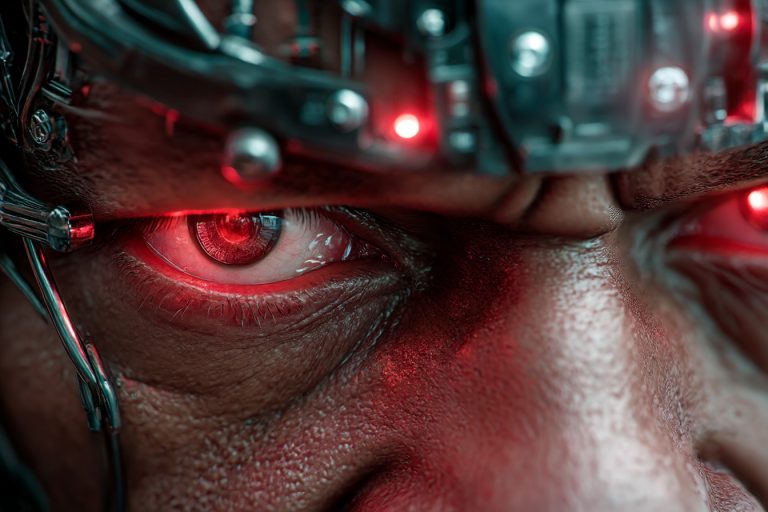
I spent an afternoon in my workshop – don’t ask me why, it seemed like a good idea at the time – trying to figure out how they achieved some of the cyborg effects. What struck me was how practical everything was. Pearl Prophet’s cybernetic components weren’t CGI magic or even particularly sophisticated prosthetics. They looked like actual computer parts that someone had cleverly integrated into costume design. Her data ports could’ve been salvaged from an old terminal. The contact lenses and makeup work suggested body modification that might actually be achievable with existing technology.
The plot itself is pretty standard stuff – plague ravages the world, cyborg carries the cure, bad guys interfere, muscle-bound hero saves the day. But here’s what got my attention as someone who’s spent his career dealing with real technology constraints: the film doesn’t waste time explaining how any of it works. There’s no exposition dump about the collapse of civilization or the development of cyborg technology. People just exist in this space where high-tech body modifications coexist with improvised weapons and scavenged equipment.
That matter-of-fact approach to advanced technology? That’s actually how real technological integration happens. Nobody sits you down and explains how your smartphone works before you start using it. You just… use it. And if civilization collapsed tomorrow, the survivors wouldn’t be rebuilding everything from scratch – they’d be salvaging what still functioned and figuring out creative ways to repurpose it.
What’s really aged well is the film’s complete lack of technophobia. In 1989, most sci-fi treated cybernetic enhancement as either body horror or transhumanism – either you were horrified by the violation of natural humanity, or you were transcending human limitations to become something godlike. *Cyborg* treats it as just another tool. Pearl Prophet isn’t struggling with existential questions about her artificial components. She’s not gaining superpowers or losing her humanity. She’s just trying to deliver medical data.
I’ve been thinking about that a lot lately, especially as I watch real cybernetic technology emerge. The first people getting brain-computer interfaces aren’t supersoldiers – they’re paralyzed individuals trying to control computer cursors with their thoughts. The first successful artificial organs aren’t giving people enhanced abilities – they’re just keeping hearts beating and kidneys filtering. Maybe *Cyborg*’s utilitarian approach to body modification was more prescient than anyone realized at the time.
The action sequences have this weird, almost choreographed quality that shouldn’t work but somehow does. Van Damme brings his usual athleticism, but Pyun shoots everything with this dreamy, surreal style that makes the violence feel ritualistic rather than brutal. There’s a crucifixion scene that’s completely bonkers and probably offensive to multiple groups, but it’s filmed with such commitment to its own internal logic that it becomes strangely compelling.
Here’s the thing about cult classics in sci-fi – they don’t achieve that status because they’re scientifically accurate or narratively perfect. They become cult classics because they’re memorable, and *Cyborg* is absolutely memorable. Every creative choice, from the post-punk character names (Fender Tremolo, Marshall Strat – apparently someone really loved guitar equipment) to the industrial wasteland settings, feels like it emerged from someone’s fever dream. But it’s a consistent fever dream with its own internal logic.
Most popular

The film’s aesthetic choices matter more than its plot, really. This isn’t the clean corporate cyberpunk of *Blade Runner* or the military precision of *The Terminator*. It’s scrappy, improvised, DIY. Van Damme’s character carries a guitar case – not because he’s musical, but because it’s an effective way to transport weapons without attracting attention. That kind of practical thinking runs through the entire film.
I showed it to my neighbor’s teenager last month – kid’s fifteen and completely obsessed with cyberpunk aesthetics, spends half his time modding computers and the other half playing games set in dystopian futures. His reaction was fascinating. He didn’t see dated effects or budget constraints. He saw a world that felt lived-in, where the technology looked like something he could actually build in his garage if he had the right components. “It looks real,” he said, which isn’t something you hear often about 1989 sci-fi.
That’s the secret, I think. *Cyborg* doesn’t try to convince you that its world is scientifically plausible or socially realistic. It just commits completely to its own premise and invites you along for the ride. The film treats its absurd concepts with complete seriousness, and that sincerity is infectious.
Watching it now, I’m struck by how much current technology has caught up with the film’s basic assumptions. We do live in a world where people carry powerful computers everywhere, where prosthetics can be controlled by neural signals, where medical data really is stored digitally and needs protection during transmission. The specific details of *Cyborg*’s world are still fantasy, but the general concept – that technology would become both more powerful and more makeshift – feels surprisingly accurate.

Maybe that’s why *Cyborg* deserves another look. Not because it’s a masterpiece of cinema or a triumph of hard sci-fi, but because it accidentally imagined a future that feels more like our present than most films do. A future built from spare parts, held together with ingenuity and determination, populated by people just trying to solve problems with whatever tools they can find. As someone who spent his career working with actual technology constraints, I can appreciate that kind of pragmatic approach to the impossible.
Sometimes the scrappy B-movies get things right that the big-budget productions miss entirely. Who knew Van Damme kicking people in a junkyard future would be more prophetic than *Blade Runner*’s corporate towers?

John spent forty years designing real spacecraft before turning his attention to fictional ones. Writing from Oregon, he brings a scientist’s curiosity to sci-fi—separating good speculation from bad physics while keeping his sense of wonder firmly intact.