












You know what happened to me last week that got me thinking? I’m in the break room at work, microwaving leftover pizza, and this new intern starts talking about how she “doesn’t really get science fiction.” She’d tried watching Blade Runner 2049 because her boyfriend insisted it was amazing, but twenty minutes in she was bored out of her mind. “It’s just so… slow and weird,” she said. “All that rain and philosophizing about robots.”
I almost choked on my coffee. Not because she was wrong — 2049 is definitely slow and weird — but because she’d basically written off an entire universe of stories based on one very specific type of film. It’s like tasting one wine, deciding you hate alcohol, and never trying beer.
This happens all the time, and honestly, it drives me a little crazy. People bounce off one corner of sci-fi and assume the whole genre isn’t for them. Meanwhile, I’ve got shelves at home groaning under the weight of books and DVDs that are all technically “science fiction” but share about as much DNA as a goldfish and a grizzly bear.
Take something like *The Martian* — pure hard sci-fi engineering porn. Andy Weir basically wrote a love letter to problem-solving, where every challenge gets tackled with actual science and math. When I first read it, I kept pausing to verify his calculations (yeah, I’m that guy). The whole book is basically “Can Real Physics Save This Guy’s Life?” stretched into 400 pages, and it works because the science feels solid and the stakes are life-or-death.
Now compare that to something like *Star Wars* or *Foundation*. These are space operas — grand, sweeping stories about galactic empires and chosen ones and mystical forces. Nobody watches *Star Wars* wondering about the thermodynamics of lightsabers or the orbital mechanics of the Death Star. You’re there for the adventure, the mythology, the sense that the universe is vast and full of wonders. Different tool, completely different job.
I remember when I was cutting together this corporate video about renewable energy a few years back, I kept switching between these two mindsets. Sometimes I’d get deep into the technical specs of solar panels, trying to make the science accessible and exciting. Other times I’d step back and think about the bigger picture — what does a solar-powered future actually look like? How do you make people feel that vision, not just understand it?
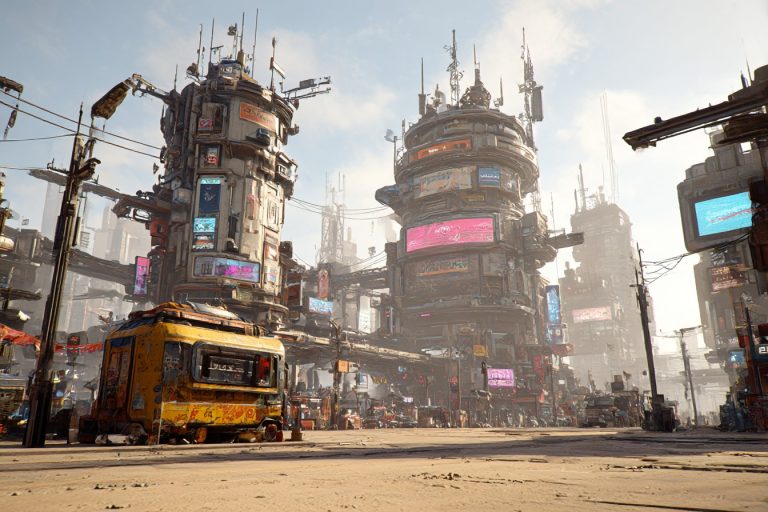
Then you’ve got cyberpunk, which is basically sci-fi’s noir cousin. Gibson, *Neuromancer*, *Black Mirror* — these stories aren’t about distant futures or alien worlds. They’re about what happens when technology and human nature collide, usually messily, usually tomorrow or next week. The future in cyberpunk feels like it’s already happening in some back-alley server farm in Seoul.
I went through a massive cyberpunk phase in my twenties, right when I was learning digital editing. Suddenly all these stories about virtual reality and digital manipulation felt less like fiction and more like instruction manuals. Every time I’d composite some footage or manipulate video in post, I’d think about those stories where reality becomes fluid and truth becomes negotiable.
But here’s where it gets interesting — there’s this whole other branch of sci-fi that barely feels like sci-fi at all. Literary stuff like *Station Eleven* or *Never Let Me Go* or anything by Margaret Atwood (who famously insists she doesn’t write science fiction, which… okay, Margaret). These stories use sci-fi elements like spices in cooking — just enough to change the flavor, but the main dish is still human relationships and emotional truth.
*Station Eleven* could’ve been a standard zombie apocalypse story, but instead it’s about how art survives when everything else falls apart. The pandemic that ends civilization is almost beside the point. What matters is the traveling Shakespeare troupe twenty years later, still performing *King Lear* for scattered communities because beauty and meaning matter even when — especially when — the world has gone to hell.
I gave that book to my sister (who used to roll her eyes at my “spaceship books”) and she absolutely devoured it. Called me up afterward wanting to talk about whether art is essential or just luxury, whether civilization is more fragile than we think. She’d never describe herself as a sci-fi reader, but she’d just engaged with some pretty heavy speculative fiction concepts.
That’s the thing about this genre — it’s not really a genre, it’s more like a toolkit. Different writers use different tools for different jobs. Some want to explore the technical limits of what’s possible. Others want to examine human nature under extreme conditions. Still others are asking big questions about society, politics, the future of our species.
Military sci-fi like *Starship Troopers* or *Old Man’s War* is asking what war looks like when technology advances but human nature doesn’t. Climate fiction like *New York 2140* is working through our anxieties about environmental collapse. New Weird stuff like *Annihilation* is using impossible scenarios to examine consciousness and reality itself.
Most popular
And lately, we’re seeing entirely new branches grow. Afrofuturism isn’t just adding more diverse characters to existing sci-fi templates — it’s imagining completely different futures based on different cultural foundations. Solarpunk is actively rejecting dystopian assumptions and asking what optimistic, sustainable futures might actually look like.
I’ve been tracking this stuff for years now, and what excites me isn’t just the variety — it’s how these different approaches serve different needs. My neighbor reads post-apocalyptic fiction to process anxiety about social collapse. My editing partner loves hard sci-fi because he’s fascinated by engineering solutions. My mom, who “doesn’t read fantasy,” absolutely loves time travel stories because they let her imagine meeting her younger self.
The problem is that marketing and bookstore categories make everything seem more homogeneous than it actually is. Walk into Barnes & Noble and it’s all just “Science Fiction/Fantasy” lumped together, with covers that tend toward either rockets or dragons. But a cyberpunk thriller and a generation ship novel and a climate disaster story are solving completely different creative problems.
I think this is why so many people assume sci-fi “isn’t for them.” They encountered one specific flavor — maybe something too technical, or too philosophical, or too action-heavy for their taste — and figured that was representative of everything. It’s like trying Brussels sprouts, hating them, and concluding you don’t like vegetables.
What I tell people now is: don’t write off science fiction, just find your entry point. If you love psychological drama, try something like *Flowers for Algernon*. If you’re into historical fiction, maybe alternate history like *The Man in the High Castle*. Mystery readers might love something like *The City & The City*. There’s probably some corner of this sprawling, weird, endlessly creative genre that’s asking exactly the kinds of “what if” questions that would make your brain light up.
Because that’s really what it’s all about — that fundamental “what if” that drives all speculative fiction. What if we could travel faster than light? What if artificial intelligence became conscious? What if climate change reshaped civilization? What if we met aliens? What if technology solved scarcity? What if it created new problems instead?
Different readers are drawn to different questions, and thankfully, science fiction is big enough and weird enough to accommodate just about any curiosity you might have about tomorrow.

Dylan grew up rewinding VHS tapes to study practical effects and never really stopped. Now based in Austin, he writes about sci-fi cinema with the eye of a filmmaker and the heart of a fan—celebrating the craft, the weirdness, and the magic of futures built by hand, not computers.