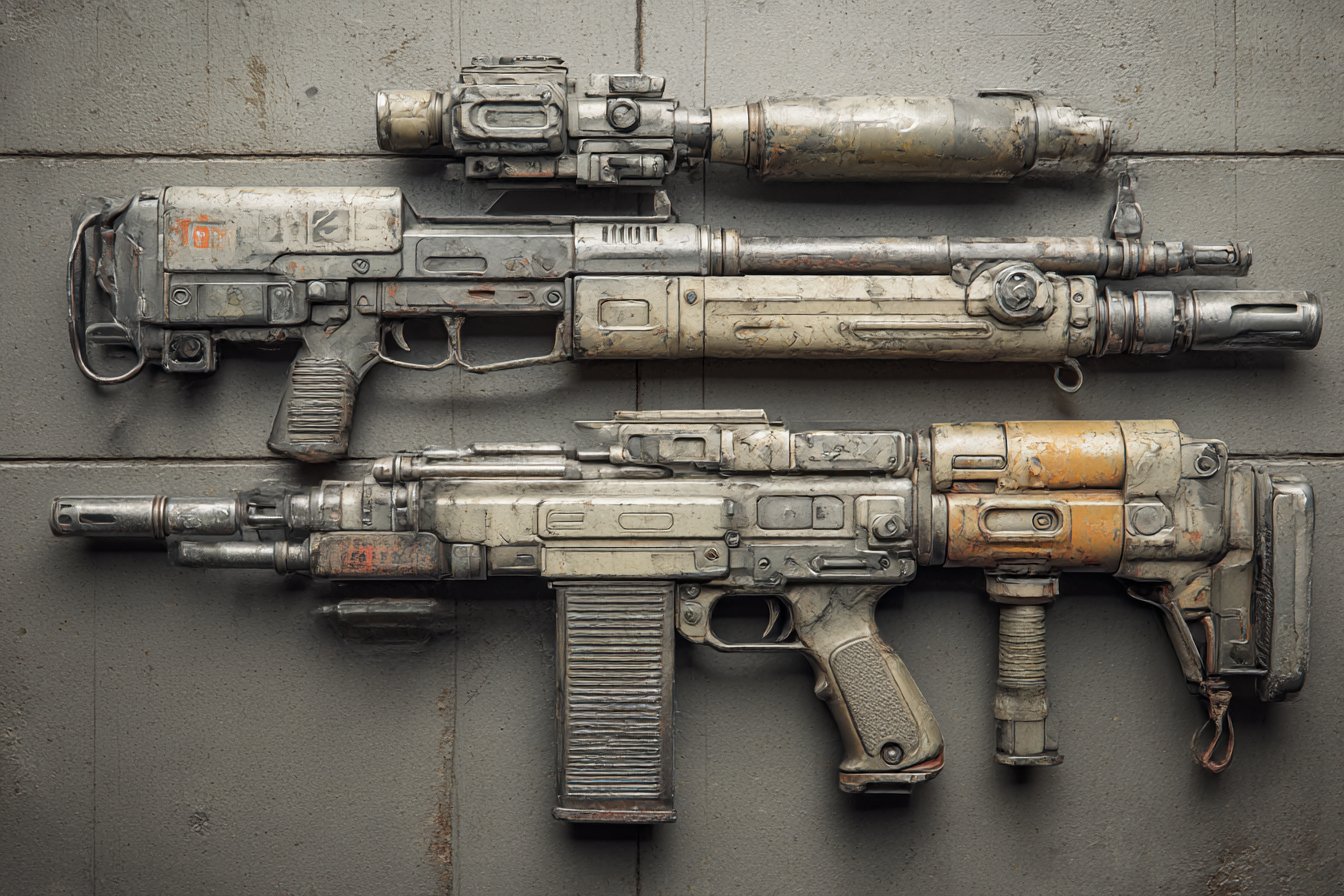

The first time I really paid attention to how a sci-fi weapon *felt* was watching Blade Runner 2049 in IMAX. Not the visual effects — though they’re stunning — but the actual weight of Harrison Ford’s blaster when he gripped it. You could see it in his posture, the slight lean forward, the way his arm compensated. That gun had heft. Mass. Consequences.
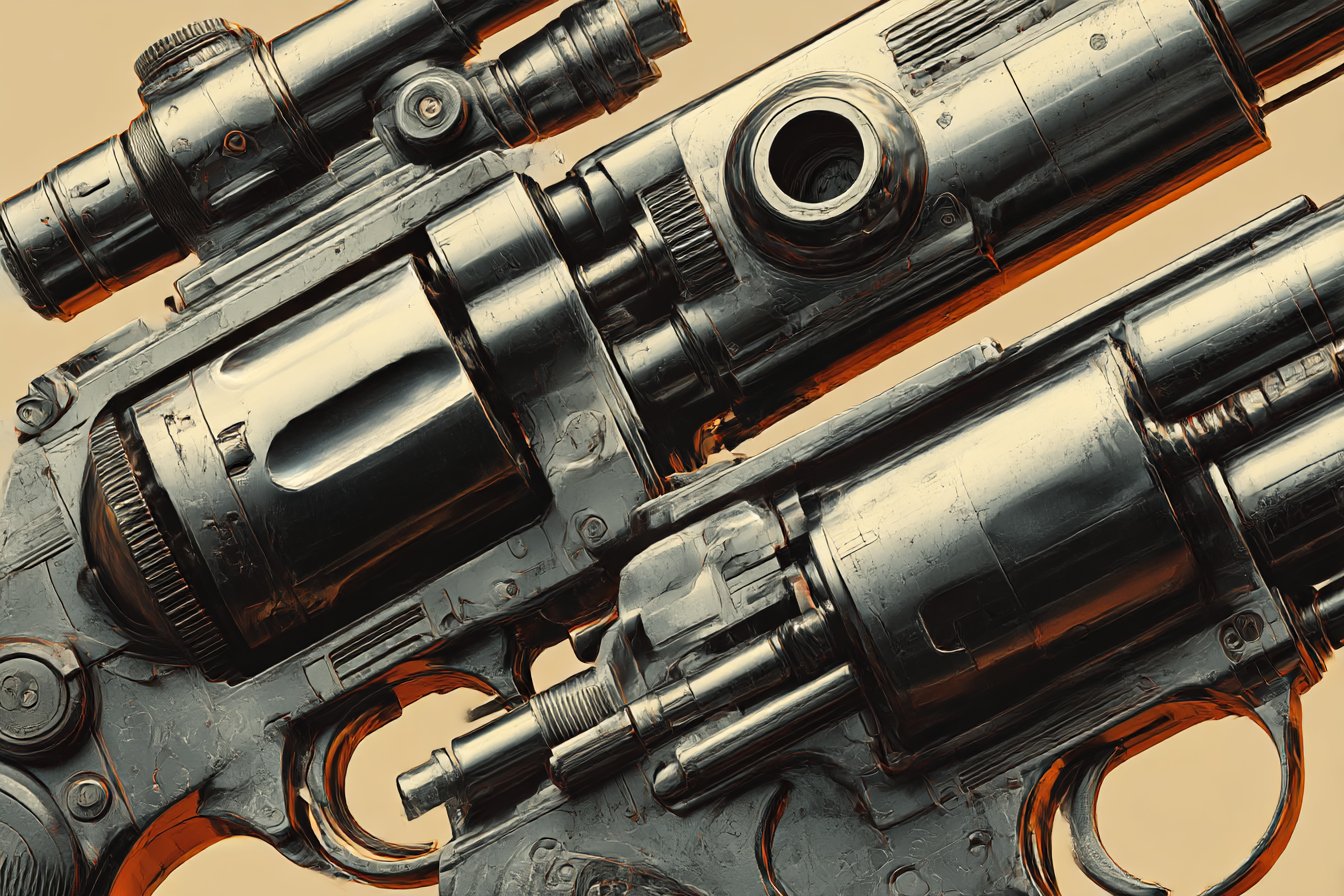
It got me thinking about something I’d been wrestling with since my game-modding days: how do you make imaginary weapons feel real without losing their otherworldly appeal? I’d spent months trying to design energy rifles for our derelict space station project, and they kept coming out either too mundane (basically reskinned assault rifles) or too fantastical (glowing death rays that belonged in a cartoon).
The problem isn’t just visual design — though that matters enormously. It’s about creating a sense of physical presence that your audience can believe in. Real weapons have quirks. They jam at inconvenient moments. They’re heavy after you’ve carried them for hours. They generate heat, make noise, require maintenance, run out of ammunition at precisely the wrong time.
I started paying closer attention to how filmmakers handled this challenge, and honestly? Most don’t. They treat futuristic weapons like magic wands that shoot pretty lights. But the exceptions — the ones that get it right — they understand something crucial about human psychology. We believe in things that behave consistently, that have limitations, that cost something to use.
Take the pulse rifle from Aliens. Cameron didn’t just design a cool-looking gun; he created a tool with specific characteristics that shaped how characters used it. The distinctive sound, the ammunition counter, the way Ripley had to brace herself against the recoil — these details made it feel like a real piece of military hardware, just advanced. When Hicks explains how it works to Ripley, you’re not getting exposition; you’re watching someone teach proper equipment handling.
Or consider the blasters in The Expanse. They overheat. Characters have to manage power cells. In zero gravity, the recoil actually affects movement — something most sci-fi completely ignores. These weapons feel integrated into their world’s physics rather than exempt from them.
I tried an experiment last year. I built a prop version of what I imagined a magnetic accelerator rifle might feel like — basically a railgun scaled down to personal use. Nothing functional, obviously, but I wanted to understand the physical constraints. The power supply alone weighed twelve pounds. The barrel needed to be perfectly straight and incredibly strong to handle the magnetic forces. Heat dissipation became a major design challenge.
Working with my hands taught me things no amount of theoretical physics could. Real weapons are compromises. Every design choice involves trade-offs between power, portability, reliability, and cost. Fictional weapons should reflect these same pressures, even if the underlying technology is imaginary.
The best sci-fi weapons tell stories through their design. The weathered look of Han Solo’s blaster suggests a galaxy where even advanced technology requires constant maintenance. The sleek, almost organic curves of the Covenant weapons in Halo imply a completely different manufacturing philosophy than human military gear. These aren’t just props; they’re cultural artifacts that help build believable worlds.
You Might Also Like

But here’s where it gets tricky: you can’t just focus on realism. Pure realism often looks boring on screen. Real military rifles are mostly black metal and polymer, optimized for function over form. They don’t glow, spark, or make interesting sounds. A truly realistic energy weapon might be completely silent, emit no visible beam, and look like a slightly bulky flashlight.
The art lies in finding the sweet spot between believable physics and visual excitement. The lightsaber is probably the most successful example of this balance. It violates numerous physical laws — how do you contain plasma in a sword-shaped field? — but it follows its own internal logic so consistently that we accept it completely. It has weight, requires skill to use effectively, and can be dangerous to the wielder. It’s fantastical yet grounded in familiar combat principles.
I’ve noticed that the most convincing fictional weapons often borrow heavily from real ones, then extrapolate logically. The smart gun from Aliens is clearly inspired by real automated weapons systems, just pushed to their logical conclusion. The sonic weapons in Minority Report feel plausible because we already use sound as a non-lethal crowd control tool.
Sometimes the most effective approach is restraint. The weapons in Ex Machina are completely conventional — modern firearms in a story about artificial intelligence. This choice makes the AI threat feel more immediate and real. When everything else in your story is speculative, familiar weapons can anchor the audience in recognizable physics.
The sound design matters enormously too. That distinctive whine of a charging capacitor, the mechanical click of a safety being disengaged, the subtle hum of active electronics — these audio cues sell the reality of imaginary technology. I spent hours sampling different electronic devices to find the right charging sound for our game’s energy weapons. Turned out a modified camera flash charging sound worked perfectly.
What really fascinates me is how weapon design reflects the society that creates them. Sleek, minimalist designs suggest advanced manufacturing and abundant resources. Crude, improvised weapons imply scarcity and desperation.
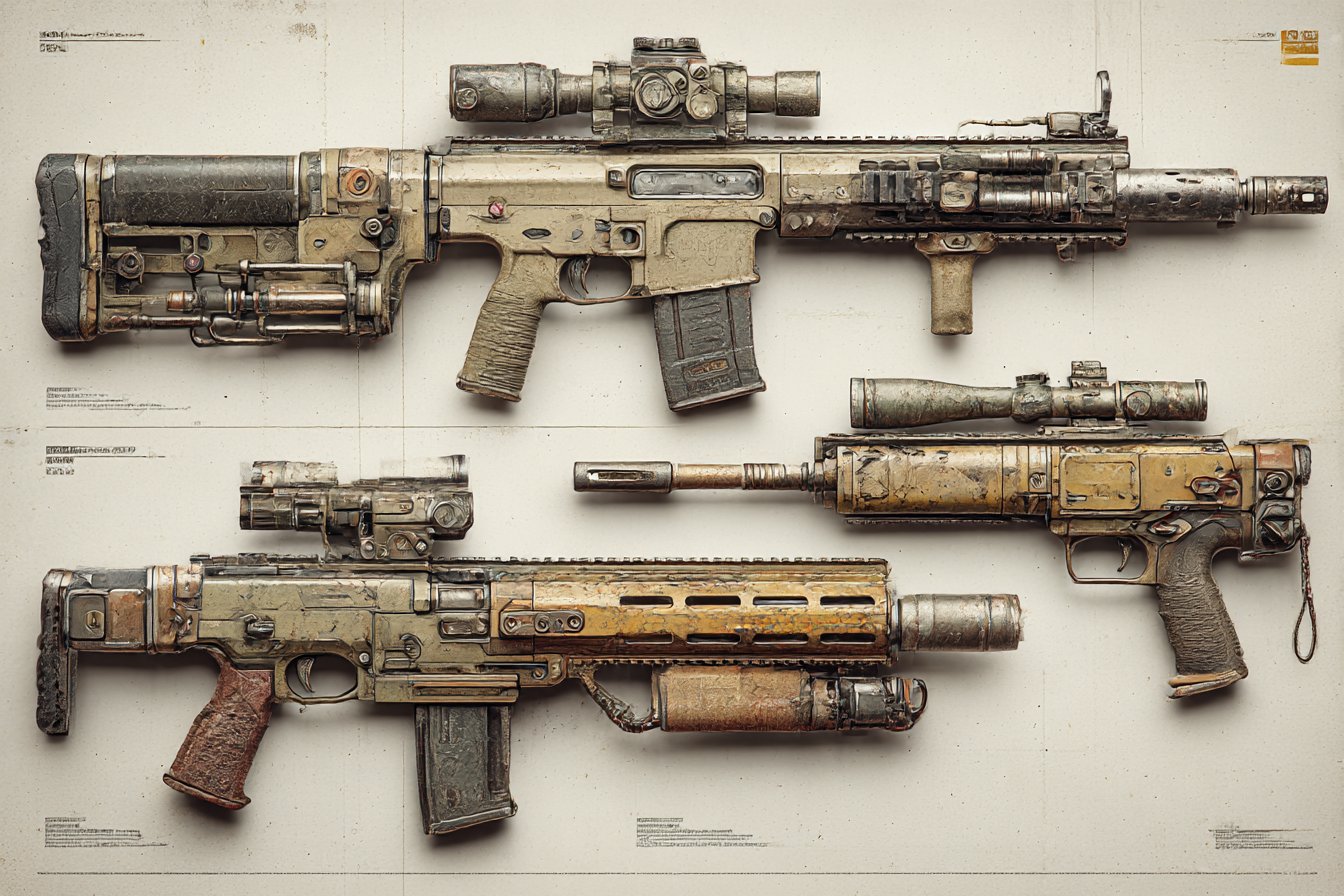
The chunky, industrial look of Warhammer 40K weapons perfectly matches that universe’s gothic, over-the-top aesthetic. Form follows worldbuilding.
I keep coming back to that moment in Blade Runner 2049 — Ford’s subtle performance showing us exactly how that weapon felt in his hands. Great sci-fi weapons aren’t just about the technology; they’re about how people interact with that technology, how it shapes their behavior and choices.
The best fictional weapons feel inevitable. Like if we really did develop energy weapons or magnetic accelerators, of course they’d work this way, have these limitations, require this kind of training. They bridge the gap between what we know and what we dream, making the impossible feel achievable. Just a few degrees off from reality, but close enough to believe.

0 Comments