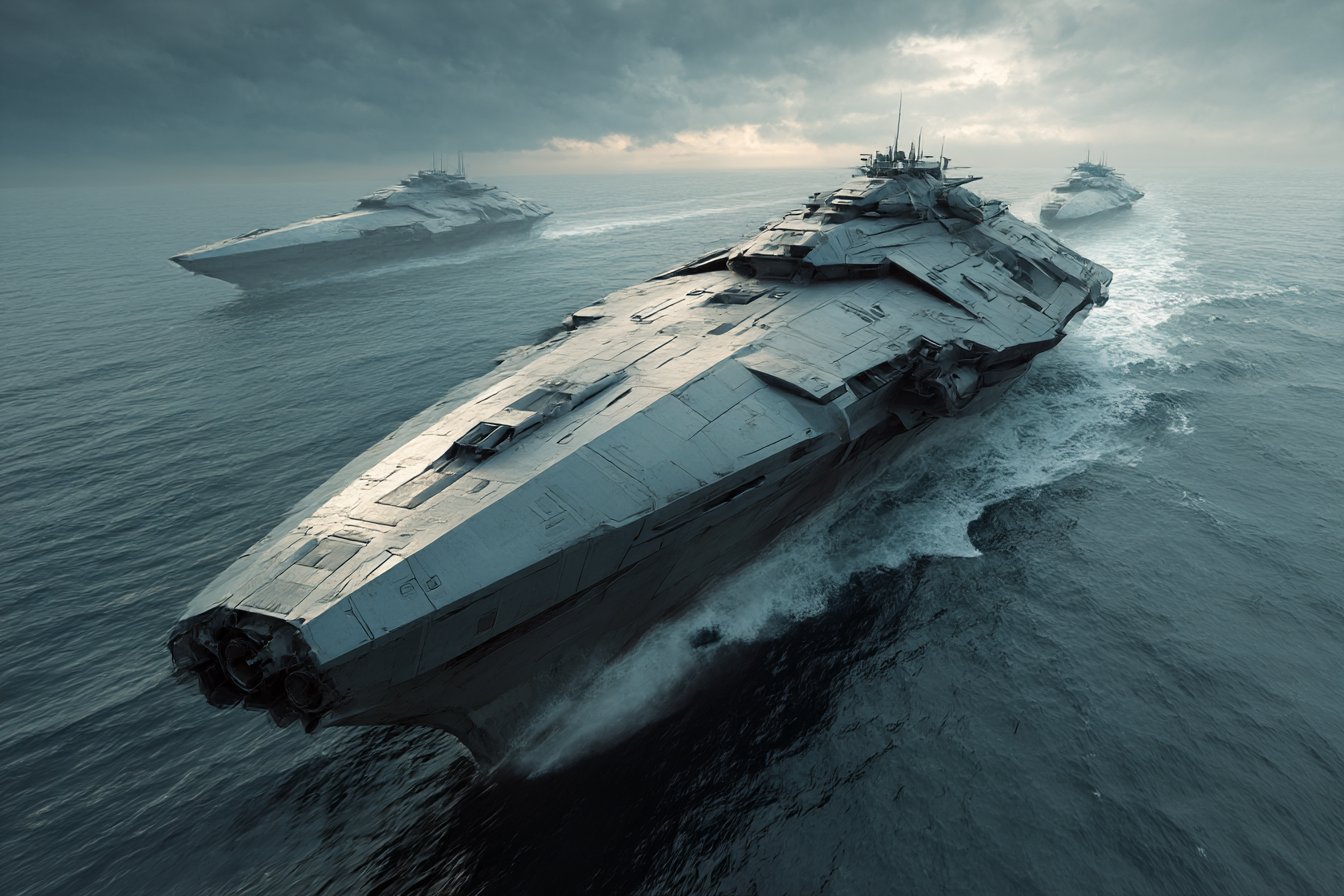

There’s something about watching a massive battleship fire its main guns that makes your chest vibrate, even in a movie theater. I was maybe twelve when I first saw the Enterprise face off against a Klingon Bird of Prey, and honestly? The physics were all wrong – sound doesn’t travel in space, those energy beams should’ve been invisible, and don’t get me started on the artificial gravity working perfectly during combat maneuvers. But none of that mattered. What got me was the weight of it all. The deliberate movements, the crew working in practiced coordination, the sense that these weren’t just flying cars with laser guns bolted on – they were proper warships, with history and purpose and souls.
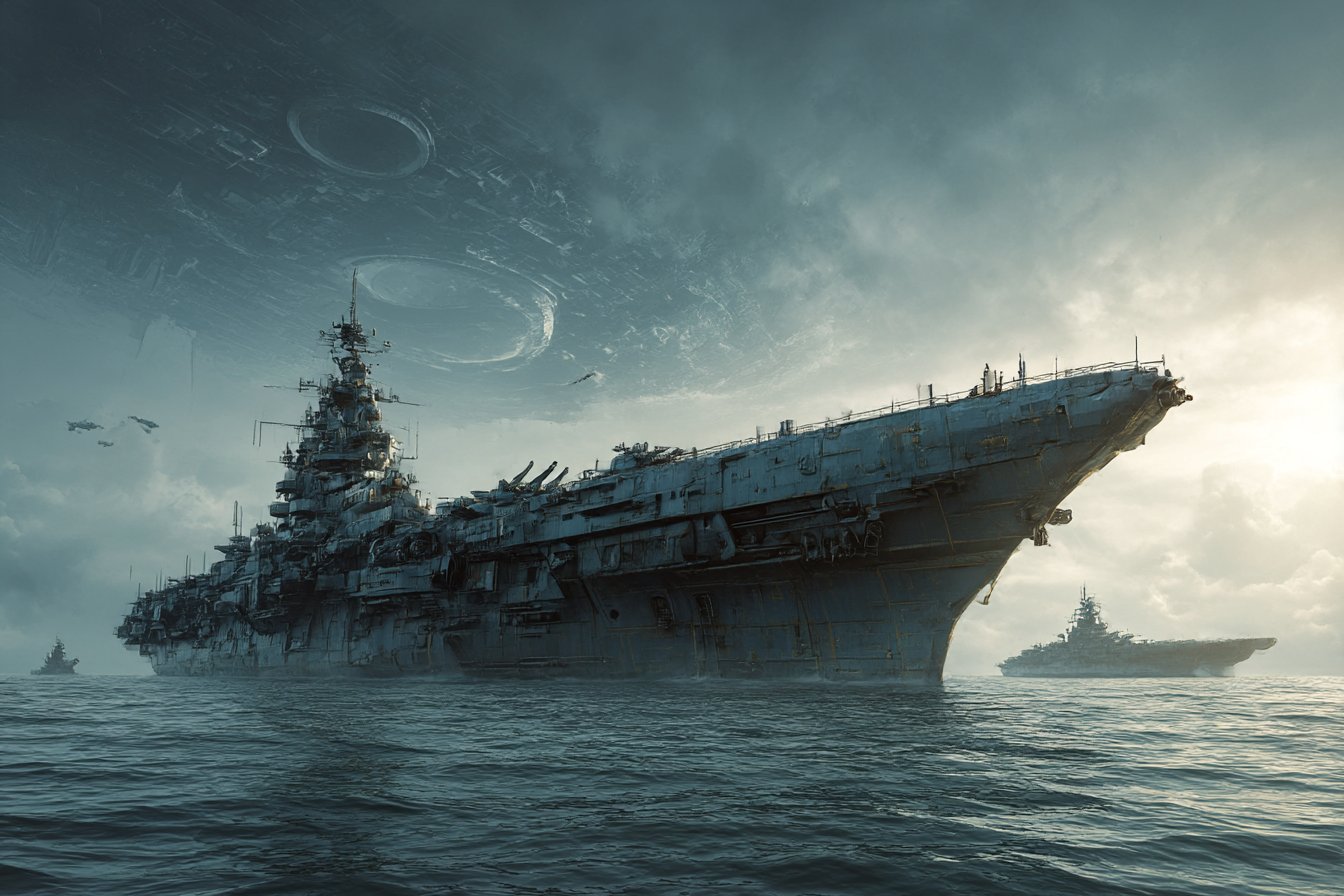
Years later, when I was knee-deep in that game-modding project I mentioned, trying to build convincing spaceship interiors, I kept coming back to naval references. Not the sleek, sterile corridors you see in most sci-fi, but the cramped, functional spaces of actual warships. I spent way too much time researching submarine layouts, destroyer bridge configurations, the placement of ammunition hoists on World War II cruisers. My sister found me at 2 AM one night, surrounded by naval architecture books from the library, muttering about torpedo storage while sketching bulkhead designs. “You know these aren’t real ships, right?” she said. But that was exactly the point – they had to feel real.
The appeal of futuristic warships runs deeper than just “spaceships with bigger guns.” It’s about taking something we understand – naval power, maritime strategy, the romance of ships and the sea – and projecting it into an infinite ocean of stars. When we imagine fleets moving through hyperspace or energy cannons charging for a broadside, we’re not really thinking about technology. We’re thinking about what it means to command something vast and powerful, to be part of a crew working in perfect coordination, to face impossible odds with nothing but your ship and the people around you.
I remember reading about the Battle of Jutland as a teenager, fascinated by the descriptions of dreadnoughts maneuvering in formation, their massive guns tracking targets beyond the horizon. The scale was mind-boggling – ships weighing thousands of tons, moving like chess pieces across hundreds of square miles of ocean, their fate decided by armor thickness and rangefinding accuracy. When I later encountered the Imperial Star Destroyers in Star Wars or the massive fleet battles in Battlestar Galactica, the emotional core was identical. It wasn’t about the technology; it was about that same chess game, just played across lightyears instead of nautical miles.
The best fictional warships understand this connection. The Rocinante from The Expanse feels like a real ship because it has the cramped, lived-in quality of an actual naval vessel. Everything serves a function, space is at a premium, and when things go wrong, the crew has to work together or die. Compare that to the Enterprise from the newer Star Trek films – gorgeous to look at, but it feels more like a flying hotel than a warship. There’s no sense of the constraints that make naval operations interesting: limited resources, mechanical failures, the constant tension between offense and defense.
What really draws people to these stories, I think, is the combination of individual heroism and collective responsibility. A starship captain isn’t just driving a fast car; they’re responsible for hundreds of crew members, carrying out missions that could affect entire worlds. When Captain Picard orders “Make it so,” he’s not just giving a command – he’s putting his trust in systems, people, and procedures that have to work perfectly under pressure. That’s the same trust a destroyer captain placed in their radar operators and gun crews during a night action in the Pacific. The technology changes, but the human element stays constant.
You Might Also Like

I’ve noticed something interesting about how different people engage with these stories. The engineering types – and I count myself among them – get excited about the technical details. How do the shields work? What’s the power output of those engines? How do you coordinate fire control across a fleet when communication travels at light speed? We want the universe to have rules, even if those rules involve imaginary physics. But there’s another group that doesn’t care about the tech specs at all. They’re there for the drama, the relationships, the moral choices. For them, the ships are just the stage where human stories play out.
Both approaches are valid, but the best stories combine them. When the Galactica makes its final jump in the series finale, landing right in the middle of an enemy fleet, it works because we understand both the desperate tactical situation and the emotional stakes for the characters. The technology serves the story, not the other way around.
There’s also something uniquely democratic about naval fiction, whether it’s set in the age of sail or the far future.
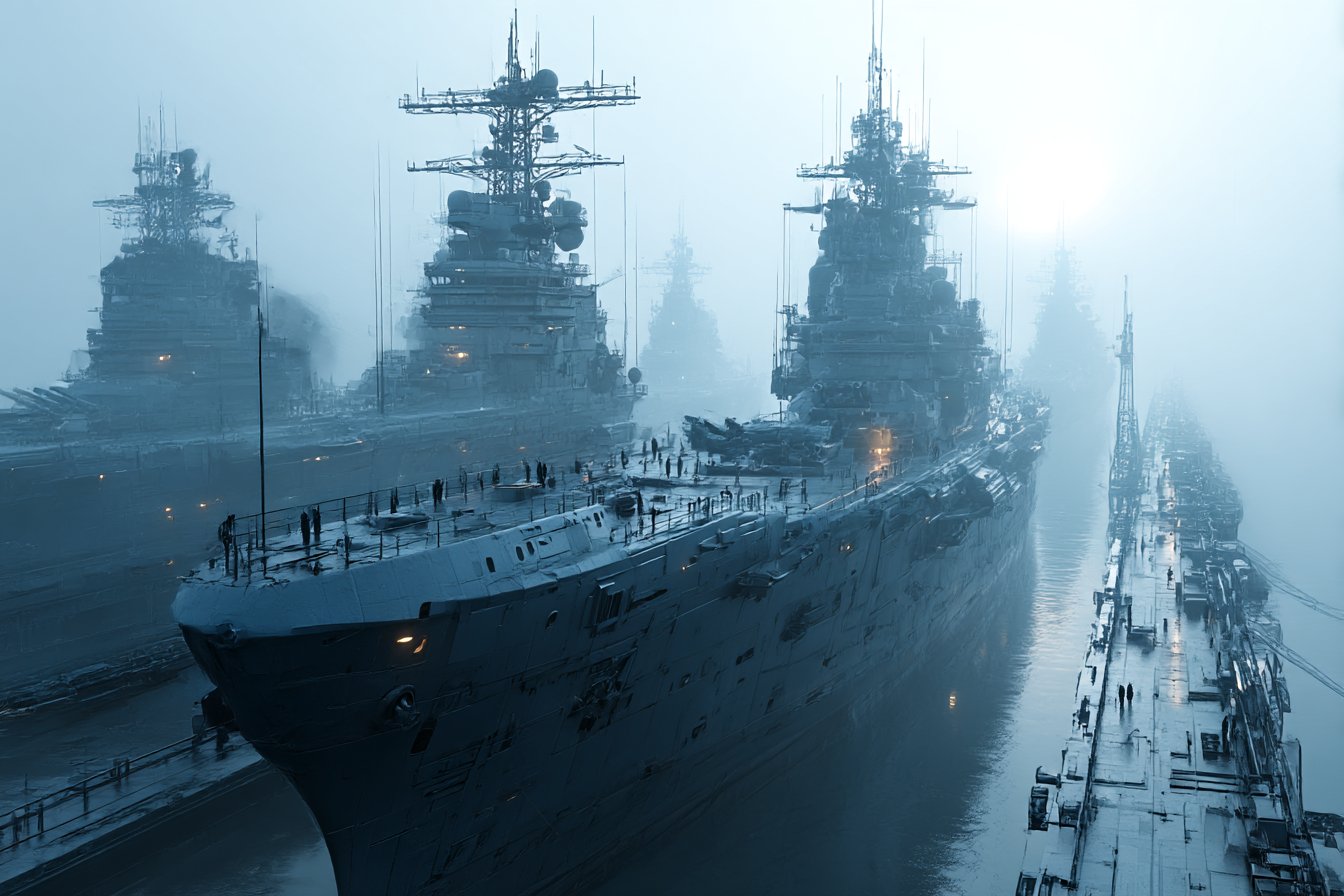
Unlike armies, where individual heroics can sometimes carry the day, naval operations require teamwork. The guy in engineering is just as crucial as the captain on the bridge. Everyone has a role, and failure at any level can doom the entire crew. That’s why so many naval stories, from Hornblower to Honor Harrington, focus on ordinary people doing extraordinary things as part of a team.
Maybe that’s what really appeals to us about futuristic warships – they represent our hope that even in an age of incredible technology and cosmic-scale conflicts, human cooperation and individual courage will still matter. The ships may be impossible, the weapons may violate physics, and the battles may rage across star systems, but at the end of the day, it’s still people working together, making tough choices, and trying to do the right thing.
And honestly? That chest-vibrating moment when the guns fire never gets old, even if you know perfectly well that space doesn’t work that way.

0 Comments