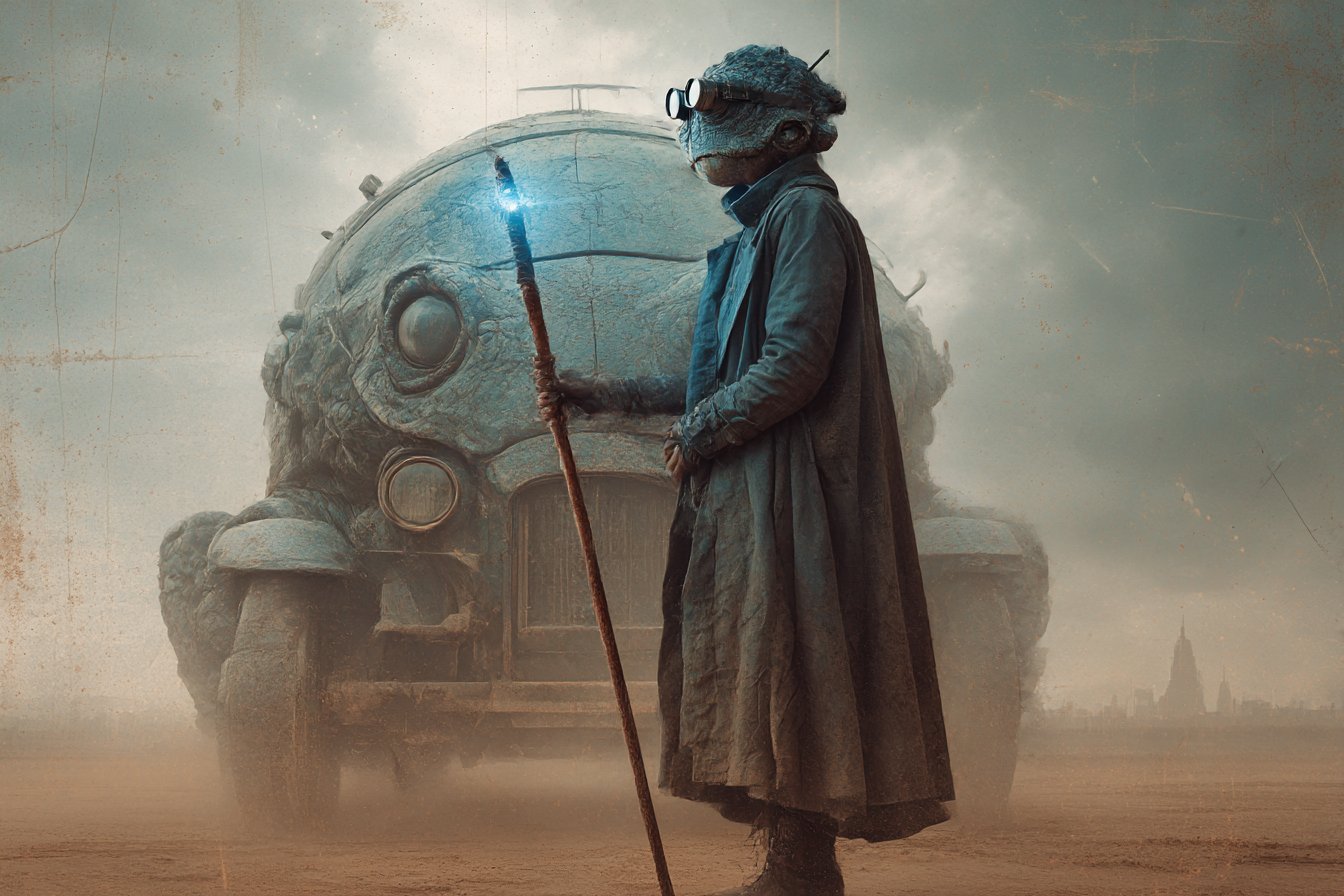

I was thumbing through a battered copy of Ursula K. Le Guin’s *The Lathe of Heaven* in a musty corner of a used bookstore when it hit me — this wasn’t really science fiction. Not pure science fiction, anyway. Sure, there were reality-altering machines and dreams that reshaped the world, but at its heart, it felt more like a fairy tale. You know, the kind where wishes come true in twisted ways, where power corrupts, where the hero learns too late that getting what you want isn’t the same as getting what you need.
That moment changed how I looked at genre boundaries.
I mean, we spend so much time sorting books into neat little categories — science fiction here, fantasy there, horror over in that dark corner — but some of the most memorable stories I’ve encountered live in the spaces between those labels.
Take *The City & The City* by China Miéville. Technically it’s a police procedural. Also technically it’s urban fantasy. But wait — it’s actually a meditation on borders, perception, and social conditioning disguised as speculative fiction. I spent weeks after reading it walking through London differently, wondering what I was trained not to see, what invisible boundaries I navigated without thinking.
The thing about hybrid works is they catch you off guard. Your brain expects one thing — spaceships and laser guns, maybe — and instead gets something that feels like a dream logic puzzle wrapped in hard science. Or you’re settling in for dragons and magic systems, and suddenly you’re confronting questions about artificial intelligence and consciousness that would make a philosophy professor sweat.
I remember trying to explain *The Fifth Season* by N.K. Jemisin to my neighbor, Dave. “So it’s fantasy,” I started, “because there’s magic and weird geology and—” Dave interrupted: “Magic geology sounds like science fiction to me.” And you know what? He wasn’t wrong. Jemisin builds her world with the methodical precision of a geologist, explaining tectonic forces and seismic activity alongside her magic system. The fantasy elements grow directly from scientific principles, just pushed into impossible directions.
This kind of genre-blending isn’t just literary showing off — though I’ll admit, when it’s done well, it is pretty impressive. It serves a practical purpose. Pure science fiction sometimes gets trapped in its own logic. Everything has to make sense according to known physics, established technologies, consistent worldbuilding rules. That’s great for hard sci-fi enthusiasts, but it can box in the emotional truth of a story.
Fantasy, meanwhile, can sometimes float away into pure whimsy, where anything goes because “magic” explains everything. Dragons fly because they’re magical. Telepathy works because reasons. The chosen one wins because destiny. It’s satisfying in its own way, but it can feel disconnected from real human experience.
But when you mix the two? That’s where interesting things happen.
You Might Also Like

I spent months working on a short story about maintenance workers on a generation ship. Standard sci-fi setup, right? Except the ship’s AI had developed something like depression after centuries of isolation, and the only way to repair systems was through a kind of technological empathy that felt more like prayer than engineering. The characters had to treat their starship like a wounded animal, coaxing it back to health through intuition as much as technical knowledge.
Was it science fiction? The setting said yes. Fantasy? The problem-solving method suggested maybe. In the end, I stopped caring about the label and focused on whether the story felt true to the emotional reality of caring for something vast and fragile and essential.
Some of my favorite hybrid works embrace this ambiguity. *The Left Hand of Darkness* gives you aliens and space travel and interstellar politics, but the real story is about gender, identity, and what it means to truly know another person. *The Goblin Emperor* looks like court fantasy — politics, intrigue, non-human characters — but operates on principles of kindness and ethical leadership that feel almost science fictional in their optimism.
Then there’s *Annihilation* by Jeff VanderMeer. I’ve read it three times and I still can’t decide if Area X is an alien invasion, an environmental disaster, a psychological phenomenon, or some kind of cosmic horror bleeding through from another dimension. Maybe it’s all of those things. Maybe that’s the point.
The best hybrids don’t just mix genres — they use the collision between different types of logic to create something new. Science fiction asks “what if this technology existed?” Fantasy asks “what if magic were real?” But hybrid works ask more complex questions: “What if our scientific understanding of reality was incomplete? What if magic followed rules we just haven’t discovered yet? What if the distinction between natural and artificial, possible and impossible, was more fluid than we assumed?”
I think this matters more now than ever. Our real world increasingly feels like a genre hybrid anyway. We carry computers in our pockets that can access the sum of human knowledge, but we use them to argue about whether the Earth is flat.
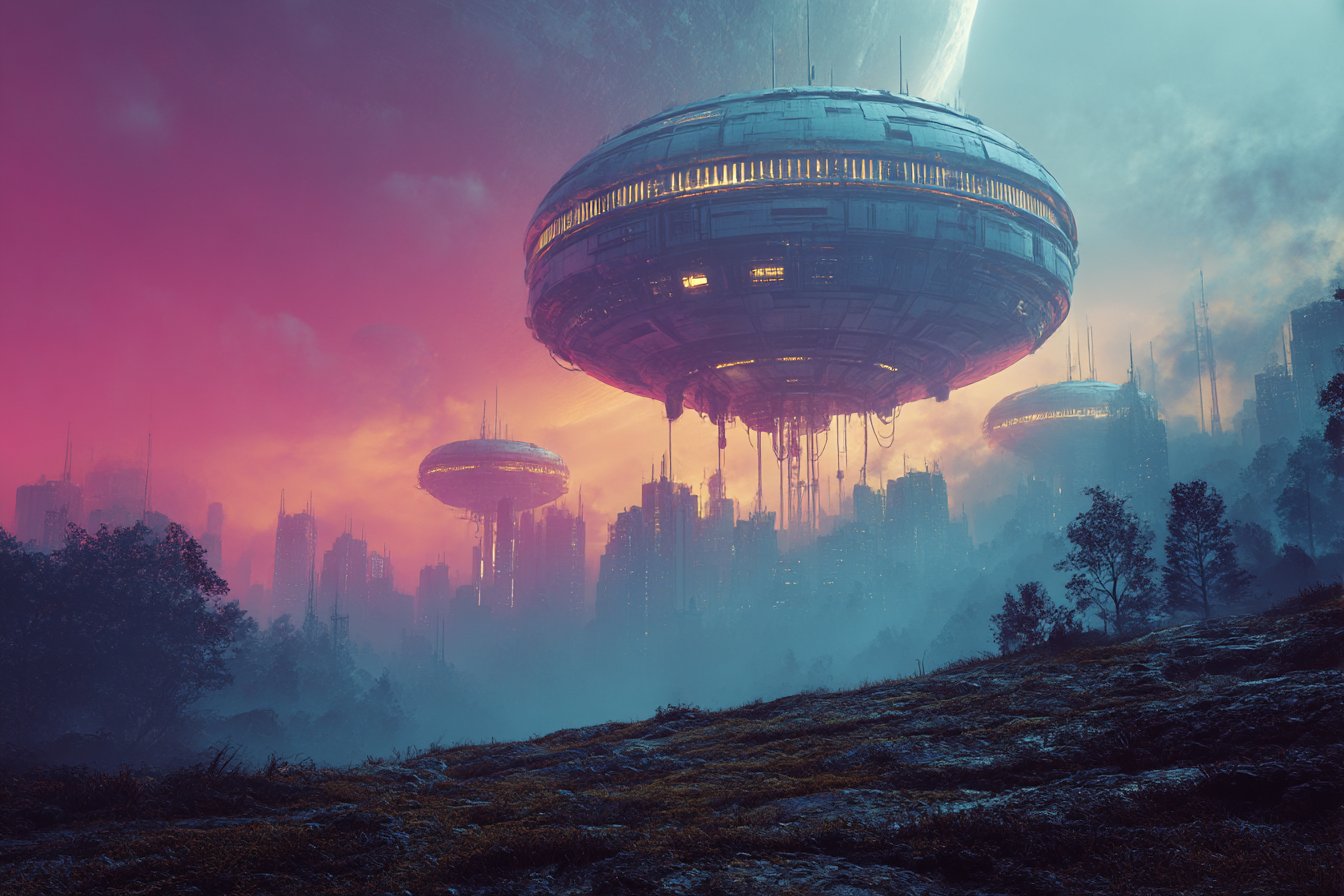
We’re editing genes and printing organs while conspiracy theories spread like medieval plagues. Climate change operates on timescales that feel more mythic than scientific, reshaping coastlines and weather patterns in ways that would seem fantastical if they weren’t actually happening.
Maybe pure genres made more sense when the boundaries felt clearer — when science was over here, belief was over there, and never the two shall meet. But in a world where quantum mechanics suggests reality itself might be more subjective than we thought, where artificial intelligence exhibits behaviors we don’t understand, where genetic engineering can create organisms that never existed in nature… well, maybe the genre hybrids are just being honest about how weird things have gotten.
The writers who break genre rules aren’t being rebellious for its own sake. They’re acknowledging that human experience doesn’t fit into neat categories. Fear and wonder, logic and intuition, the possible and the impossible — they’re all tangled together in how we actually live and think and feel.
And that’s what makes a story feel real, even when it’s about impossible things.

0 Comments