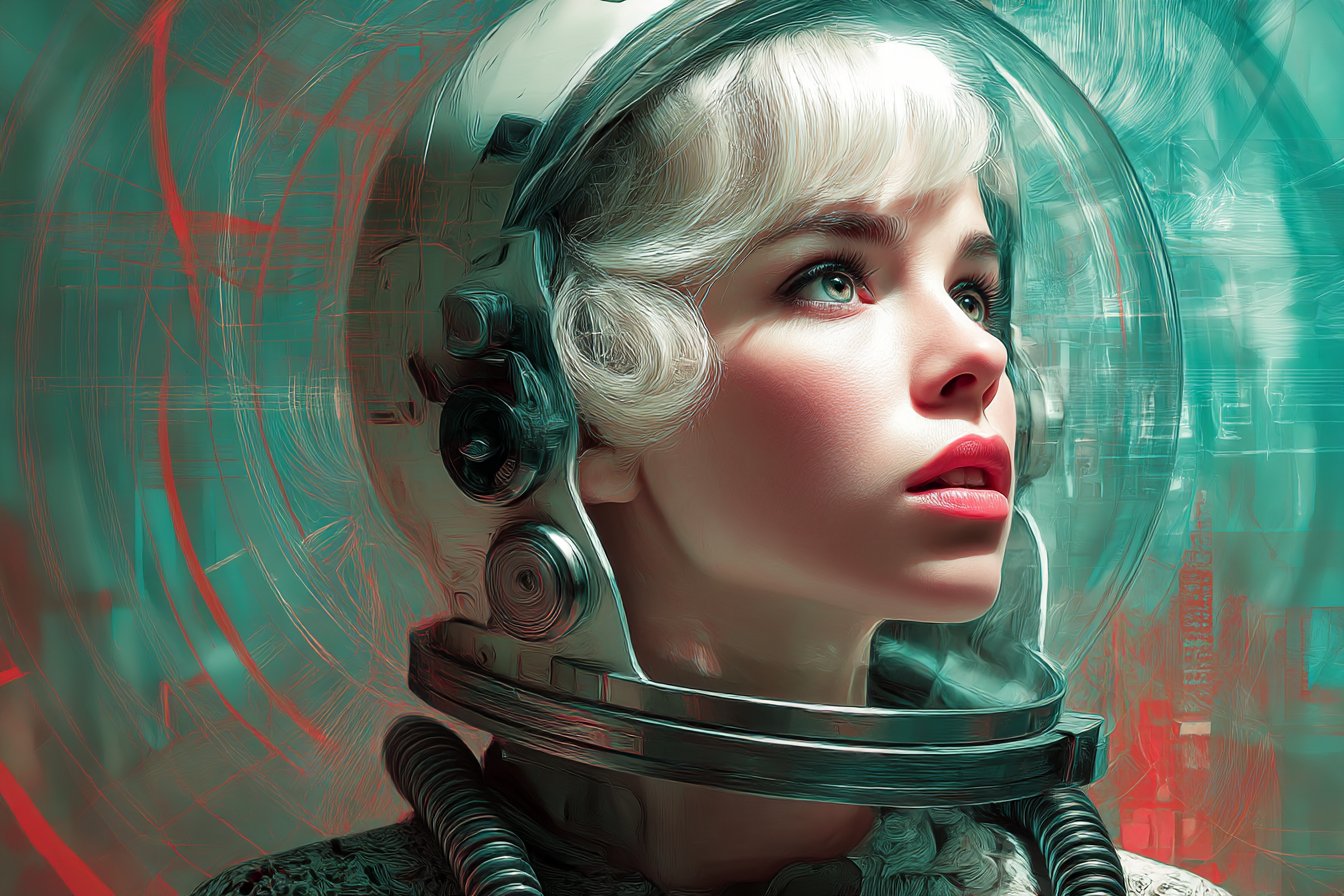

There's this moment about forty minutes into Lucy where Scarlett Johansson's character starts absorbing information at superhuman speed, and I swear I felt my pulse quicken. Not because of the flashy visual effects — though they're impressive — but because for just a few seconds, the film captured something I'd been trying to articulate for years. What would it actually *feel* like to suddenly understand everything?
I'd been wrestling with this question since my physics days, scribbling theories in margins about consciousness and information processing. When I first heard about Lucy's premise — a woman accidentally ingests a synthetic drug that unlocks her brain's full potential — I was simultaneously excited and worried. Hollywood has this habit of taking fascinating scientific concepts and turning them into popcorn spectacle without bothering to explore the human cost.
The "we only use 10% of our brain" myth has been floating around since the early 1900s, and it drives neuroscientists absolutely mad. We use virtually all of our brain, just not all at once — which is probably a good thing, considering what happens during seizures.

But here's what Lucy gets right: it doesn't really matter if the science is accurate. What matters is whether the film uses that premise to explore something meaningful about human nature.
And for the first hour or so, it absolutely does.
The early scenes where Lucy begins developing her abilities are genuinely unsettling. Johansson plays those moments with this wonderful mixture of wonder and terror — you can see her character grappling not just with new powers, but with the fundamental question of whether she's still human. I remember watching her face during the hospital scene where she calls her mother, trying to express feelings she can barely comprehend anymore. That phone call hits harder than any action sequence in the film.

The visual language works brilliantly here too. Director Luc Besson doesn't just show us Lucy getting smarter; he shows us the world becoming more transparent to her. Information layers become visible — electromagnetic fields, cellular processes, the flow of data through networks. I've always believed that good sci-fi should make the familiar feel alien, and these sequences nail that completely. They made me think about how limited our normal perception really is, how much invisible activity surrounds us every moment.
But then something goes wrong. Not with Lucy's brain — with the film's.
Around the time Lucy hits 70% brain capacity, the movie starts losing its grip on what made the early scenes compelling. Instead of exploring the philosophical implications of transcendent intelligence, it falls back on tired action movie beats. Car chases. Shootouts. Generic bad guys who exist purely to create obstacles. The very human story about identity and consciousness gets buried under explosions and special effects.
You Might Also Like

I kept thinking about this during a conversation I had with my sister last month. She'd watched Lucy on Netflix and called to ask what I thought about the ending. "It felt like two different movies," she said, and she wasn't wrong. The first film is about a woman confronting the boundaries of human experience. The second is about a superhero fighting cartoonish villains in increasingly ridiculous ways.
The biggest missed opportunity comes in the final act, where Lucy transcends physical form entirely. This should have been the most interesting part — what does existence look like beyond human consciousness? How do you communicate concepts that human language can't contain? Instead, we get a scene where Lucy literally hands someone a USB drive containing "all knowledge." A USB drive! As if the accumulated wisdom of the universe could fit on a thumb drive from Best Buy.
That moment crystallized everything frustrating about the film's approach. Lucy starts with genuine curiosity about consciousness and evolution, but when faced with the really challenging questions — questions that don't have easy answers or flashy visual solutions — it retreats into familiar territory.
The science fiction I love most doesn't just ask "what if?" — it follows that question to uncomfortable places. What if expanding your consciousness meant losing your humanity? What if ultimate knowledge came at the cost of emotional connection? What if transcendence was actually a form of death? Lucy touches on these ideas but doesn't have the courage to really explore them.
I've been experimenting lately with trying to visualize superhuman intelligence in my own projects. It's incredibly difficult. How do you show someone thinking thoughts that humans can't think? How do you make that relatable without dumbing it down? Lucy's early attempts are genuinely innovative — the cellular time-lapse sequences, the data visualization effects, the way normal human behavior starts looking primitive and mechanical. But by the end, it's settled for showing us Lucy as essentially a wizard throwing energy blasts.

The film succeeds when it focuses on the cost of transformation. There's this heartbreaking moment where Lucy tells her friend she can no longer feel pain or fear, and you realize she's describing not just physical sensation but emotional capacity. She's becoming something beyond human experience, which means she's losing access to human feelings. That tension — between gaining knowledge and losing humanity — could have carried the entire film.
Instead, we get Morgan Freeman delivering exposition about evolution and brain capacity, as if consciousness were just a computer that needs better hardware.

The real mystery of consciousness isn't processing speed or storage capacity; it's the subjective experience of being aware. What philosophers call the "hard problem" of consciousness — why we have inner experiences at all — gets reduced to percentages and processing power.
Don't get me wrong — Lucy isn't a bad film. It's ambitious in ways that most Hollywood sci-fi isn't, and Johansson's performance anchors even the weakest moments. The visual effects work is genuinely creative, and there are sequences that will stick with you long after the credits roll. But it's frustrating precisely because it comes so close to being something extraordinary before settling for being merely entertaining.
Sometimes the most interesting stories are the ones that refuse easy answers, that leave you with questions rather than solutions. Lucy had the chance to be one of those films. Instead, it chose to be a superhero movie with philosophy sprinkled on top. Not terrible, but not transcendent either.

0 Comments