

Look, I'll be honest with you — I used to be one of those people who'd roll their eyes whenever someone said "you have to watch this show." My sister still teases me about the time she recommended Firefly and I spent three months insisting I was "too busy" before finally caving and binge-watching the entire season in one weekend. Now I do the same thing to people, but with better taste, obviously.
The thing about sci-fi television is that it's gotten so good lately that choosing what to watch feels overwhelming. You've got your big-budget space operas, your mind-bending time travel puzzles, your dystopian warnings, and your optimistic futures all competing for attention. But here's what I've learned from years of watching (and rewatching, and arguing about): the best sci-fi series aren't just about the cool tech or the alien makeup — they're about people figuring out how to be human when everything familiar gets turned upside down.
Let me start with something that'll surprise you: *The Good Place*. Yeah, I know, it's technically a philosophy comedy, but hear me out. This show takes the biggest sci-fi question of all — what happens after we die — and builds an entire cosmology around it.
The worldbuilding is meticulous, the rules are consistent, and the emotional core is rock solid. Plus, it's only four seasons, so you won't lose six months of your life to it. My friend James called it "Star Trek for people who don't think they like Star Trek," and honestly? He's not wrong.
*The Expanse* has to be on this list, though I'm still bitter they cancelled it just when things were getting really interesting. If you've ever wondered what space colonization might actually look like — the politics, the resource wars, the way human bodies adapt to different gravities — this show did the homework. I spent hours reading about Epstein drives and orbital mechanics after watching the first season. The physics isn't perfect, but it's close enough that you believe in the world completely.
Now, if you want something that'll mess with your head in the best possible way, try *Dark*. It's German, it's subtitled, and it's probably the most tightly plotted time travel story ever put on screen. I made the mistake of trying to diagram the family trees while watching — ended up with something that looked like a spider web drawn by someone having a seizure. But that's the point. Every detail matters, every character serves the story, and by the end you'll understand why bootstrap paradoxes give physicists nightmares.

*Severance* just finished its first season, and I'm still thinking about it months later. The premise sounds simple — what if you could separate your work memories from your personal ones — but the execution is brilliant. The production design alone is worth watching for; those office spaces feel both timeless and deeply unsettling. I kept pausing episodes to examine the backgrounds, looking for clues about how this world actually works.
For something completely different, *Russian Doll* takes the time loop concept and does something genuinely surprising with it. Natasha Lyonne's character gets stuck reliving the same night, but instead of just being Groundhog Day with more swearing, it becomes this meditation on trauma, family, and the ways we're all connected. The second season goes even weirder with time travel, though I'm still not sure I fully understand what happened with the subway timeline.
You Might Also Like

*Westworld* deserves a mention, though with the caveat that you should probably stop after season one. That first season is a masterclass in gradually revealing how a seemingly simple premise — AI robots in a theme park — connects to bigger questions about consciousness, free will, and what makes us human. I spent weeks after watching it wondering if I'd pass the Turing test myself. The later seasons… well, let's just say they proved that you can have too much of a good thing.
If you're looking for something more recent, *Andor* surprised everyone by being actually good Star Wars television. It takes the rebellion seriously as a political movement rather than just a backdrop for lightsaber fights. The attention to detail is incredible — they built entire civilizations just for background shots. I found myself caring more about Imperial bureaucracy than I ever thought possible.
*Station Eleven* might be the most beautiful post-apocalyptic story ever filmed. Based on Emily St. John Mandel's novel, it follows a group of actors and musicians traveling through a world devastated by pandemic. Sounds grim, doesn't it? But it's actually hopeful, focusing on how art and human connection survive even when everything else falls apart. I watched it during lockdown, which probably wasn't the best timing, but I'm glad I did.
Don't sleep on *Tales from the Loop*.
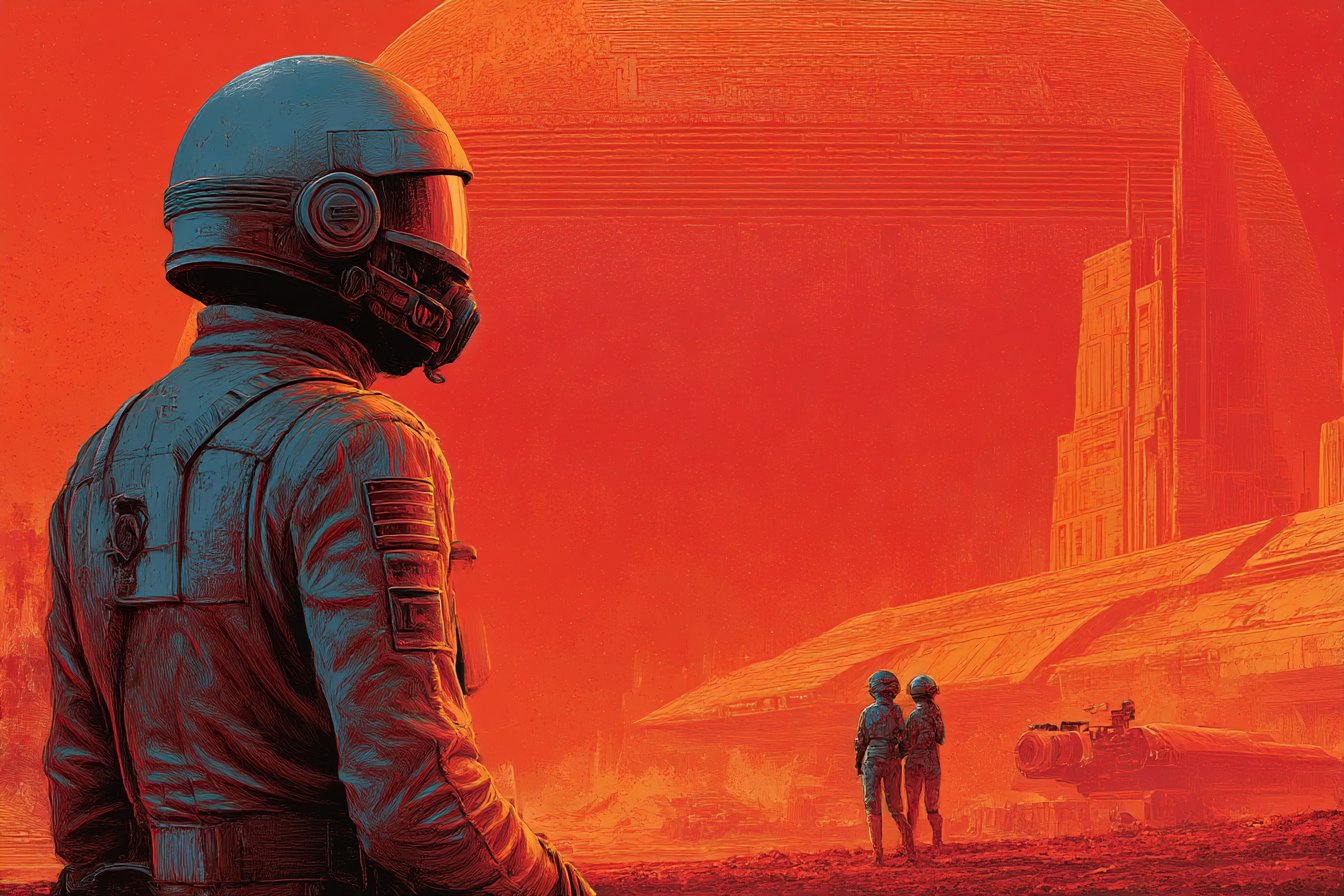
It's quiet, contemplative, and based on Simon Stålenhag's artwork of retro-futuristic small towns. Each episode is basically a short film about growing up in a place where weird technology is just part of the landscape. The pacing is deliberately slow, but if you let yourself sink into its rhythm, it's incredibly rewarding.

For something with more action, *Altered Carbon* (at least the first season) does cyberpunk better than most cyberpunk movies. The idea of consciousness as transferable data isn't new, but the show explores what that would mean for society, relationships, and individual identity. The murder mystery plot gives structure to all the philosophical questions about what makes you "you."
Here's the thing about all these shows — they're accessible without being dumbed down. You don't need a physics degree to follow *The Expanse*, but you'll learn something about orbital dynamics anyway. *Dark* doesn't require fluency in German philosophy, but you'll find yourself thinking about determinism versus free will. *The Good Place* won't make you a moral philosopher, but you might start questioning your own ethical choices.
What makes these series special is that they trust their audience to keep up while never forgetting that the science fiction is just the vehicle for human stories. Whether it's a robot questioning consciousness or a time traveler trying to save their family, the best sci-fi always comes back to that fundamental question: what does it mean to be human when the world changes around us?
Start with whichever premise grabs you most. Trust me, once you find your way in, you'll understand why the rest of us can't stop talking about these shows.

0 Comments