















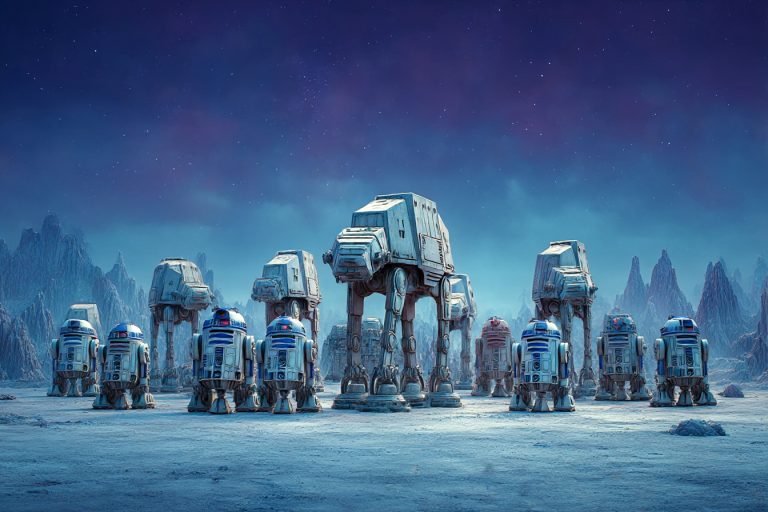

I was reorganizing my game collection last week — trying to make room for the new Mass Effect remaster because apparently I need to own that trilogy in every format ever made — and I started thinking about what makes certain sci-fi properties stick around forever while others disappear completely. Like, I’ve got shelves full of games from franchises that were supposed to be “the next big thing” and now I can’t even give them away at garage sales. But here I am, still buying Mass Effect for the fourth time.
It’s not just games either. My girlfriend was watching some new Star Trek show the other night (honestly can’t keep track of all the different series at this point), and I realized that franchise has been going strong since before my parents were born. Same with Doctor Who, Star Wars, all these massive properties that somehow keep finding new audiences decade after decade. Meanwhile, remember that sci-fi show… what was it called… Defiance? Had a whole transmedia thing with an MMO tie-in, looked super expensive, gone after three seasons. Nobody talks about it anymore.
So what’s the difference? What makes some sci-fi worlds become these unstoppable cultural juggernauts while others just fade away?
I think part of it is that the stuff that lasts doesn’t try to impress you with how advanced or perfect everything is. The Millennium Falcon is famously a piece of junk held together with spare parts and stubbornness. The TARDIS makes weird noises and the door gets stuck. Even in Mass Effect, the Normandy gets blown up and rebuilt, your armor gets dinged up, your weapons malfunction. These aren’t sleek perfect machines from a perfect future — they feel like tools that real people actually use and abuse.
That matters more than I used to think it did. When I was working on QA for this space combat game a few years back, the art team kept making everything look pristine and factory-fresh, like someone had just unwrapped it from the box. I kept filing bugs about it looking unrealistic, but they thought I was being picky. Game shipped and nobody connected with it emotionally. Everything looked impressive but nothing felt lived-in.
But here’s what really took me years to understand — the franchises that become generational aren’t actually about the sci-fi stuff at all. Strip away all the spaceships and laser swords and time machines, and Star Wars is about kids dealing with their parents’ mistakes. Star Trek is about trying to be decent to people who are completely different from you. Doctor Who is about staying curious and hopeful when everything seems hopeless. Mass Effect is about leadership and making impossible choices with incomplete information.
These are problems that don’t go away. Every generation deals with them. That’s why you can show the original Star Wars to a ten-year-old today and they still get it immediately — not because they care about the Death Star, but because they understand what it’s like to feel small and powerless and want to matter.
My nephew is sixteen and completely obsessed with the Marvel movies. When I was his age, superhero movies were mostly terrible, so this whole cinematic universe thing is wild to me. But he explained why he keeps watching them, and it wasn’t about the special effects or the action scenes. He said he likes that the heroes keep screwing up in ways he recognizes. Tony Stark builds something amazing and immediately loses control of it. Steve Rogers tries to do the right thing and makes everything worse. Peter Parker gets superpowers and still can’t get his life together.
That’s when it clicked for me. The sci-fi that lasts doesn’t show us perfect futures with perfect people having perfect adventures. It takes our messy, complicated, very human problems and scales them up until they’re impossible to ignore. The technology changes, the settings get bigger, but the core conflicts remain recognizably human.
Look at how these long-running franchises handle change over time. Not just “ooh, better graphics,” but actual meaningful change that acknowledges time passing and consequences mattering. The Federation in modern Star Trek isn’t the same optimistic organization from the original series, and that’s not a mistake — that’s commentary on how institutions change over time. The Doctor regenerates into different personalities, which lets the show explore how we all change as we age without actually aging the character. Even Star Wars, for all its problems with the sequel trilogy, at least tried to show what happens after the happy ending.
The franchises that die quickly are usually the ones that assume they can just freeze everything in place forever. Same characters, same conflicts, same stakes, just with slightly different window dressing each time. But real life doesn’t work that way, so stories that ignore change feel artificial pretty quickly.
Here’s something else I’ve noticed from trying to create consistent fictional worlds myself (and mostly failing at it): the stuff that lasts leaves room for other people’s imaginations. It gives you enough detail to feel grounded but not so much that there’s nothing left to discover. Star Wars shows you Jedi and Sith but trusts fans to imagine thousands of years of galactic history. Star Trek gives you Starfleet Academy but doesn’t specify every single course requirement. Mass Effect shows you this huge galaxy but somehow always feels like there are entire civilizations you haven’t met yet.
I spent way too much time once trying to design every detail of a space station for a story I was writing. What shops were on which level, how the environmental systems worked, crime statistics for different sectors — completely pointless. Nobody cares about sector seven’s recycling protocols. What they care about is whether it feels like a place where real people would actually live and work and complain about their neighbors playing music too loud.
Most popular
The other thing successful franchises do that I wish more creators understood — they’re not afraid to tell different kinds of stories within the same universe. Star Trek can do serious philosophy one episode and goofy comedy the next. Star Wars works as a kids’ adventure movie and a meditation on fascism and a soap opera about space wizards, sometimes all in the same film. Doctor Who has been horror, comedy, historical drama, and fairy tale, often switching genres mid-episode.
Most failed sci-fi tries to be one thing consistently. But people aren’t consistent, so why should stories about them be?
What really gets me is how these lasting franchises become part of the language. You can say “red shirt” or “may the force be with you” or “wibbly-wobbly timey-wimey” and people immediately know what you mean, even if they’re not huge fans. They become shorthand for ideas that didn’t have names before. They give us ways to talk about concepts that are too big or weird or scary to discuss directly.
Maybe that’s the real secret sauce. The sci-fi that survives generations isn’t about predicting the future — it’s about giving us better tools to understand the present. And those tools need to be sturdy enough to still work for your kids and their kids. Not because the technology will be the same, but because the human problems will be.
That’s probably why I keep buying Mass Effect in every format. Not because I need to experience Shepard’s story again, but because I need to keep that conversation about leadership and sacrifice and impossible choices available whenever the world gets too complicated to handle directly. Sometimes you need space marines and alien politics to talk about the stuff that really matters.

Logan lives in Minneapolis with too many consoles and just enough opinions. He explores how sci-fi plays differently across games, TV, and film—celebrating great world-building and calling out lazy tropes. Expect passionate takes, sarcasm, and the occasional Mass Effect reference.