











I was digging through my old storage boxes last weekend, looking for my slide rule (don’t laugh, I still use it sometimes), when I stumbled across stacks of paperbacks I’d forgotten I owned. Without really thinking about it, I’d sorted them years ago into these neat little categories. Hard sci-fi over here, space operas there, cyberpunk novels in a separate pile that still smelled faintly of the musty used bookstore where I’d found most of them back in the ’80s.
It got me thinking about something I’ve noticed after four decades of reading this stuff – we don’t just randomly pick up science fiction books. There’s something deeper going on, some psychological itch each subgenre scratches in its own particular way. And after spending my career designing actual spacecraft while reading stories about imaginary ones, I think I’ve figured out what that something is.
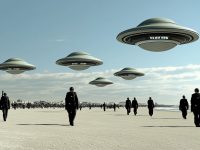
Take space opera, which honestly was never my favorite genre until I retired and finally had time to appreciate what it was actually doing. When I was working, I’d read *Foundation* or *Dune* and get hung up on the physics – how exactly does spice allow faster-than-light travel, and why doesn’t anyone in Asimov’s galaxy understand basic orbital mechanics? But my grandson borrowed my copy of *Hyperion* last year, and watching his reaction taught me something. He wasn’t reading it for the science. He was reading it for the scope.
Space opera isn’t about space at all, really. It’s about making human problems feel cosmic. The kid would come back from school stressed about some drama with his friends, then lose himself in stories where individual decisions affect entire star systems. That’s the appeal – it takes the emotional weight we all carry around and gives it a stage big enough to matter. When your protagonist is choosing between saving their lover or saving a planet, suddenly your own relationship troubles don’t seem so overwhelming.
Hard science fiction, now that’s more my speed. Always has been. I remember spending an entire evening in 1987 working through the physics in Kim Stanley Robinson’s *Red Mars*, checking his calculations for the space elevator against my own textbooks. The math held up, mostly. Had some quibbles about tensile strength assumptions, but the basic engineering was sound. That’s exactly what I wanted – speculation grounded in actual science.
People who gravitate toward hard SF aren’t looking for escape, we’re looking for extension. We want authors who’ve done their homework, who understand that the universe has rules and that those rules make some things possible and others impossible. When Greg Egan writes about quantum mechanics or when Alastair Reynolds describes relativistic spacecraft, I can follow their reasoning. I can see where they’re pushing beyond current knowledge and where they’re working within established physics.
My wife thinks I’m nuts for fact-checking fiction, but there’s real pleasure in reading a story where the author clearly understands how orbital transfer windows work or why you can’t just ignore conservation of momentum. It makes the impossible parts feel earned somehow.
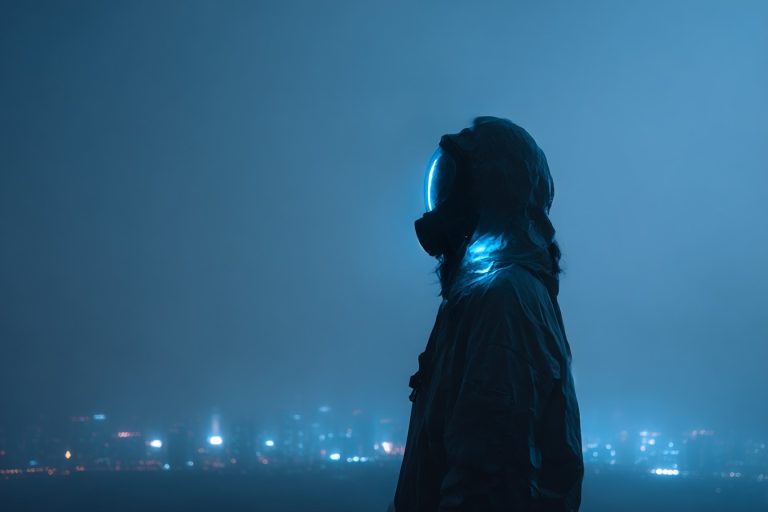
Cyberpunk hit me differently when I first encountered it. This was the early ’80s, I was working on satellite communication systems, and suddenly here was William Gibson writing about a future where information was power and networks were everything. Seemed far-fetched at the time. Now I’m typing this on a device that connects me instantly to most of human knowledge, while algorithms track my reading habits and targeted ads follow me around the internet. Gibson wasn’t writing about the future, he was writing about an amplified present.
The appeal of cyberpunk isn’t really the technology – it’s the paranoia. Every time I have to agree to some incomprehensible terms of service or wonder what Amazon’s recommendation engine thinks it knows about me, I get that cyberpunk feeling. The sense that we’ve built systems we don’t fully control and they’re reshaping us faster than we can adapt. Cyberpunk takes that anxiety and turns it into adventure.
Time travel stories scratch yet another itch entirely. I’ve been keeping notes on temporal mechanics in fiction for years now – occupational hazard of being an engineer, I guess. Some authors use fixed timelines, others allow paradoxes, still others split into parallel universes. The physics is usually nonsense, but that’s not the point. The point is regret.
Everyone has moments they’d like to undo, decisions they’d make differently with hindsight. Time travel fiction lets us explore those feelings safely. Plus there’s something satisfying about stories where knowledge becomes power, even when that power comes with impossible moral choices. Would you really go back and kill Hitler if it meant erasing everyone who was born because of changes your action caused?
Horror science fiction works by making the unknown genuinely unknowable. I made the mistake of reading Peter Watts’ *Blindsight* during a business trip to a remote facility in Nevada. Middle of nowhere, weird desert sounds at night, and here I’m reading about aliens so foreign that contact with them might literally drive humans insane. Regular horror shows you the monster eventually. Science fiction horror suggests maybe we’re not equipped to understand what we’re looking at even when we see it clearly.
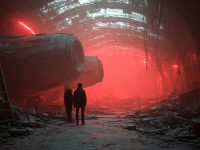
Post-apocalyptic fiction appeals to the part of us that wonders if we could handle real adversity. I spent some time during the early pandemic thinking about supply chains and self-sufficiency, growing a small vegetable garden and learning to preserve food. Post-apocalyptic stories aren’t really about the end of the world – they’re about what comes after, about which parts of our current civilization are truly necessary and which might be worth abandoning.
Most popular

What’s interesting is how reader preferences change over time. In my twenties and thirties, I wanted hard science fiction with rigorous physics and detailed technical explanations. Now I find myself drawn to quieter stories about communication and understanding – Kim Stanley Robinson’s later work, stuff like *Arrival* or *Story of Your Life*. Maybe that’s because the older you get, the more you realize how difficult it is to truly understand even the humans around you, let alone hypothetical aliens.
Each subgenre offers its own particular mix of comfort and challenge. Space opera makes our problems feel cosmic. Hard SF makes the impossible feel plausible. Cyberpunk makes the present feel dangerous. Time travel makes the past feel changeable. Horror SF makes the unknown feel unknowable. Post-apocalyptic fiction makes the future feel survivable.
And that’s why we keep reading, isn’t it? Because somewhere between the familiar and the strange, between the scientific and the speculative, we find new ways of thinking about the world we actually live in. Even us grumpy old engineers who should probably know better.

John spent forty years designing real spacecraft before turning his attention to fictional ones. Writing from Oregon, he brings a scientist’s curiosity to sci-fi—separating good speculation from bad physics while keeping his sense of wonder firmly intact.