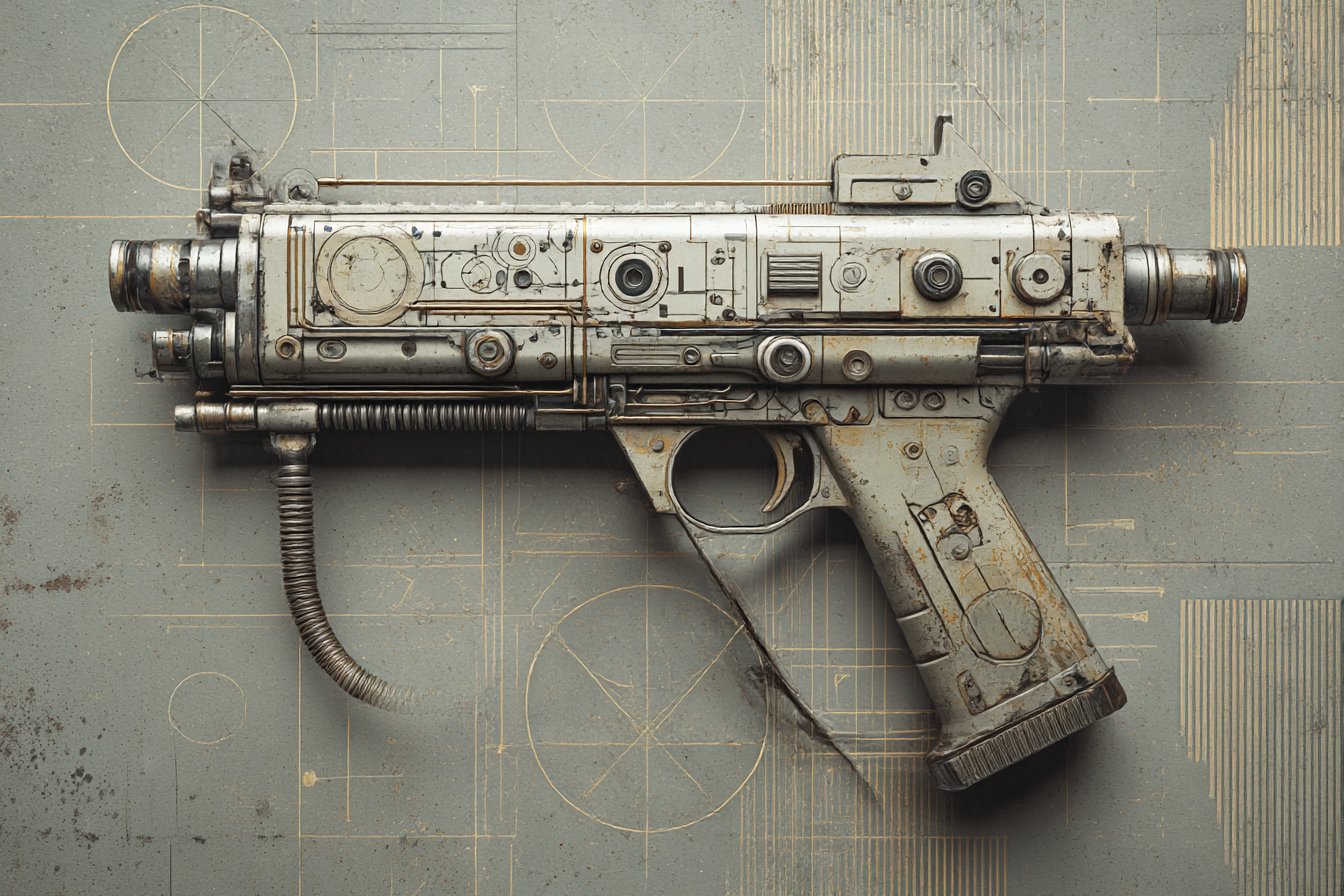

Last week I was tinkering with a prop blaster from a friend’s garage sale — one of those chunky plastic things that lights up when you pull the trigger — and it got me thinking about how bloody difficult it must be to design weapons that feel both futuristic and believable. I mean, this thing looked like someone had glued a calculator to a hairdryer and called it done. Yet somehow, the best sci-fi weapons stick in our minds for decades.
The thing is, when you’re creating a fictional weapon, you’re walking this impossible tightrope between making something that could theoretically work and making something that looks absolutely mental in the best possible way. Too realistic? Boring. Too outlandish? Nobody buys it, even in a story about telepathic space wizards.
I’ve been fascinated by this balance ever since I started paying attention to how different franchises approach their arsenal designs. Take the pulse rifle from Aliens — that thing feels like it could genuinely exist in some military contractor’s wet dreams. Cameron and his team based it on a Thompson submachine gun with bits of a Franchi shotgun grafted on, then added all these tactical accessories that actually serve recognisable functions. The ammo counter makes sense. The grip placement works. Even the way Vasquez handles it feels natural, like she’s been training with that specific weight distribution for months.
But then you’ve got something like the lightsaber, which is completely mental from an engineering standpoint — I mean, a blade made of contained plasma that somehow stops at exactly the right length? — yet it works because it serves the story’s needs perfectly. It’s elegant, it’s personal, it makes every fight scene a dance rather than a shootout. The design tells you everything about the Jedi philosophy: precise, disciplined, requiring skill over brute force.
When I was working on that space station mod project, I spent weeks just staring at reference photos of real military hardware, trying to figure out what makes something look functional versus decorative. Turns out, it’s usually the boring bits. The cables that have to go somewhere logical. The heat vents positioned where they’d actually dissipate thermal buildup. The wear patterns on grips and controls that suggest regular use.
I remember sketching out designs for a fictional energy rifle and getting completely stuck on where to put the power source. Too big and obvious? Looks clunky. Too small and hidden? Then where’s all that juice coming from? I must’ve drawn fifty different battery configurations before settling on this modular system with swappable power cells that slot into the stock. Still not perfect, but at least I could explain how it worked to myself.
The best fictional weapons seem to follow certain unspoken rules. They need a clear power source — whether that’s bullets, batteries, or some exotic fuel. They need moving parts that look like they have a purpose, not just random greebles stuck on for visual interest. And they need to feel like they have weight, like they’d kick back when fired or require proper handling technique.
You Might Also Like

What really gets me is how the same basic design philosophy can produce completely different results depending on the story’s tone. Look at Star Trek phasers versus Warhammer 40K bolters. Both universes went for “energy weapons of the future,” but Trek’s clean lines and smooth surfaces suggest precision and restraint, while 40K’s chunky, gothic absurdity tells you this is a universe where subtlety went out the window along with sanity.
I’ve noticed that the most memorable sci-fi weapons tend to have some kind of unusual operational quirk. The Blade Runner pistol that needs to be manually charged between shots. Mass Effect’s thermal clips that force you to actually think about ammunition management. Even something as simple as having to wind up a weapon before firing — like the Gears of War Lancer — can make it feel more real and tactile.
The sound design matters just as much as the visual. I once tried to recreate the distinctive whine of a Star Wars blaster using just household electronics and recording software. Turns out that iconic noise comes from hitting a guy wire on a radio tower with a hammer, then layering in some synthesised elements. But the key thing is, it doesn’t sound like any real gun. It has its own acoustic signature that immediately tells you this is Something Else.
Then there’s the question of how these weapons interact with their environment. Do they leave scorch marks? Punch clean holes? Disintegrate targets entirely? Each choice carries storytelling weight. Clean, bloodless energy weapons let you show violence without gore, perfect for Star Trek’s more optimistic tone. Messy, destructive firearms emphasise the brutal reality of conflict, which works better in something like Starship Troopers.
I think the most successful fictional weapons are the ones that feel like natural extensions of their universe’s technology level and philosophy. The chunky, analog-looking guns in Alien feel right in a world where computers still use green text on black screens and everything’s held together with gaffer tape. Meanwhile, Minority Report’s transparent, almost crystalline weapons fit perfectly with that film’s clean, touch-based interface aesthetic.
What really impresses me is when designers manage to create something that looks completely alien yet still suggests a logical operating principle. The weird bio-mechanical guns in eXistenZ or the living weapons in some of Cronenberg’s work — they’re disturbing precisely because you can almost see how they might function, even though they operate on completely foreign principles.
The challenge, I think, is creating something that serves multiple masters simultaneously. It needs to look cool enough to sell toys and inspire fan art. It needs to function believably within the story’s internal logic. And it needs to communicate something about the characters or world that uses it. That’s a hell of a design brief, and it’s probably why so many fictional weapons end up looking like boring variations on existing firearms with extra bits glued on.
But when someone gets it right? When they create something that feels both impossible and inevitable? That’s when sci-fi weaponry transcends mere prop design and becomes genuine world-building. It’s worth the effort.

0 Comments