












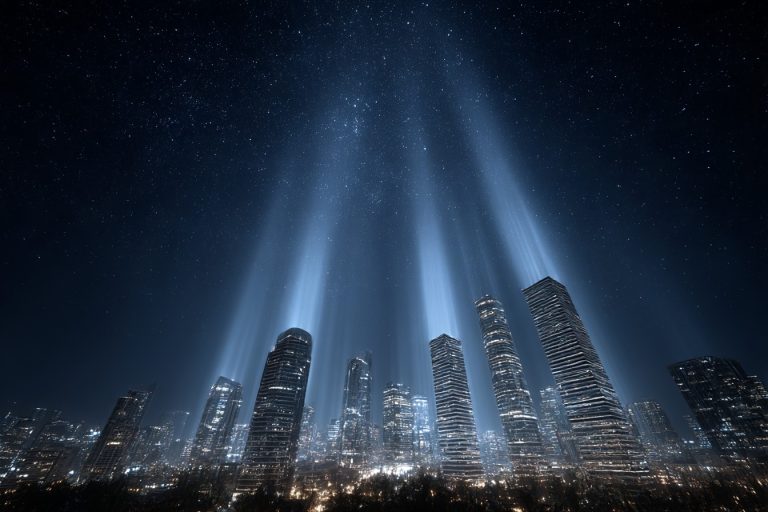

I was hunched over my editing bay last Tuesday, cutting together some corporate footage of downtown Austin’s skyline, when I started thinking about why most sci-fi cities look so damn fake. You know that generic look – take any modern city, make the buildings three times taller, throw in some flying cars and call it the future. It’s lazy filmmaking, honestly. The really great futuristic cities understand something most designers miss completely: these aren’t just bigger versions of what we have now. They’re entirely different organisms.
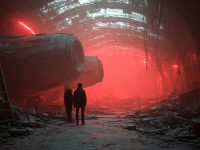
Been rewatching *Blade Runner 2049* again – probably my fifteenth time through – and what strikes me isn’t just how good it looks, but how it feels like a place that actually functions. Those massive structures aren’t just set pieces; they’re environments where people live and work and survive. Denis Villeneuve and his production team clearly thought through how air moves through those spaces, how people navigate between levels, what happens when it rains in a city that’s essentially one enormous building.
This is where my film school background really comes in handy. We spent months studying production design, learning how great designers create spaces that serve the story. In sci-fi, the city usually *is* the story – it’s a character in itself. But too many films treat it like expensive wallpaper instead of a living ecosystem.
I remember being maybe twelve years old, watching *Ghost in the Shell* on a bootleg VHS my cousin brought back from Los Angeles. The animation was incredible, sure, but what blew my mind was how vertical that city felt. Not just tall buildings, but layers upon layers of activity. Markets and cafes tucked into spaces between massive structural supports. People living their entire lives without ever reaching ground level. It wasn’t just visually stunning – it was believable.
Started sketching my own city designs after that, filling notebook after notebook with ideas about how vertical spaces would actually work. My engineering-minded dad thought I was wasting time, but I was genuinely curious about the practical problems. How do you move fresh air through a structure that’s essentially a mountain? What happens to all the waste? Where do people go when they need to feel connected to nature?
The physics alone are fascinating. I’ve run some basic calculations on my laptop – just for fun, you understand – modeling airflow through hypothetical mega-structures. The lower levels would be perpetually humid from all that human activity above. Condensation would be constant. You’d probably develop entirely different architectural styles just to deal with the moisture. The middle sections might be the sweet spot – protected from weather but still getting decent ventilation. And the top levels? They’d deal with incredible wind shear and temperature swings.
Most sci-fi films completely ignore these realities. Everything’s either perfectly climate-controlled or dramatically grimy, with nothing in between. But real vertical cities would have microclimates, weather patterns that exist nowhere else on Earth. I love how *The Fifth Element* hints at this – you can almost smell the different levels of that world, from the humid lower reaches to the clean upper atmospheres.
Lighting is another area where filmmakers usually screw up. They either flood everything with harsh artificial illumination or go for that perpetual twilight look that’s become such a cliché. But think practically – in a city that’s essentially a vertical canyon, natural light becomes precious. Really precious. The most convincing futuristic cities understand this scarcity. They make sunlight something that has to be captured, redirected, fought over.
I actually spent a weekend in my garage with mirrors and LED panels, trying to figure out how you’d illuminate spaces several kilometers deep. It’s way trickier than you’d expect. Direct lighting creates harsh shadows and uses massive amounts of energy. But if you can bounce and diffuse light effectively – which requires some serious engineering – you start to understand why so many sci-fi cities have those elaborate mirror systems and light pipes running through them.
The transportation question is equally critical, and this is where my editing experience really helps. When you’re cutting footage, you develop an intuitive sense of how people move through spaces. In vertical cities, movement becomes three-dimensional in ways we’re not used to. You can’t just think about elevators and stairs. People need to travel vast horizontal distances too, probably between structures that are constantly swaying in the wind.
The cities that feel most real usually have layered transit systems. High-speed tubes for long distances, moving walkways for medium distances, traditional walking for short hops. *Minority Report* actually handles this pretty well – you’ve got multiple transportation modes operating simultaneously, each serving different needs.
But here’s what really separates great sci-fi cities from generic ones: human scale. Just making everything bigger doesn’t make it better. I’ve been in those massive modern airports that try to feel “futuristic,” and they’re exhausting. Everything’s too big, too impersonal, too overwhelming. Humans still need spaces that feel manageable.
Even in *Blade Runner*’s oppressive Los Angeles – which is definitely not designed for comfort – there are those little noodle bars and cramped electronics shops that feel human-sized. They’re refuges from the overwhelming scale of everything else. Those intimate spaces are crucial for making audiences believe people actually live in these environments.
Most popular

The cultural element is probably most important and most often ignored. Cities aren’t just buildings and infrastructure – they’re the accumulated habits of everyone who lives there. What kind of art develops when you never see the horizon? How do people meet and socialize in vertical communities? What happens to sports, to music, to all the weird little traditions that make places feel lived-in?
This is why I keep building physical models in my spare time, testing out ideas about how these spaces might actually work. Not because I think I’ll design the next great sci-fi film – though that would be nice – but because understanding the practical constraints helps me recognize when filmmakers have really done their homework.
The cities that stick with you are the ones that feel possible. Maybe not today, maybe not with current technology, but someday. They follow consistent rules, solve real problems, create believable new ones. They’re places where, despite all the impossibilities, you can imagine yourself grabbing coffee before work, even if that work happens to be three kilometers above sea level.
That’s the difference between great production design and expensive set decoration. Great design creates worlds. Everything else just creates pretty pictures.

Dylan grew up rewinding VHS tapes to study practical effects and never really stopped. Now based in Austin, he writes about sci-fi cinema with the eye of a filmmaker and the heart of a fan—celebrating the craft, the weirdness, and the magic of futures built by hand, not computers.