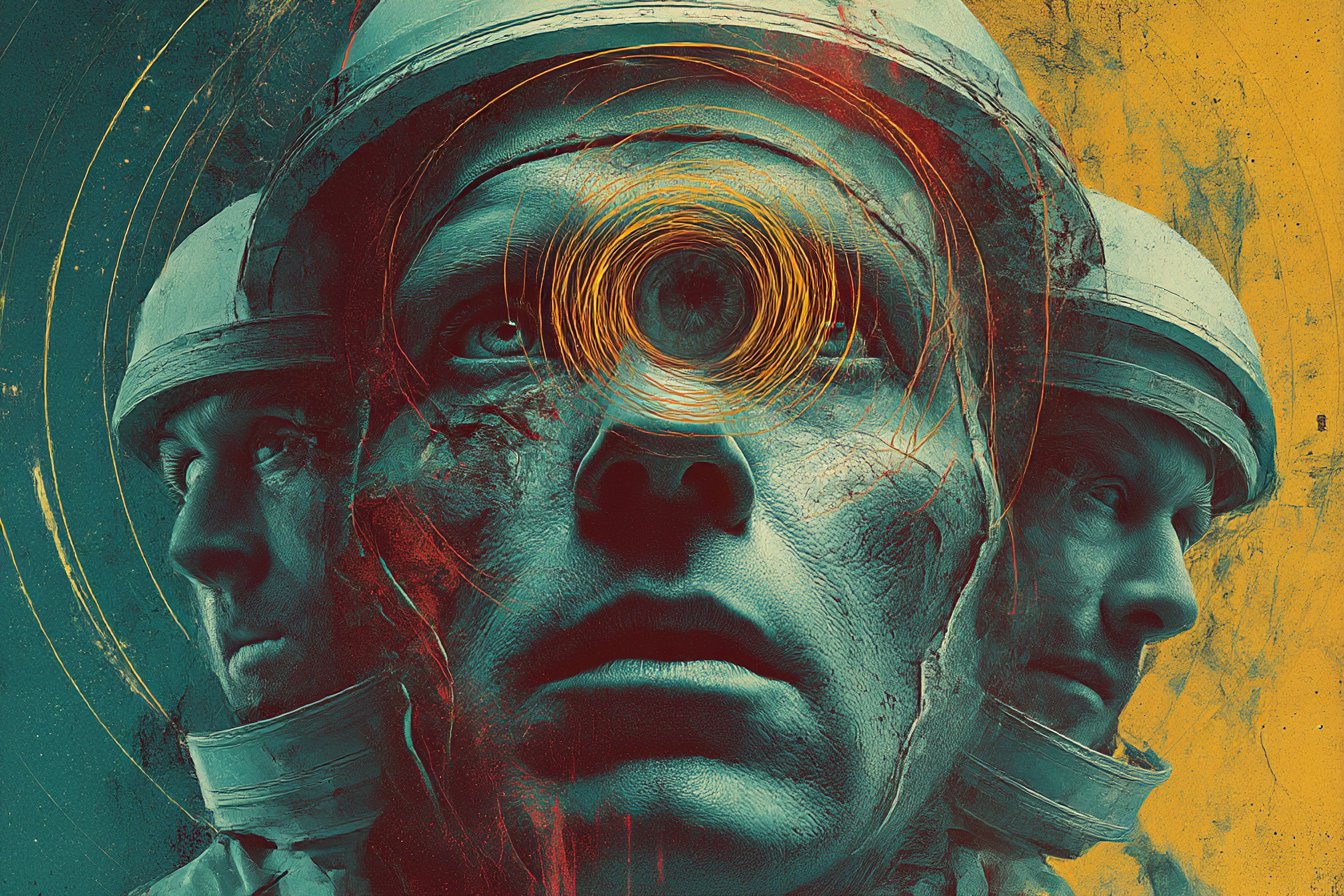

The first time I saw someone cough up black goo on television, I was eating cereal. Probably Cheerios — I remember the spoon stopping halfway to my mouth while I stared at the screen. This wasn’t your typical zombie show blood-and-gore moment. Something about the way the character’s eyes widened, the genuine confusion before the horror set in, made my stomach twist in a way I wasn’t expecting.
That was Helix. And I was hooked.
You know how some shows grab you with explosions or car chases? Helix gets under your skin with something far more unsettling — the creeping realisation that the human body can betray you in ways you never imagined. I’d seen plenty of sci-fi series tackle disease outbreaks before, but most treated them like plot devices. Zombie virus? People turn. Alien parasite? They become monsters. Simple. Clean. Helix? Nothing about it felt clean.
The premise sounds straightforward enough: CDC team gets dispatched to an Arctic research facility after a disease outbreak. Standard stuff, right? Except the moment you meet Dr. Alan Farragut and his team stepping off that helicopter into the Antarctic wasteland, you know this isn’t going to be standard anything. The facility — Ilaria Corporation’s remote Arctic Biosystems — feels wrong from the start. Too clean, too organised, too many locked doors and nervous glances from the staff.
I spent a weekend binge-watching the first season during a particularly grim February, wrapped in blankets while snow piled up outside my window. Perfect viewing conditions, really. The show’s use of isolation isn’t just atmospheric — it’s weaponised. These characters can’t leave. Help isn’t coming. And whatever’s happening in that facility, it’s spreading.
What struck me most wasn’t the body horror (though there’s plenty), but how the series handles paranoia. Everyone’s potentially infected. Everyone’s potentially lying. The CDC team arrives thinking they’re the experts, the ones who’ll solve everything, but they’re immediately out of their depth. Dr. Hatake, the facility’s enigmatic leader, knows more than he’s saying. Julia Walker, the base’s civilian doctor, seems helpful but… is she? Even the supposed victims might be playing a longer game.
I remember pausing an episode halfway through — I think it was when they discovered the “silver eyes” — because I needed to pace around my flat for a bit. The show had this way of making you question basic assumptions about who was human and who wasn’t, who could be trusted and who was already compromised. Not through cheap reveals or gotcha moments, but through gradual erosion of certainty.
You Might Also Like

The science behind the virus — or viruses, plural, because there are definitely multiple strains at work — walks that fine line between plausible and fantastical. I’ve got enough biology background to appreciate when a show at least tries to make its plague feel real. Helix doesn’t just wave its hands and say “mysterious disease.” There are vectors, transmission methods, incubation periods. The way the virus affects different people in different ways? That actually makes sense from an evolutionary standpoint — a pathogen that can adapt to its host has serious survival advantages.
But it’s the psychological stuff that really gets its hooks in you. The show understands that in a crisis like this, the real enemy isn’t necessarily the disease. It’s the breakdown of trust, the way fear makes people do terrible things to each other. When you’re not sure who’s infected, when the symptoms aren’t always obvious, when someone who seems fine today might be patient zero tomorrow… well, civilization gets pretty thin pretty fast.
I found myself checking my own reflection more than usual while watching. Ridiculous, I know, but the show’s imagery — those black veins spreading under the skin, the way infected people’s behaviour changes subtly before becoming obvious — it gets in your head. Good sci-fi horror should make you aware of your own body in uncomfortable ways.
The second season shifts gears completely, jumping ahead thirty years to a different crisis involving immortals and genetic engineering. Some fans didn’t love the change, but I appreciated the ambition. Rather than just repeating the isolated facility formula, the creators decided to explore what happens when that kind of biological manipulation gets out into the wider world. The themes stay consistent — who controls human evolution, what price are we willing to pay for survival — but the scope expands dramatically.
What I respect most about Helix is its commitment to showing consequences. Actions have ripple effects. Characters make desperate choices that come back to haunt them episodes later. The show doesn’t reset everything at the end of each arc — trauma accumulates, relationships fracture, trust once broken stays broken. It’s exhausting in the best possible way.
The production design deserves mention too. Those sterile white corridors that gradually become more claustrophobic, the way certain areas of the facility feel deliberately maze-like, the contrast between the pristine labs and the organic horror of what’s happening inside them — it all serves the story. I tried sketching some of those interior spaces after watching, curious about how they created that sense of wrongness. Turns out it’s mostly about proportions being just slightly off, doorways a bit too narrow, ceilings either too high or too low.
Looking back, Helix arrived at the perfect moment. This was before the real-world pandemic made disease outbreaks feel less like science fiction and more like documentary footage. The show’s exploration of institutional cover-ups, the way authorities downplay threats to avoid panic, the speed with which normal social structures can collapse when people lose faith in expertise… well, let’s just say some of those themes hit differently now.
Did the series stick the landing? That’s debatable. The mythology got pretty convoluted by the end, and some of the immortal subplot felt underdeveloped. But the core experience — that slow-burn paranoia, the way it made biological horror feel personal and immediate — that worked brilliantly. Even now, I catch myself thinking about those silver eyes when I hear someone cough unexpectedly in a quiet room.

0 Comments