
You know that feeling when you stumble across a show that seems completely bonkers on the surface, but then hooks you so completely that you can't explain why to anyone else? That was me with Farscape back in 1999. My flatmate kept insisting I watch this "weird puppet show in space," and honestly, I thought he'd lost his mind. Puppets? In sci-fi? Come on.
But here's the thing – twenty-five years later, I'm still thinking about John Crichton's journey, still getting goosebumps when I hear that opening theme, still convinced that Farscape got something fundamentally right about science fiction that most other shows miss entirely.

And now that it's sitting there on Prime Video, waiting for new audiences to discover it, I've been wondering: what exactly makes this bizarre Australian production so damn compelling?
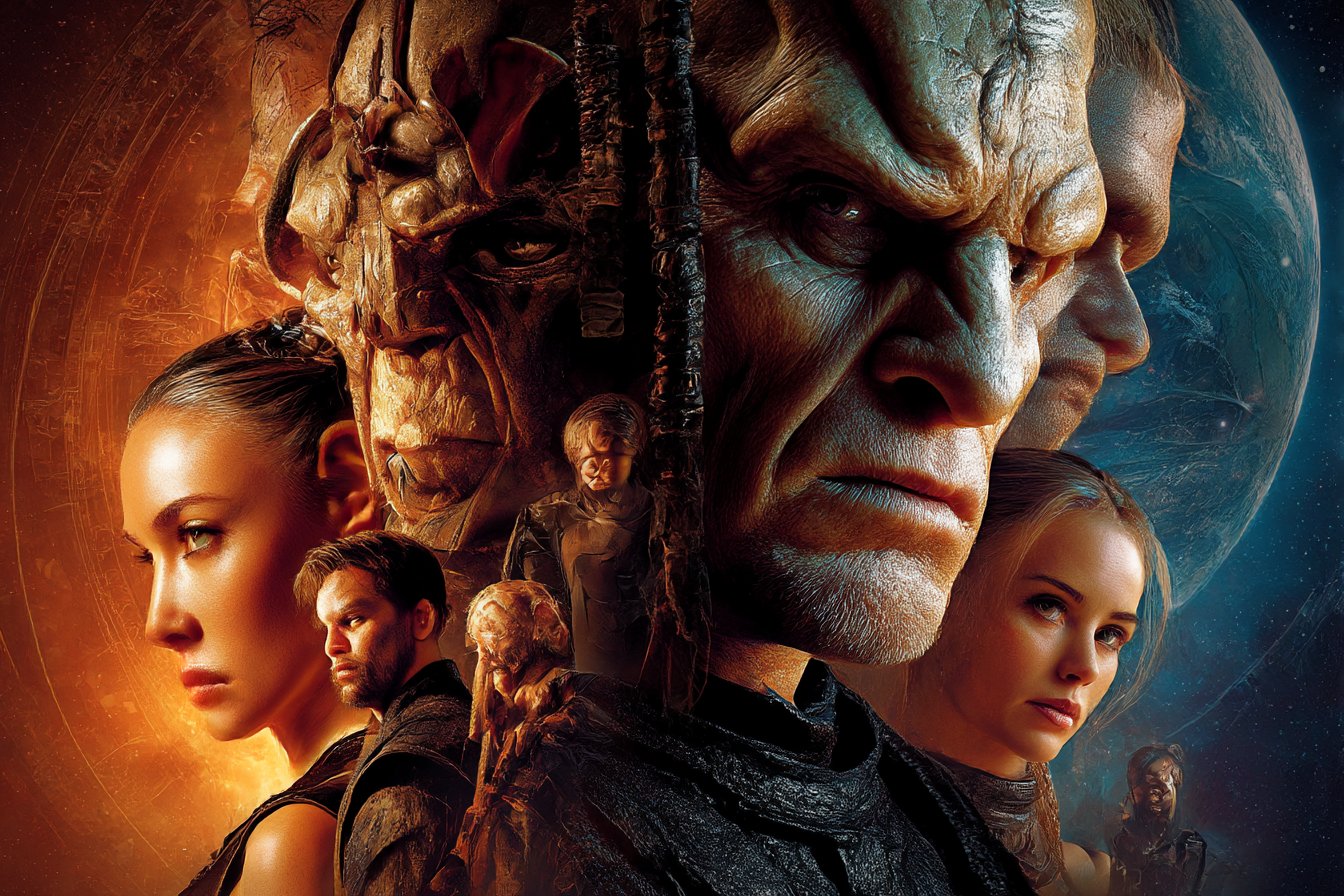
First off, let's acknowledge the obvious weirdness. Farscape looks like nothing else on television, before or since. You've got Jim Henson's Creature Shop building these incredible alien puppets that somehow feel more alive than most CGI creations today. Rygel, that little deposed emperor, isn't just a puppet – he's a fully realised character with motivations, fears, and this wonderful petty streak that makes him feel absolutely real. Same with Pilot, this massive multi-limbed navigator whose design should be nightmare fuel but instead becomes one of the most sympathetic characters on the show.
The technical achievement alone is staggering. I spent some time a few years back trying to figure out how they made Rygel's eye movements so expressive, and it turns out there's this whole network of cables and servos hidden in his body, operated by puppeteers who had to coordinate their movements with surgical precision. No wonder each episode took weeks to film. But that physical presence – the weight, the texture, the way light hits these creatures – creates an immediacy that green screen work often struggles to match.
What really grabbed me, though, wasn't the puppetry or the production design. It was the emotional honesty. John Crichton starts the series as this fairly typical American astronaut – confident, wise-cracking, sure of his place in the universe. Then he gets sucked through a wormhole and everything falls apart. Not just his circumstances, but his sense of self, his moral certainties, his sanity.

Most sci-fi shows would've had him adapting heroically, learning alien languages, becoming a natural leader. Farscape does something far more interesting: it breaks him down completely. Over four seasons, you watch this man slowly lose pieces of himself – his innocence, his human relationships, sometimes his grip on reality. The show doesn't shy away from the psychological cost of being stranded in an incomprehensible universe where violence is casual and survival often requires compromising your principles.
I remember watching the episode where Crichton has to torture someone for information. Not reluctantly, not with anguish – he's genuinely good at it by this point, and that terrifies him more than any alien threat. That moment crystallised something for me about why Farscape works: it takes its premise seriously. If you really were lost in space, surrounded by hostile aliens, cut off from everything familiar, you wouldn't just adapt. You'd change, probably in ways you wouldn't recognise.
You Might Also Like

The supporting characters get the same treatment. Aeryn Sun isn't your typical tough female warrior – she's a former soldier struggling with the concept that enemies can become allies, that showing mercy isn't weakness, that her rigid military worldview might be fundamentally flawed. D'Argo carries around decades of rage and shame that colour every decision he makes. Even Zhaan, the spiritual healer, has this dark past as a violent revolutionary that occasionally surfaces in disturbing ways.
What's brilliant is how these damaged people slowly learn to function as a family. Not a crew or a team – a family, with all the messiness that implies. They fight, they hurt each other, they keep secrets, they make terrible decisions out of love or fear. But they also protect each other, sacrifice for each other, find ways to heal together that none of them could manage alone.
The show's approach to science fiction concepts follows the same pattern. Take the Peacekeepers, the military organisation that's basically the show's version of the Empire. They're not cartoonishly evil – they're efficient, organised, genuinely convinced they're bringing order to chaos. Their technology is impressive but flawed, their soldiers are competent but human. When they do terrible things, it's usually because they've convinced themselves it's necessary, not because they're mustache-twirling villains.
Or consider the living ships. Moya isn't just a cool spaceship design – she's a character with her own needs, fears, and relationships. The bond between her and Pilot isn't just functional but emotional, sometimes even romantic in its own alien way. When the ship gets injured, it matters not just tactically but personally. When she has to make difficult choices, the crew doesn't just override her – they negotiate, they argue, they respect her autonomy even when it's inconvenient.

This attention to emotional truth extends to the show's handling of violence and consequences. Characters don't just shake off injuries or traumatic experiences. When someone dies, it haunts the survivors. When relationships break down, they don't magically repair themselves with a single conversation. Crichton's growing facility with violence doesn't make him more heroic – it makes him more frightening, to his enemies and to himself.
The visual design supports all of this beautifully. The sets feel lived-in, worn down by years of use. The costumes show wear and tear, get dirty, need repair.

Nothing looks pristine or manufactured – everything has history, character, personality. Even the sound design contributes, with Moya's organic groans and whispers creating this sense of being inside a living creature rather than a machine.
Twenty-five years on, Farscape's commitment to emotional authenticity and practical effects gives it a timeless quality that many flashier shows lack. The puppets don't look dated because they were never trying to look like anything other than themselves. The character development doesn't feel forced because it emerges naturally from the situations and relationships the writers created.
And maybe that's why it still holds up so well. In an era of increasingly polished, committee-designed entertainment, Farscape remains gloriously, unapologetically weird. It trusts its audience to care about strange creatures and broken people finding their way through an hostile universe. It earns its emotional moments instead of just manufacturing them. It understands that the best science fiction isn't about the technology or the aliens – it's about what happens to us when we encounter the truly unknown.

0 Comments