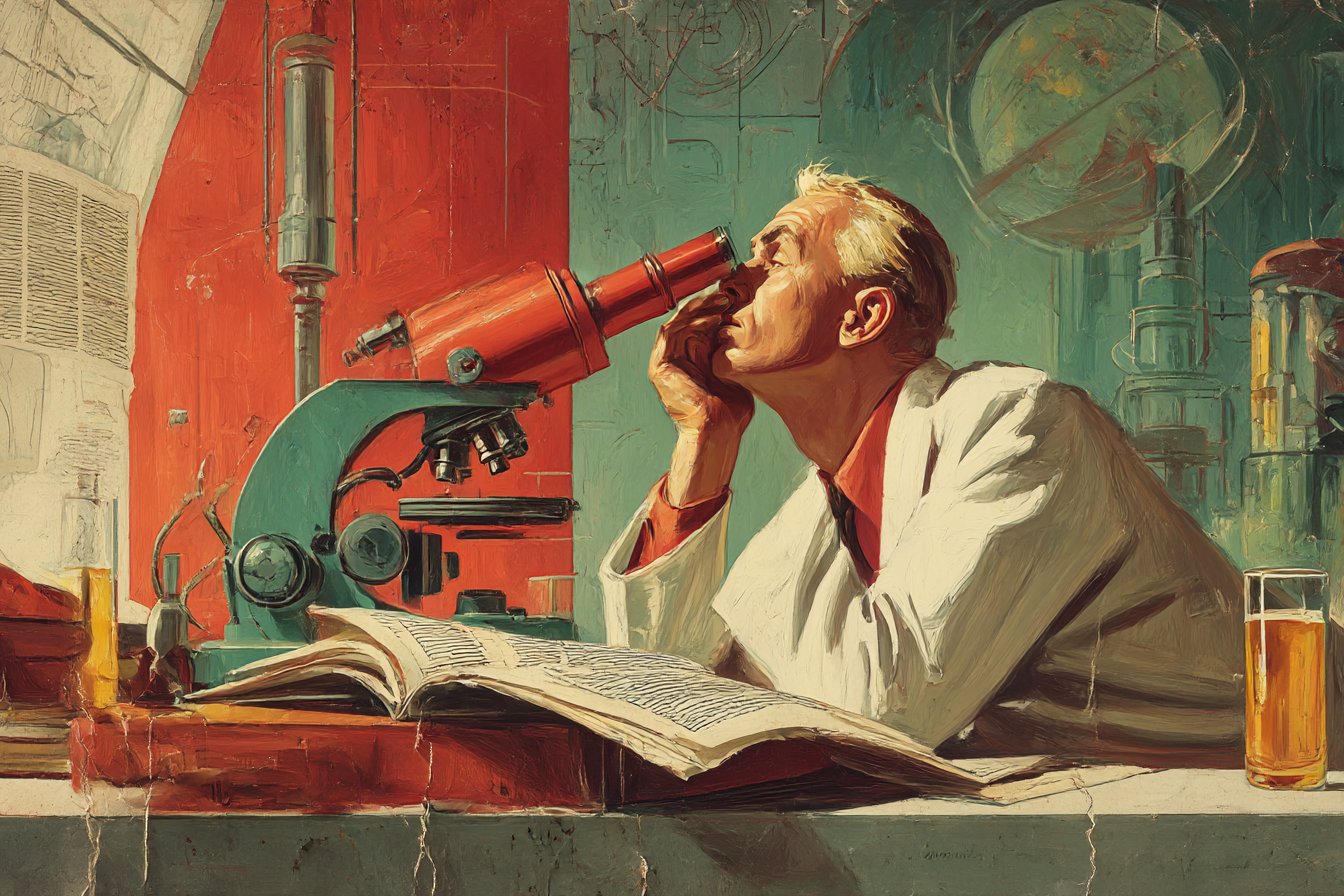

You know that moment when you’re watching a movie and something impossible happens on screen, but instead of rolling your eyes, you find yourself leaning forward, thinking “wait, how would that actually work?” That’s the sweet spot I live for — where rigorous science meets boundless imagination, creating stories that feel both magical and believable.
Last month, I was rewatching *Arrival* for probably the tenth time (my partner jokes that I have three movies on permanent rotation, and this is definitely one of them), and I got caught up again in how the film handles linguistics as a hard science. The way Louise Banks approaches the alien language isn’t just academic handwaving — it’s grounded in real theories about how language shapes thought, the Sapir-Whorf hypothesis, the actual methodical process of decoding unknown communication systems. But then the story takes this scientific foundation and pushes it into territory that’s purely speculative: what if understanding a radically different language could literally rewire how your brain processes time?
That’s the magic formula right there. Start with something we know, something real, then ask “but what if?” and follow that question wherever it leads.
I’ve been thinking about this balance a lot lately because I’ve been corresponding with a physicist named Dr. Sarah Chen who consults on sci-fi projects. She told me something fascinating: the best science fiction writers often understand the rules better than people who break them carelessly. “You can’t convincingly bend reality,” she said, “unless you first understand what you’re bending.”
Take Andy Weir’s approach in *The Martian*. The guy did his homework — and I mean really did it. Every calculation for growing potatoes in Martian soil, every orbital mechanics equation, every life support system failure and workaround. The science is so solid you could probably use the book as a survival manual if you ever found yourself stranded on Mars (which, let’s be honest, would be simultaneously the worst and most exciting day of your life). But here’s the thing: all that technical accuracy serves the story, not the other way around. We’re not reading a NASA manual — we’re following Mark Watney as he science’s the shit out of his problems, and every equation makes his personality shine brighter.
I learned this lesson the hard way during my game-modding days. I spent weeks researching how artificial gravity might actually work on a rotating space station, calculating the right RPM to avoid motion sickness, figuring out the Coriolis effects on walking and throwing objects. I was so proud of getting the physics right. Then I played the level, and it was… boring. Technically accurate but emotionally flat. The science was there, but the story wasn’t.
So I started over. Kept all the physics research but focused on what it would feel like to live there. The subtle wrongness when you drop something and it doesn’t fall quite straight. The way your inner ear never quite adjusts, leaving you slightly queasy during the first few months. The psychological weight of knowing that the artificial gravity keeping you alive depends on massive machinery that hums constantly beneath your feet — and what happens during those terrifying seconds when it stops for routine maintenance.
That version worked. Players would email me saying they felt claustrophobic just walking through the station corridors. The science was still there, more solid than ever, but now it was serving something bigger.
You Might Also Like

I see this same approach in writers like Kim Stanley Robinson, who spent years researching everything from Martian geology to the psychology of isolated communities for his Mars trilogy. Or Liu Cixin, whose *Three-Body Problem* takes actual physics concepts like quantum mechanics and astrophysics and uses them to build scenarios that are both scientifically plausible and utterly mind-bending. When those sophons unfold from eleven dimensions down to two, creating a universe-sized supercomputer, it’s not just a cool visual — it’s based on real theoretical physics about how extra dimensions might work.
But here’s what I find really interesting: the influence runs both ways. Science doesn’t just inform fiction — fiction shapes how we think about science. I can’t count how many conversations I’ve had with actual scientists who cite sci-fi as inspiration. The communicator in *Star Trek* didn’t just predict cell phones; it probably influenced their development. William Gibson’s *Neuromancer* didn’t just describe cyberspace; it gave us a way to visualize and talk about digital networks that we’re still using today.
I remember chatting with a bioengineering student who said she got interested in her field after reading *Becky Chambers’ Wayfarers* series, particularly the way those books handle genetic modification and artificial intelligence as everyday parts of a functioning society rather than sources of existential dread. “It made me think about the positive possibilities,” she told me. “Most sci-fi treats genetic engineering like it’s automatically dystopian, but what if we could use it to eliminate hereditary diseases? What if AI could genuinely make life better for everyone?”
That’s the power of well-grounded speculation. When science fiction takes current research seriously and extrapolates thoughtfully, it doesn’t just entertain — it expands our sense of what might be possible. It gives scientists and engineers new problems to solve, new goals to aim for.
Of course, there’s also room for softer science, for stories that prioritize wonder over technical accuracy. I’m not going to complain about the sound effects in space battles or demand rigorous explanations for faster-than-light travel in every story. Sometimes you just want to see someone wield a lightsaber, you know? But even then, the best stories find ways to ground their impossibilities in emotional truth.
The key is intentionality. Know what you’re doing and why.
If you’re going to ignore the laws of physics, do it for a good reason — to serve character development, to explore philosophical questions, to create moments of genuine awe. Don’t just hand-wave because you can’t be bothered to research.
That notebook I kept as a kid, full of impossible inventions and alien ecosystems? I still have it, tucked away in my desk drawer. Sometimes I flip through it and laugh at my younger self’s creative solutions to problems I didn’t even understand yet. But you know what? Some of those ideas, the ones that seemed completely ridiculous twenty years ago, don’t look quite so impossible now. And that, I think, is the real magic of blending science with imagination — not just creating better stories, but expanding our vision of what reality might someday become.

0 Comments