

The first time I really understood the weight of imagining a city was when I tried to sketch the subway system for a story I was writing. Sounds simple, right? Just draw some tunnels, add a few stations, maybe throw in some futuristic touches. But then I started asking myself the annoying questions: Where does the power come from? How do people pay? What happens when it breaks down?
Who fixes it? Who decides where the lines go?
Three hours later, I had seventeen pages of notes about transit governance, energy distribution, and social inequality, and I'd barely drawn a single tunnel.
That's when it hit me — you can't build a believable city in fiction without accidentally building a whole society. Every street corner implies a decision about who gets to live where. Every building suggests an economy. Every piece of infrastructure reveals what that culture values, what it fears, and what it's willing to sacrifice.
I've been fascinated by fictional cities ever since, from the towering spires of Coruscant to the underground warrens of Metro 2033. What strikes me isn't just their visual spectacle — though that matters — but how they function as arguments about the future. They're not just backdrops; they're manifestos written in concrete and steel.
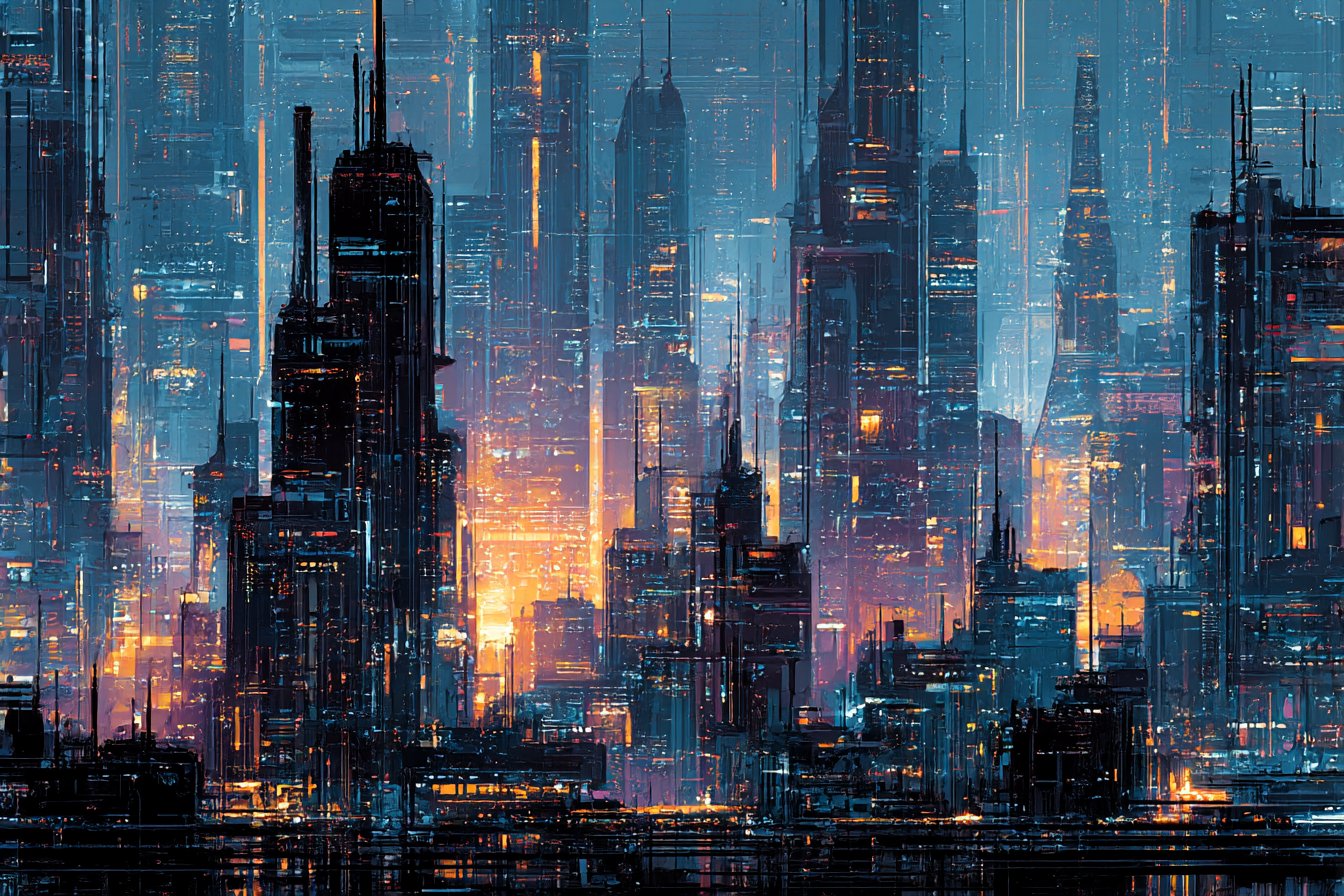
Take Blade Runner's Los Angeles. Everyone talks about the rain and the neon, but what really unsettles me is the vertical segregation. The wealthy live up high in pristine towers while the street level festers in perpetual twilight, choked with smoke and crowds. It's not subtle, but it doesn't need to be. The city itself tells you everything about inequality, environmental collapse, and what happens when technology advances faster than wisdom. You don't need exposition about corporate power when you can see Tyrell Corporation looming over everything like a brutalist god.

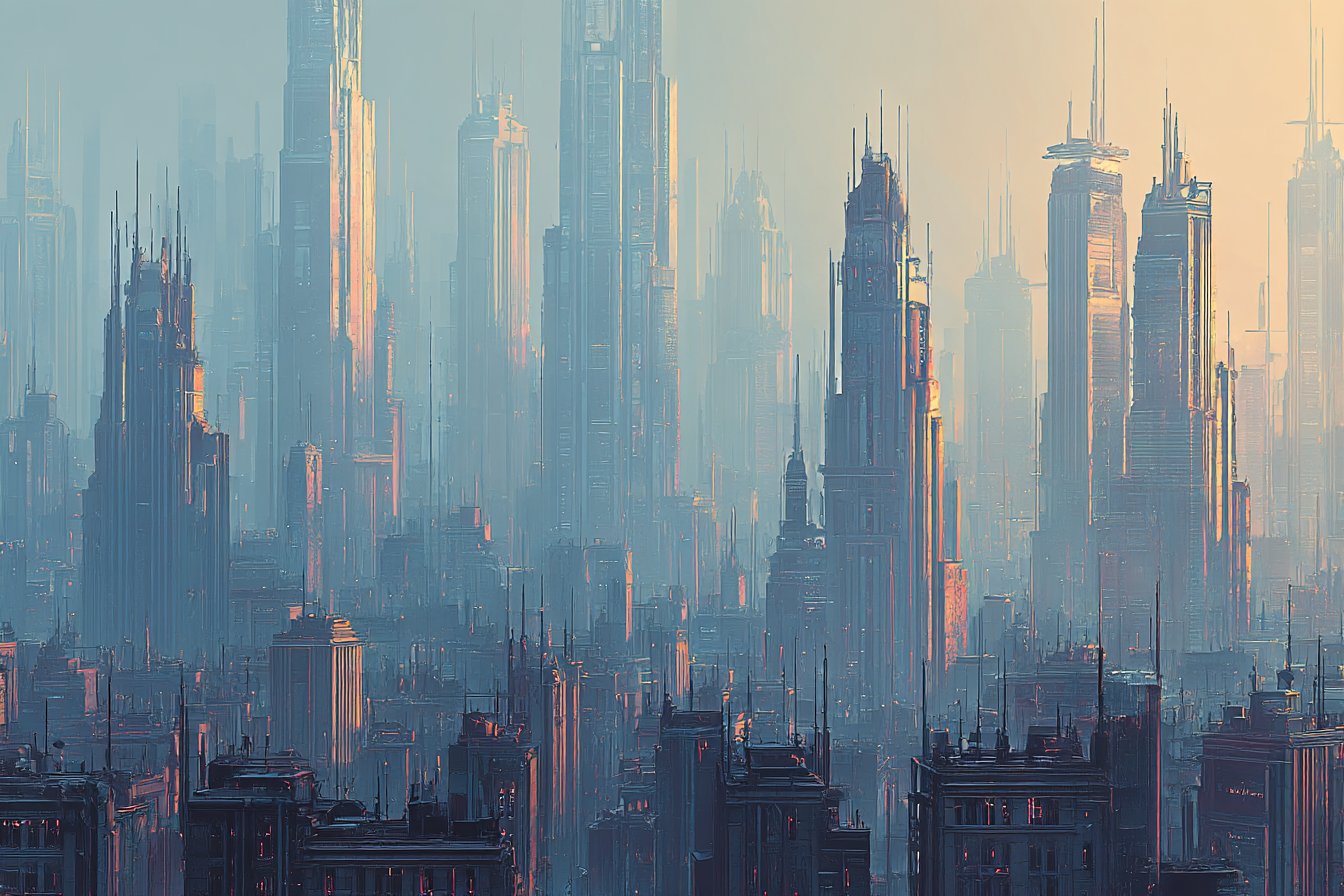
On the flip side, there's something like Star Trek's Earth cities — gleaming, integrated, surrounded by parks. They represent post-scarcity optimism, the idea that we might actually solve our problems instead of just managing them. But here's what I find interesting: they're almost boring by design. Conflict-free cities don't make for compelling drama, so we rarely see them up close. They exist in the background, suggesting that maybe the real story happens once you leave paradise behind.
The most honest sci-fi cities admit they're experiments that might fail. I spent weeks researching the arcologies in Paolo Bacigalupi's "The Windup Girl" — these massive, self-contained structures that try to create closed-loop ecosystems. The theory is sound: minimize waste, maximize efficiency, create sustainable habitats for thousands of people. But Bacigalupi shows you the cracks. The air recycling systems that break down. The social tensions when resources get tight. The way hierarchy reasserts itself even in supposedly egalitarian spaces.
I tried building a small-scale version once — okay, it was just a terrarium with some LED grow lights and a tiny water pump, but I wanted to see how hard it actually is to create a closed system. Turns out, very hard. The pH went wonky within days. The plants either died or took over everything. The pump clogged. My little utopia became a swamp that smelled like sulfur.
You Might Also Like

That failure taught me more about fictional cities than any movie could. Real systems are messy, interconnected, and fragile. The best sci-fi cities remember this. They show you the maintenance tunnels, the backup generators, the people whose job it is to keep everything running. They acknowledge that every solution creates new problems.
Cyberpunk cities excel at this. Night City from Cyberpunk 2077, the sprawls in William Gibson's novels — they feel lived-in because they show you the layers. The corporate districts with their clean lines and private security. The middle zones where people try to maintain normal lives. The combat zones where infrastructure has basically given up. You can trace the history of these places in their architecture, see how different waves of technology and social change left their marks.
But what fascinates me most are the cities that try to imagine governance itself differently. Becky Chambers' "A Closed and Common Orbit" features communities that make decisions through consensus protocols, where AI and humans collaborate on urban planning. It sounds utopian, but Chambers shows you the friction — the endless meetings, the personality conflicts, the challenge of balancing individual needs with collective welfare. Democracy is messy in real life; it's still messy in space.
Then there are the cities that have given up on human governance entirely. The algorithmic cities of Martha Wells' Murderbot Diaries, where AI systems manage everything from traffic flow to resource allocation. They're efficient, but there's something unsettling about places where humans become just another variable to optimize. The buildings are perfect, the systems never fail, but you can't shake the feeling that you're living inside someone else's spreadsheet.

I've noticed that the most memorable fictional cities tend to be the ones facing some kind of crisis. Maybe it's environmental — rising seas, killer heat, poisoned air. Maybe it's social — revolution, class war, the collapse of old institutions. Maybe it's technological — AI uprising, genetic warfare, reality itself becoming unstable.
Crisis forces characters to make choices, and choices reveal values.
That's why I keep coming back to these imagined places. They're not just thought experiments about urban planning or technology. They're explorations of who we are and who we might become. They ask: What matters most when resources are scarce? How do we balance individual freedom with collective survival? What happens when the systems we depend on start to fail?
The cities that stick with me are the ones that don't pretend to have easy answers. They show you the tradeoffs, the unintended consequences, the way every solution brings its own shadows. They remind you that the future won't be perfect, but it might be worth fighting for anyway.
Building fictional cities is really about building hope — messy, complicated, fragile hope that acknowledges the darkness but keeps trying to find the light.

0 Comments