

The first time I walked into a themed restaurant that really committed to the bit, I knew I was experiencing something special. Not the half-hearted pirate ship decorations you see at family chains, but a place where every surface, every sound, every detail had been crafted to transport you somewhere else entirely. It was a steampunk café in Manchester – copper pipes snaking across the ceiling, Edison bulbs flickering in glass orbs, and servers dressed like Victorian inventors. The menu came printed on aged parchment, and yes, they'd actually aged it with tea and careful burning around the edges.
What struck me wasn't just the attention to detail, though. It was watching other customers. People weren't just eating; they were performing.
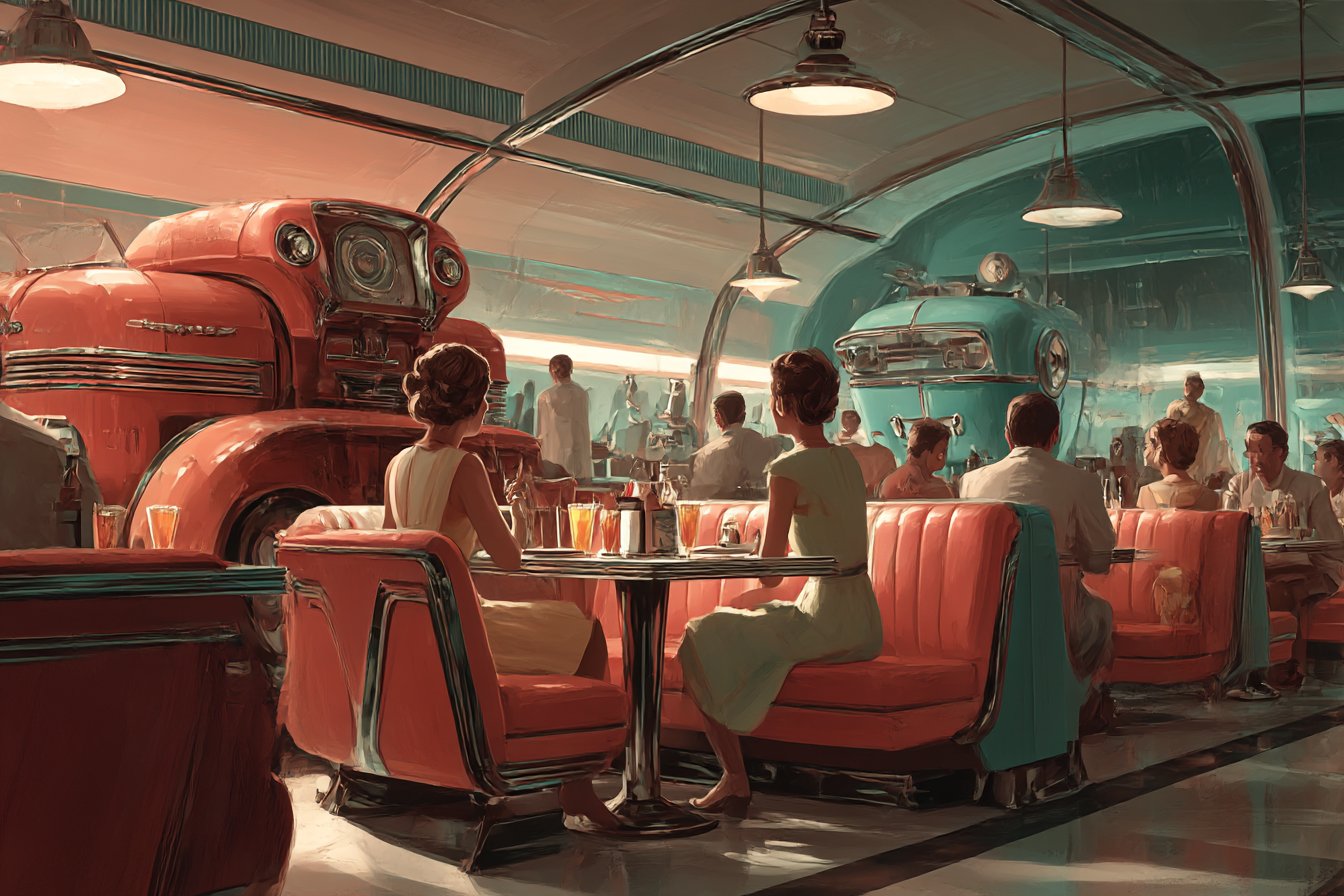
Taking photos, sure, but also speaking differently, sitting straighter, engaging with the fiction in ways they'd never do at a regular restaurant. One couple spent twenty minutes examining the "machinery" built into their table, speculating about what it might do in this alternate timeline. They were living the story, not just observing it.
That experience got me thinking about something I'd noticed in my years writing about science fiction: fans don't just want to consume stories – they want to inhabit them. And restaurants, with their multi-sensory environments and social nature, offer something unique that movies or books can't quite match. They let you taste the fiction.
I've since visited dozens of themed eateries, from zombie apocalypse burger joints to alien cantinas to cyberpunk noodle bars. The successful ones understand something crucial: it's not enough to slap some props on the walls and call it immersive. You need to think like a world-builder. Every choice – the weight of the utensils, the texture of the seats, the way light pools in corners – either supports the illusion or breaks it.
Take the robot-themed diner I tried in Birmingham last year. The owners had clearly spent money on animatronic servers and LED strip lighting, but they'd missed the fundamentals. The floor was standard restaurant tile (screaming "health department compliance" rather than "future laboratory"), the background music was generic techno, and worst of all, the robots moved with jerky, obviously mechanical motions that felt more broken than advanced. Instead of feeling like I'd stepped into a sleek sci-fi future, I felt like I was eating in a Chuck E. Cheese that had raided a Halloween store.

Contrast that with a tiny alien-themed café I discovered in Edinburgh. The budget was obviously smaller – no fancy animatronics, no high-tech displays. But they'd nailed the atmosphere. The lighting was that particular shade of blue-green that makes everything look otherworldly. The walls were textured to look organic, almost grown rather than built. The menu described familiar foods as if they were exotic alien cuisines ("terrestrial bovine protein strips with fermented tuber wedges" for fish and chips). Even the salt and pepper shakers were designed to look like crystalline formations from another world.
The difference? The second place understood that immersion is about consistency, not spectacle. Every detail reinforced the same fictional reality. When I picked up my drink – served in what looked like a scientific beaker – it felt like something an alien researcher might actually use. The illusion held.
You Might Also Like

This connects to something I've learned from studying successful sci-fi: the best world-building doesn't just pile on the exotic details. It thinks through how those details would actually work, how people would live with them, what they'd take for granted. In a good themed restaurant, you should be able to imagine the staff actually living in that world, not just playing dress-up for eight hours.
The social aspect matters too. Themed restaurants work because they give fans permission to be openly enthusiastic about the things they love. In regular social situations, admitting you've memorized the technical specifications of Star Trek phasers might earn you some odd looks. But in a space-themed restaurant where the walls are covered with fictional star charts and the waitstaff wear Starfleet uniforms? Suddenly that knowledge becomes social currency. You're not the weird one who knows too much about imaginary technology – you're the expert who can explain the fiction to your dinner companions.
I've watched friends transform in these spaces. People who are normally reserved become animated storytellers, explaining the lore behind decorations or debating whether the restaurant's version of a space station layout makes practical sense. The environment gives them license to engage with their fannish side in a way that feels socially acceptable.

Of course, not every attempt works. I've eaten at plenty of places where the theming felt cynical – a transparent grab for the "geek dollar" without any real understanding of what makes fans tick. These tend to rely on surface-level references (look, it's the robot from that movie!) rather than creating a coherent fictional space. They're like bad fan fiction: they use the right keywords but miss the emotional core that makes the original compelling.
The best sci-fi themed restaurants understand that fans aren't just looking for nostalgia or novelty. They're looking for extension – a way to push beyond the boundaries of the stories they love into new experiences that feel authentically connected to those fictional worlds.

They want to answer questions like: what would it really feel like to eat in a space station mess hall? How would food taste in a post-apocalyptic settlement? What would the social dynamics be like in an alien marketplace?
When a themed restaurant gets this right, it becomes more than just dinner with decorations. It becomes a form of collaborative storytelling, where the restaurant creates the stage and customers become the characters. You're not just observing science fiction – you're temporarily living inside it. And for fans who've spent years imagining what it would be like to inhabit these fictional worlds, that's incredibly powerful.
The key is treating the fiction seriously, even when – especially when – you're having fun with it. Respect the source material, think through the implications, and create an experience that feels like a genuine extension of the worlds fans already love. Do that, and you'll have customers who don't just come for the food – they come to briefly step sideways into the impossible.

0 Comments