















I was halfway through a bag of crisps when the twist hit me like a freight train. There I was, three episodes into what I thought was going to be a straightforward space drama about life aboard a generation ship, and suddenly everything I believed about the show's reality came crashing down. My laptop screen felt smaller, the room quieter. That's the moment I knew Ascension had done something genuinely clever – and probably why most people never gave it the chance it deserved.
See, when Ascension aired back in 2014 as a SyFy miniseries, it landed with all the marketing fanfare of a damp squib. The trailers made it look like yet another "people stuck on spaceship" story, complete with the usual power struggles, forbidden romances, and mysterious technical failures. I almost skipped it entirely. My flatmate at the time was obsessed with it, kept insisting I had to watch, but honestly? I was burned out on space shows that promised the universe and delivered cardboard characters floating around sterile corridors.
What actually got me to press play was a random comment thread I stumbled across months later. Someone mentioned that the show wasn't what it seemed, that there was something fundamentally different about its premise. They wouldn't say what – just that patient viewers would be rewarded. I hate spoilers, but I love mysteries, so I figured I'd give it a shot.
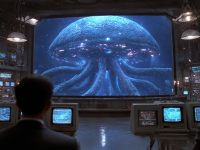
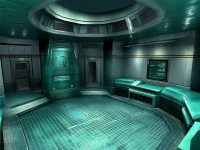
The first two episodes felt familiar enough. We're aboard the titular starship Ascension, launched from Earth in the 1960s on a century-long journey to Proxima Centauri. The ship carries about 600 people living in a rigidly stratified society – upper deck elites, middle deck workers, lower deck laborers. Think Titanic meets Battlestar Galactica. There's political intrigue, class warfare, a murder mystery that threatens to tear the community apart. Standard stuff, competently done, but nothing groundbreaking.
Then episode three happened, and I had to pause the show, walk around my kitchen twice, and come back to make sure I'd understood correctly.
Without spoiling the specific reveal (because discovering it yourself is half the joy), I'll say this: Ascension takes everything you think you know about its world and flips it completely. The twist doesn't just change how you see the story going forward – it recontextualizes everything that came before. Suddenly, seemingly throwaway lines from earlier episodes take on entirely new meanings. Character motivations shift. The very nature of the conflict becomes something else entirely.
This kind of structural storytelling requires serious planning. You can't just decide halfway through production to completely alter your show's fundamental premise and hope it works. The writers had to plant seeds from episode one that would pay off episodes later, crafting dialogue that reads one way on first viewing and completely differently once you know the truth. It's ambitious television writing, the sort of thing that makes you want to immediately rewatch everything with fresh eyes.
But here's where Ascension stumbles a bit, and why I think it never found its audience. The show doesn't quite know what to do with its brilliant twist. The revelation opens up fascinating questions about identity, reality, and the ethics of long-term psychological manipulation – themes that could fuel seasons of compelling drama. Instead, the miniseries rushes toward a conclusion that feels both overstuffed and underdeveloped. There are about three different shows fighting for screen time in the final episodes, and none of them gets the breathing room they deserve.
The cast deserves credit for selling material that must have been challenging to perform. Tricia Helfer and Brian Van Holt anchor the show as characters whose true motivations remain hidden until the final acts. They have to play scenes that work on multiple narrative levels simultaneously, conveying information to different audiences (both within the show and watching at home) without telegraphing the central conceit too early. It's trickier than it sounds, requiring performances that feel genuine in the moment while serving the story's larger architecture.
Visually, Ascension succeeds in creating a believable world that feels both retro-futuristic and lived-in. The ship's design incorporates 1960s aesthetic sensibilities – all wood paneling and brass fixtures – while still functioning as a credible generation ship. The attention to detail in the sets and costumes helps sell the show's central premise, whatever that premise might actually be. When your story depends on viewers buying into a specific version of reality, production design becomes crucial storytelling infrastructure.

What frustrates me most about Ascension's limited run is how much potential it left unexplored. The show raises questions about the nature of reality, the ethics of deception, and the psychological toll of isolation that science fiction is uniquely positioned to examine. These aren't just intellectual puzzles – they're deeply human concerns that affect how the characters relate to each other and understand themselves. A longer series could have used its speculative elements to explore universal themes of trust, identity, and community in ways that purely contemporary drama can't access.

I've rewatched Ascension twice since that first viewing, and each time I notice new details that support the eventual reveal. It's the kind of show that rewards close attention, where seemingly casual background details turn out to be crucial plot elements. The writers clearly put significant thought into crafting a story that functions coherently on multiple levels – no small feat when your central premise depends on maintaining a specific illusion for both characters and audience.
The show's brief run means it never had the chance to fully explore its most interesting ideas, but what's there demonstrates genuine ambition and creativity. Ascension deserves recognition not just for its clever plot mechanics, but for attempting something genuinely original in a genre often content with recycling familiar concepts. Sometimes the most interesting science fiction comes from asking "what if everything you think you know is wrong?" and following that question to its logical conclusion.
If you're looking for something genuinely surprising, something that will make you question your assumptions about what kind of story you're watching, Ascension is worth your time. Just be patient with those first two episodes. Trust me.
