












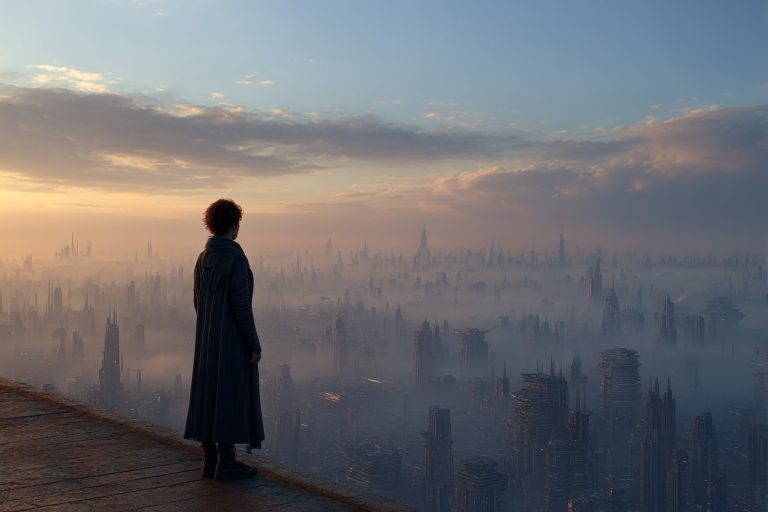

You ever watch a movie from like 1968 and somehow it still hits harder than something that came out last year? I mean, I was doing my usual Sunday night rewatch of 2001: A Space Odyssey a couple weeks ago – probably my fifteenth time through it, honestly – and that stargate sequence still made my brain melt in the best possible way. Meanwhile, I tried rewatching some big-budget sci-fi thing from 2019 the other day and couldn’t even finish it. Felt like watching someone’s expensive screensaver.
This has been bugging me for years, you know? What’s the deal with some sci-fi films aging like fine wine while others turn into vinegar practically overnight? It’s definitely not about having better CGI or bigger explosions. Some of the most legendary sci-fi movies were basically made with cardboard boxes and really good lighting. I’ve tested enough games with million-dollar budgets that play worse than indie projects made by three people in a garage to know that money doesn’t automatically equal quality.
I think part of it comes down to this thing I notice when I’m playing games at work versus at home. When I’m testing some rushed corporate product, there’s always these little details that feel wrong. Like, the physics don’t quite work right, or the UI feels clunky, or the world-building has these obvious gaps that nobody bothered to fill. After eight hours of finding bugs in the same level, you develop this sense for when something’s been made with care versus when it’s just been assembled to hit a deadline.
Movies work the same way. Take Blade Runner – and I’m talking about the original here, not the sequel, though that one’s pretty solid too. The world feels lived-in, right? The streets are dirty, the technology looks like it evolved from stuff we actually use, and most importantly, it doesn’t try to explain every little thing. Compare that to some modern sci-fi where they spend twenty minutes of exposition telling you exactly how their magic technology works, and it usually makes no sense anyway.
My girlfriend and I got into this huge argument about The Matrix when we first started dating – she’s more of a fantasy person, so sci-fi logic really bothers her when it’s dumb. She kept going on about how humans can’t possibly be efficient batteries, which, fair point, but she was missing the whole metaphor. The Wachowskis weren’t making a documentary about energy production. They were talking about choice and reality and control, and the battery thing was just the vehicle. Sometimes the emotional truth matters more than the scientific accuracy.
That’s actually something I’ve learned from years of consuming way too much sci-fi across every possible medium. The stuff that sticks around isn’t really about spaceships or robots or time travel. It’s about us. Right now. Just reflected through this weird funhouse mirror of speculation. Star Trek wasn’t about phasers and transporters – it was about what humanity could become if we actually got our act together. Alien wasn’t about face-huggers, it was about how corporations will absolutely sacrifice their workers for profit. Still pretty relevant, unfortunately.
I’ve been doing this thing lately where I show classic sci-fi movies to friends who somehow missed them, just to see how they land with fresh eyes. What’s fascinating is how the truly great ones still feel urgent and relevant, while movies that seemed groundbreaking just a few years ago already feel trapped in their specific moment. Like, Minority Report still works because we’re all living with surveillance technology and predictive algorithms now, but some other “visionary” films from that era just feel quaint.
The visual stuff matters too, but not how you’d think. It’s not about having the most realistic CGI – it’s about consistency and authenticity within whatever world you’re building. Mad Max: Fury Road looks incredible because they actually built those cars and drove them around the desert at ridiculous speeds. You can feel the weight and heat and chaos in a way that no amount of digital effects could match. Same with Moon – Sam Rockwell’s mostly alone with some miniatures and practical sets, and it’s more convincing than movies with ten times the budget.
But here’s what really separates the classics from the forgettable stuff: they’re not afraid to leave you uncomfortable. They ask questions without providing easy answers. A Clockwork Orange makes you think about free will and the nature of violence. Ex Machina doesn’t tell you whether Ava is truly conscious or just really good at manipulation. These movies trust you to sit with ambiguity, to keep thinking about them after you leave the theater.
I notice this all the time in my job – the best games are the ones that respect your intelligence, that don’t hold your hand through every single interaction. Same with movies. Solaris doesn’t explain what the ocean planet wants or how it works, and that’s what makes it haunting. Under the Skin leaves Scarlett Johansson’s motivations largely mysterious, and you spend the whole movie trying to figure out what she’s thinking.
The other thing is that lasting sci-fi movies understand how technology actually changes us. Not just the flashy stuff, but the subtle ways it shifts how we relate to each other and see ourselves. Her gets this perfectly – Spike Jonze wasn’t just imagining better AI, he was exploring how intimacy might evolve when artificial beings can understand us better than we understand ourselves. The technology serves the story instead of the other way around.
There’s this pattern I keep seeing where the most forgettable sci-fi focuses on the gadgets and spectacle, while the memorable stuff focuses on the people using the gadgets. E.T. works because it’s fundamentally about childhood wonder and finding connection with something completely different from yourself. Terminator 2 succeeds because underneath all the explosions, it’s about a kid learning to trust and a machine learning to be human.
I think that’s why I keep coming back to certain films while others just fade from memory. The ones that stick with me change how I see the world, make me question assumptions I didn’t even know I had. They’re not just entertainment – they’re thought experiments that happen to be wrapped in compelling stories. They make impossible things feel real by grounding them in recognizable human emotions and experiences.
Most popular

Sometimes I’ll be working on some side project – building props or sketching out world-building ideas – and I find myself asking the same questions the best sci-fi movies ask. What would this actually feel like? How would people really behave in this situation? What would be the unintended consequences? The films that endure are the ones that follow through on these questions with answers that feel authentic, even when they’re describing completely impossible scenarios. That’s the real magic trick – making the unreal feel undeniably, viscerally real.

Logan lives in Minneapolis with too many consoles and just enough opinions. He explores how sci-fi plays differently across games, TV, and film—celebrating great world-building and calling out lazy tropes. Expect passionate takes, sarcasm, and the occasional Mass Effect reference.