














People drive me absolutely crazy when they wave their hand and say “oh, you know, fantasy and sci-fi stuff” like they’re talking about two flavors of the same ice cream. I’ve been reading both genres since I was twelve years old sneaking my dad’s Asimov paperbacks, and I’m telling you right now — these aren’t distant cousins. They’re completely different beasts that happen to get shelved in the same section of the bookstore.
The difference really crystallized for me a few months ago when I was helping a student find something “like Star Wars but with wizards.” I kept trying to explain why that was… complicated, and she kept looking at me like I was being deliberately obtuse. But here’s what I couldn’t quite articulate then: science fiction asks “what if this were possible?” while fantasy asks “what if this simply is?” It’s a fundamental philosophical divide that shapes everything else about how these genres work.
Take the way they handle their impossible elements. Science fiction, even at its most ridiculous — and believe me, I’ve read some truly wonderfully ridiculous stuff — usually attempts some kind of explanation. The hyperdrive functions through folded space-time. The robot achieves sentience via quantum neural networks. The alien communicates through pheromone matrices. Even when it’s complete technobabble (and I can spot technobabble from three parsecs away), there’s this underlying assumption that someone, somewhere, could theoretically figure out how this works.
Fantasy operates on entirely different principles. Magic exists because magic exists. The dragon breathes fire because dragons do that. The ancient artifact glows when danger approaches because that’s what this particular artifact does, and demanding a scientific explanation is like asking why Tuesday comes after Monday. I remember once trying to create what I thought was a sophisticated magic system based on thermodynamic principles — every spell had to draw energy from somewhere else, creating these elaborate conservation equations. My writing group very gently pointed out that I’d basically invented science fiction with sparkly special effects.
The emotional cores feel completely different too. Science fiction characters typically wrestle with change — what happens when we can upload consciousness, when artificial intelligence surpasses human intelligence, when we encounter something genuinely alien? The anxiety usually stems from losing our sense of specialness or control. What if we’re not the pinnacle of evolution? What if our children (biological or technological) surpass us?
Fantasy stakes tend to be more… archetypal, I suppose. Good versus evil, light versus darkness, the corruption of power, the hero’s journey through trials that test character rather than problem-solving skills. Not always — there’s plenty of morally complex fantasy that would make Dostoevsky proud — but the default emotional register is different. Fantasy villains want to conquer the world or destroy it. Science fiction villains might want to perfect it.
I learned this distinction the embarrassing way when I attempted writing what I thought was a fantasy novel about a young woman discovering her magical abilities. Five chapters in, I realized I’d spent more time explaining how magical energy interfaced with cellular metabolism than I had on character development. My protagonist wasn’t undergoing a spiritual transformation; she was essentially conducting controlled experiments with increasingly sophisticated variables. Pure science fiction mindset wearing a fantasy costume.
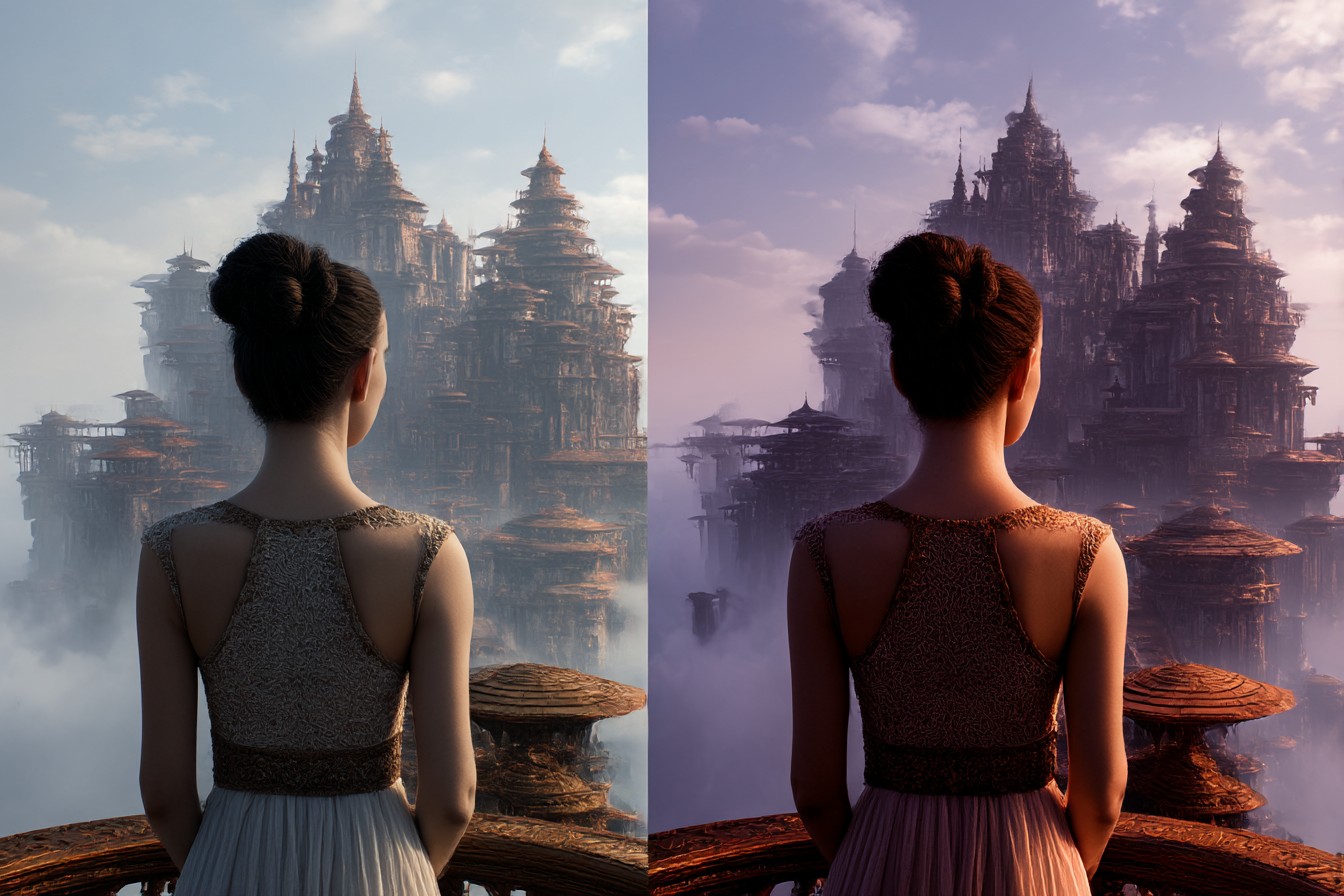
The structure of heroism works differently too. Fantasy protagonists typically must become worthy of their power — they grow into strength through suffering, moral trials, and spiritual development. Luke Skywalker needs to understand the Force on a philosophical level, not just access it. Frodo must develop the spiritual fortitude to bear the Ring’s burden, not comprehend its manufacturing process.
Science fiction characters more often need to understand their circumstances — solve the puzzle, uncover the truth, figure out how to work with or against whatever technology they’re confronting. They develop by learning, adapting, making difficult choices about what’s possible versus what’s ethical. The capability was always potentially there; they just needed to grasp it intellectually.
This shows up in world-building approaches too. Fantasy worlds operate on rules, but they’re more like natural laws — gravity exists, magic exists, dragons exist. These rules are stable but not necessarily explicable. You don’t question why water flows downhill; you don’t question why certain words summon fire. Science fiction worlds operate on systems — technologies, social structures, scientific principles that can be understood, manipulated, potentially improved or broken. When something goes wrong in fantasy, you usually need a chosen one. When something goes wrong in science fiction, you might need a good engineer.
Don’t misunderstand me — neither approach is inherently superior. I’ve encountered fantasy novels that examine human nature more rigorously than most literary fiction, and science fiction that generates more genuine wonder than any CGI spectacle. But they achieve these effects through fundamentally different methods.
Fantasy typically works through metaphor and archetype. The Dark Lord isn’t merely evil; he represents something about power’s corrupting influence or the seductive nature of control. The magical sword isn’t just a weapon; it’s the externalization of inner strength or the weight of destiny.
Most popular
Science fiction generally works through extrapolation and consequence. The artificial intelligence isn’t just intelligent; it’s what cognition might become without human limitations and biases. The alien isn’t just foreign; it’s what consciousness might look like without human evolutionary assumptions.
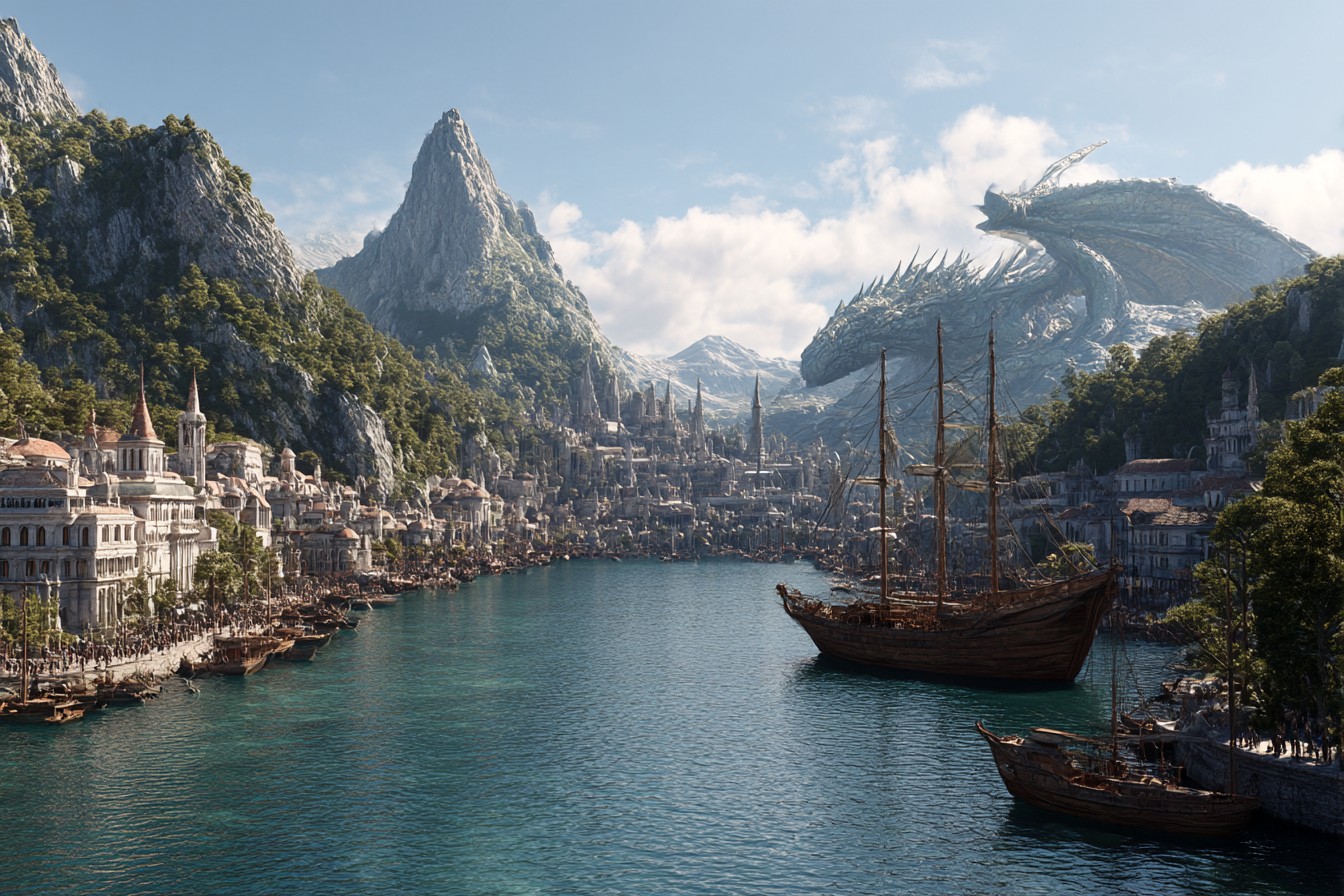
This is why successful genre-blending is so damn difficult. You can’t just transplant elves onto a starship and expect it to work — well, you can, but it usually feels artificial. These genres operate on different emotional and logical wavelengths. When they do blend successfully, it’s typically because someone found a way to honor both approaches: fantasy’s archetypal power and sense of wonder combined with science fiction’s systematic thinking and extrapolative curiosity.
After forty years of reading both genres obsessively, I think that’s what I appreciate most about each of them. They’re both perfect engines for exploring “what if” scenarios — they just fuel the question through completely different mechanisms. And that difference matters more than most people realize.

Kathleen’s a lifelong reader who believes science fiction is literature, full stop. From her book-filled home in Seattle, she writes about thoughtful, character-driven sci-fi that challenges ideas and lingers long after the last page. She’s a champion for under-read authors and timeless storytelling.