
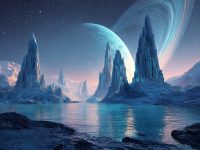
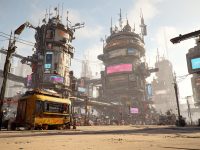




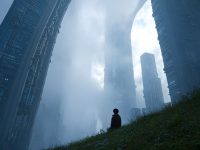




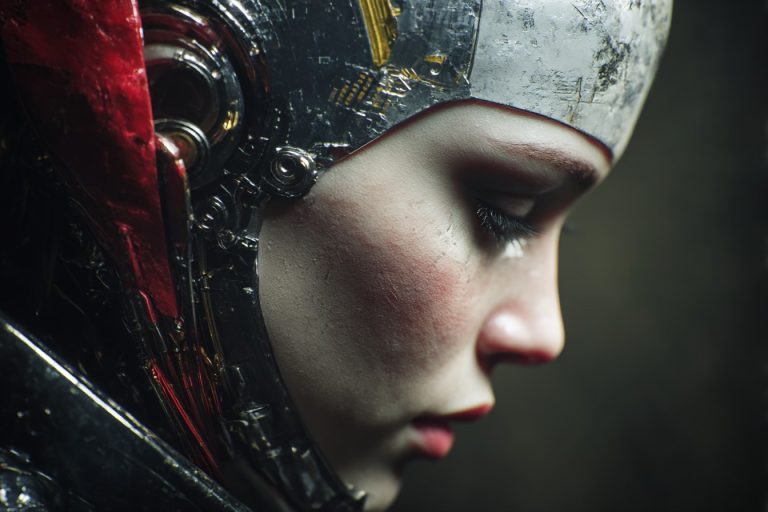

So there I was, probably three years ago now, scrolling through some concept art for yet another Mars colonization project when it hit me – this stuff all looks completely wrong. Not wrong like “oh the proportions are off” wrong, but wrong like “this artist has never thought about how light actually works on Mars” wrong. The painting showed this gorgeous colony with perfect cinematic lighting on every surface, like some cinematographer had followed the colonists to Mars and set up a full lighting rig.
Thing is, Mars barely has an atmosphere. I mean, we’re talking about 1% of Earth’s atmospheric density here. Light doesn’t scatter and bounce around creating those soft shadows and ambient lighting we’re used to seeing. On Mars, shadows are harsh, black voids, and the contrast between lit and unlit areas would be brutal. But this painting? It looked like a sunset in California with some red rocks photoshopped in.
That moment of frustration basically consumed the next chunk of my life. I’ve got a physics background – did my undergrad before I fell into game testing – and I couldn’t stop thinking about all the ways sci-fi art gets the science spectacularly wrong. Not just wrong, but wrong in ways that actually matter for how we imagine these futures.
I started messing around with my own concept work, partly because I was bored and partly because I figured I couldn’t do worse than the stuff I was seeing. Set up this ridiculous little light box in my garage using whatever I could find. Flour mixed in water to simulate atmospheric scattering, dry ice for fog effects (turns out dry ice is weirdly hard to get in Minneapolis, and the guy at the supply shop definitely thought I was up to something sketchy).
The scale problem hit me first. You know how in Star Wars, the Death Star looks massive until you realize the hangar bay doors are maybe twelve feet tall? I went through frame by frame in some of my favorite sci-fi movies, measuring objects against human figures, and the math is insane. These supposedly enormous spaceships have corridors that would make airline passengers feel claustrophobic. Windows that couldn’t fit a refrigerator through them. It’s like the artists drew cool shapes first and forgot humans would need to live inside them.
When I started sketching my own Mars habitat designs, I got obsessed with dust. Martian dust isn’t like anything we deal with on Earth – it’s superfine, it carries electrical charge, and it gets into everything. I watched hours of Mars rover footage, and you can see how quickly everything gets coated. The solar panels need constant cleaning. The cameras get dirty. The landscape always looks hazy because there’s dust suspended everywhere.
But look at most Mars colony art and everything is pristine. Shiny. Like someone just finished pressure washing the entire planet. Where are the dust mitigation systems? Where are the cleaning protocols? How do airlocks work when people are tracking in dust that behaves more like smoke than dirt? I spent weeks sketching spacesuits with brush systems built into the joints, habitats with electromagnetic fields around doorways to knock dust off people before they enter. My girlfriend started calling it my “boring doorway period” because I had pages and pages of airlock designs.
Space lighting is another thing that drives me crazy. In space, you’ve got this incredibly harsh, unfiltered sunlight on one side and complete darkness on the other. No atmosphere to scatter light, no sky to provide ambient illumination. I tried recreating this in my apartment using a bright LED work light and blackout curtains, and the results were genuinely unsettling. Even familiar objects look alien under those conditions.
The artificial lighting question gets really interesting when you think about long-term habitats. You’d need full-spectrum LEDs to keep people’s circadian rhythms working, but you’d also need specialized lighting that doesn’t interfere with instruments or create reflections on critical displays. I ended up buying way too many different LED strips from Amazon – my search history probably made me look like I was starting a grow operation – testing different color temperatures and intensities.
Those warm white LEDs everyone loves for their living rooms? Absolutely terrible for a spacecraft. They make everything look sickly and create these weird shadows that would probably drive you insane after a few months in a confined space. You’d want something much closer to natural daylight, but then you need to think about power consumption and heat generation and… it gets complicated fast.
Physics constraints aren’t limitations – they’re opportunities to create more interesting designs. When you’re sketching a generation ship, you can’t just draw a cool spaceship shape and call it done. If it’s rotating to create artificial gravity, where are the gyroscopes? How do you prevent the whole structure from wobbling itself apart? I actually built this pathetic cardboard model of a rotating habitat and spun it on my sister’s lazy Susan to see what would happen. Spoiler alert: engineering is hard.
The gravity gradient in a rotating habitat means objects near the center experience almost no gravity while things at the rim get pressed outward. Your whole design has to account for this, or you’re just making fantasy art with spaceships in it. Elevators become incredibly complex. Moving water around becomes a nightmare. Even walking from the hub to the rim would feel bizarre as your weight gradually increases.
Water behavior in low gravity is something I’ve never seen depicted correctly in concept art. I rigged up this amateur demonstration using a fish tank and some creative camera work to simulate how liquids would behave in lunar gravity. It’s genuinely weird – surface tension dominates over weight, so water forms these perfect spheres and moves in ways that would completely change how you design plumbing, food preparation, even personal hygiene systems.
Most popular

Yet most sci-fi art shows people casually sipping coffee like they’re hanging out at a Starbucks that happens to be on the moon. The devil’s in these mundane details, and getting them right is what makes the extraordinary stuff believable.
Real space equipment is bulky and redundant and covered in access panels because things break and need fixing. When I design fictional spacesuits or hab modules now, I try to think about what would actually fail and how you’d repair it. Where do spare parts get stored? How do you perform delicate work wearing thick gloves? Where are the backup systems for the backup systems?
These constraints aren’t boring – they’re what make designs interesting. A spacesuit that looks like it could actually keep someone alive is more compelling than one that just looks cool. The wear patterns on surfaces, the improvised storage solutions, the maintenance schedules taped to bulkheads – these details tell stories that no amount of dramatic lighting can match.
I’ve been working on this series showing the same lunar habitat at different points in its artificial day cycle. How the lighting changes, how people adapt their spaces over time, the gradual accumulation of personal touches and jury-rigged improvements. It’s not glamorous stuff, but it’s honest. It acknowledges that even in the most extraordinary circumstances, life includes a lot of ordinary moments.
The best sci-fi art doesn’t just show us cool technology – it shows us how humans would actually live with that technology on a random Tuesday when nothing particularly exciting is happening. Sometimes the most convincing detail is a coffee stain on a control panel or someone’s creative solution to a storage problem the original designers didn’t anticipate.
That’s what I’m chasing now in my own work. Not just beautiful visions of the future, but believable glimpses of what everyday life might actually feel like when everyday happens to be on Mars.

Logan lives in Minneapolis with too many consoles and just enough opinions. He explores how sci-fi plays differently across games, TV, and film—celebrating great world-building and calling out lazy tropes. Expect passionate takes, sarcasm, and the occasional Mass Effect reference.